
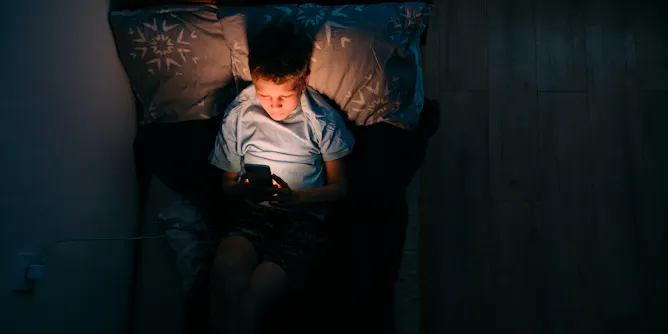
The language used in response to gender-based violence erases who’s doing the harm and who’s experiencing it, making it harder to report on and easier to excuse.
Articles on Gender-neutral language
Displaying all articles

This is far from the first time alternative words for God have been discussed.
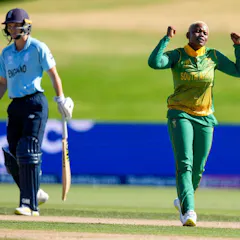
Kicking off the cup with three straight wins, South Africa is ranked 2nd in the world in one day internationals.

No one is forcing people to use “iel” with a gun to their head. But paradoxically, by making the pronoun the focus of attention, critics are inevitably making it more popular.

Trans people are confronted by discrimination and misunderstanding, but education communities can do a lot to help overcome these problems.
Pronouns rarely, if ever, change. Then along came the gender nonbinary ‘they,’ which was just anointed ‘word of the decade.’

A progressive city’s new ordinance on gender-neutral language provokes a worldwide media storm.
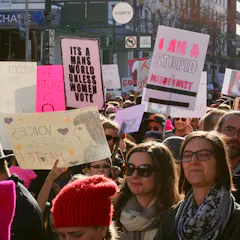
English is a language made by men, for men and it reinforces inequality.
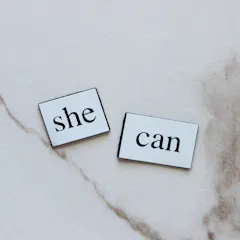
We could expect a change in language to decrease gender disparities across a host of measures, including wages, educational attainment, and leadership positions in corporate and political life.
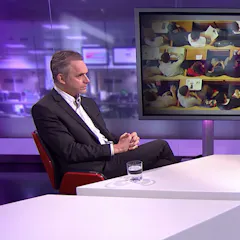
Jordan Peterson is now a right-wing darling for his views on everything from transgender people, the #MeToo movement and political correctness on campus. But he’s not saying anything new.

The Mississippi is characterised in America as male, while the Indians see the Ganges as female.
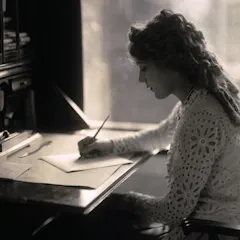
Women’s voices have been seen as unwanted or untruthful, but the snowballing sexual assault revelations from the #MeToo campaign show that women must find their voices.
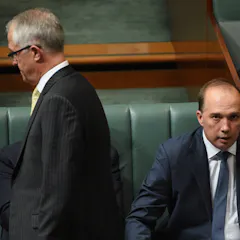
Australian politicians have twice reminded us what it feels like for a woman to live in a world where some men don’t actually think very much of us.
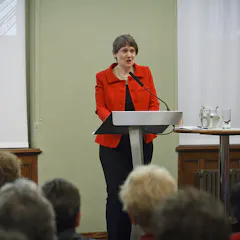
A friend of mine calls me professor of genius studies. It’s a sort of slip of the tongue, as I teach in gender studies, but it‘s also funny because everyone knows that genius is not associated with gender…
Top contributors
-

Lecturer, Language and Culture, Keele University
-
Lecturer in Religion, York St John University
-
Senior lecturer, The University of Queensland
-
Professor, Curtin University
-
Senior Lecturer, The University of Melbourne
-
Dean of Arts and Professor of Philosophy, University of Regina
-
Professor of Political Science, Nipissing University
-
Associate Professor, Eighteenth-Century English Literature, Northumbria University, Newcastle
-
Ph.D. Candidate in Linguistics, USC Dornsife College of Letters, Arts and Sciences
-
Associate Professor, The University of Western Australia
-
Associate professor, Hamad Bin Khalifa University
-
Professor of Economics, Union College
-
Professeur en analyse de discours et communication à l'ESSLIL, chercheur au laboratoire ETHICS, Institut catholique de Lille (ICL)
-
Adjunct Assistant Professor, Media and Technology Studies, and Director of the Feminist Collaboratory and Data Visualization Centre, University of Alberta