
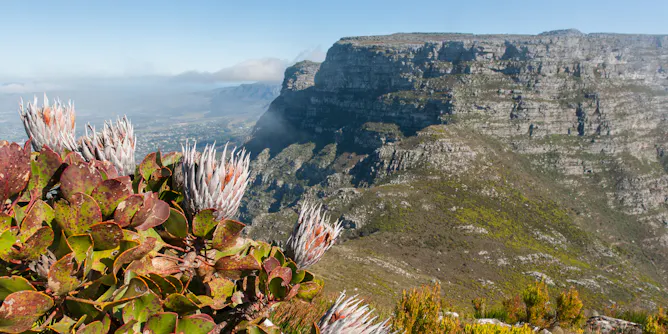
The latest checklist of Table Mountain flora shows that Cape Town is still a global hotspot for threatened flowering plants.
Articles on Fynbos
Displaying all articles
Hundreds of ancient fynbos species could regrow and restore a former pine plantation on Cape Town’s Table Mountain, but only if the remaining pine trees are removed.
Burning invasive plants on site creates scars and prevents natural vegetation from growing back quickly.
More than 700 million hectares of land in Africa has been degraded by human activity. Everyone can get involved in restoring the ecology.

The Agulhas long-billed lark builds nests on the ground in endangered fynbos vegetation. Here’s how it is surviving.

Autumn extreme fire weather around Cape Town in South Africa has become 90% more likely in a warmer world.

Hollywood undermines Africa’s struggles, creating a false impression of the continent to please western viewers.

The fynbos vegetation that historically clothed the slopes of Table Mountain is highly inflammable. This has been worsened by the spread of alien trees that burn more intensely than the fynbos.

Fire hazards are influenced by three factors: weather, an ignition source and fuel loads. The first two are unpredictable. But fuel loads can be managed.
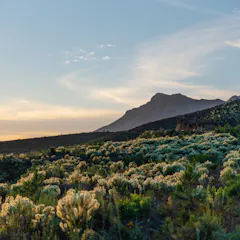
Cape Town’s new climate strategy is a good start. But it falls short when it comes to nature.

These plants play a crucial role in a delicate ecosystem. If Cape Beech trees or in fact other native tree species are wiped out, that whole ecosystem shifts.
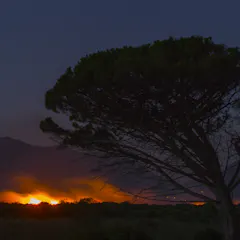
The danger of fires in the Cape region this season is partly dependent on how the Fynbos has been managed over the past few decades.

The number of Cape Rockjumpers’ are declining and the reason might be the weather.
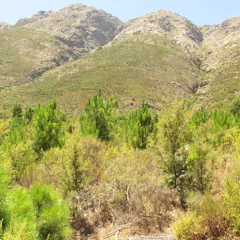
Invasive plants have an impact on native species and unless these factors are properly understood, it is difficult to predict what sort of impact invasive plants will have.
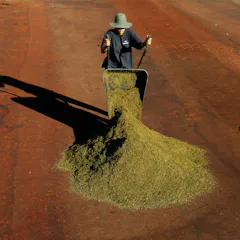
The rooibos industry has been accompanied by dispossession and adversity stretching back over centuries.

A tall grass-like plant in the Western Cape has managed to dupe dung beetles into rolling and spreading its seeds.
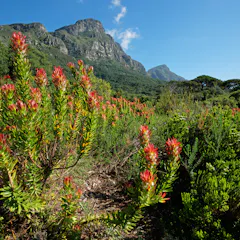
Restoring habitats have numerous benefits, they can also benefit humanity. But it is for people to be convinced that they can actually do good.
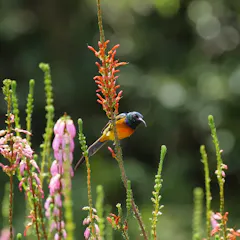
Given the global commitment to conserve biodiversity in the face of climate change, it is important to understand how biodiversity arises in the first place – and how it is maintained.
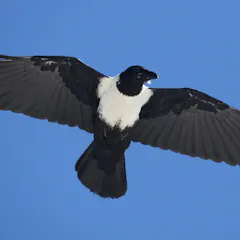
South Africa’s pied crows are moving to areas where the climate suits them more.
Top contributors
-

Distinguished Professor of Conservation Ecology, Stellenbosch University
-
Scientist, South African National Biodiversity Institute
-
Senior Researcher, Agricultural Research Council
-
plant ecologist, Stellenbosch University
-
Senior scientist, South African National Biodiversity Institute
-
Research associate, Stellenbosch University
-
Postdoctoral fellow at the CIB, Stellnbosch University, Stellenbosch University
-
Professor of Biological and Biomedical Sciences, Durham University
-
Professor at Department of Biological Sciences, University of Cape Town
-
PhD student in African Climate Risk, University of Cape Town
-
Research Chair, African Climate and Development Initiative, University of Cape Town
-
Professor, Advisor to the Executive, University of Pretoria, University of Pretoria
-
Lecturer, University of Cape Town
-
PhD researcher, Coventry University
-
Climate Scientist and Researcher, University of Cape Town