
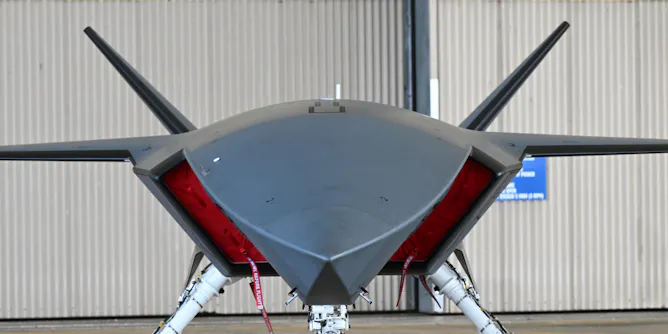
Australia needs to consider how to adapt its military tactics and preparedness to meet potential future threats.
Articles on Future of warfare
Displaying all articles
The speed and scale of war are being enhanced by AI systems – but they also bring new risks for civilians and military combatants.
What might the age of generative AI tools mean for strategic thinking and planning within organisations losing key figures?

The law of the sea says warships must have a crew. What does that mean for naval drones?
Aerial drones are already transforming warfare. Underwater drones are next.
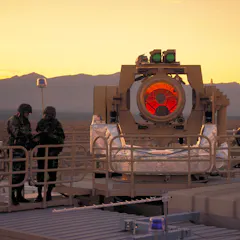
Militaries around the world are scrambling to realise the ‘God mode’ of invulnerability and infinite ammunition promised by laser weapons.
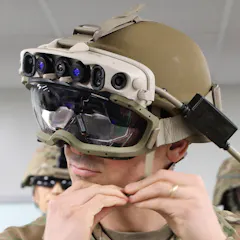
Augmented reality has largely enjoyed cover from critique by being taken as a benign gaming technology. But recent developments suggest we need to get serious about it.
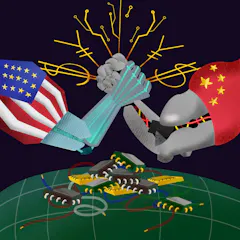
The US defense community is coming to understand that AI will significantly transform, if not completely reinvent, the world’s military power balance.

Treating non-violent cyber attacks as warfare could lead to unnecessary escalation.
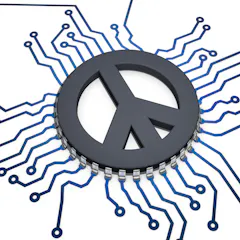
Dozens of countries and hundreds of firms and nonprofits are fed up with digital violence and are working toward greater cybersecurity for all.

A defender that can hold out while inflicting greater losses on its attacker can wear down an adversary – reducing the threat of additional attacks.

Doping is condemned in sports. But what about in the military? Should soldiers be allowed or even encouraged to take drugs that make them superior fighters and more likely to complete a mission?
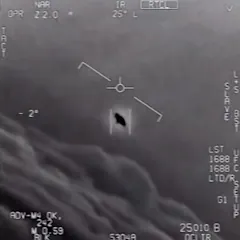
During a military mission, whether in peace or in war, the inability to identify an object within an area of operation represents a significant problem.
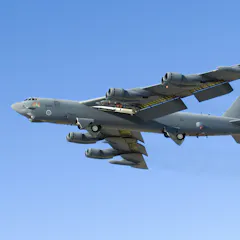
Missiles that fly 3,000 mph or faster – much faster than the speed of sound – are the next generation of high-technology weapons.
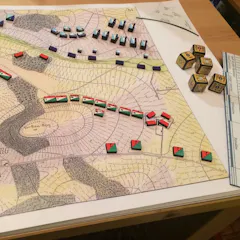
War games let you test your political and military acumen right at your kitchen table – while also helping you appreciate how decision-makers are limited by the choices of others.
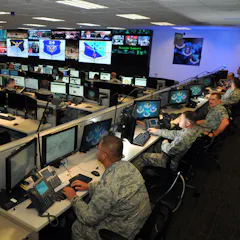
A new strategy for U.S. Cyber Command seeks to block enemies from achieving their objectives – but may not be successful, and could have unforeseen consequences.
Top contributors
-

Professor of Strategic Studies at the Marine Corps University School of Advanced Warfighting; Scholar-in-Residence, American University School of International Service
-
Director of the Center for National Security Initiatives and Professor of Aerospace Engineering Sciences, University of Colorado Boulder
-
Senior Lecturer in Digital Cultures, Australian Research Council DECRA Fellow, University of Sydney
-
Lecturer, University of Aberdeen
-
Professor in Human-Computer Interaction, ARC Future Fellow, University of Sydney
-
Director, RMIT University Centre for Cyber Security Research and Innovation, RMIT University
-
Brigadier General, U.S. Marine Corps; President, Marine Corps University
-
Lecturer in Law, Griffith University
-
Professor of Biomedical Ethics, Case Western Reserve University
-
Assistant Professor , Seton Hall University
-
Postdoctoral Fellow, RMIT University
-
Senior Lecturer in War Studies, University of Hull
-
Professorial Lecturer of International Politics, American University School of International Service
-
Senior Lecturer, School of Global Affairs, Lancaster University
-
Senior Lecturer in Political Geography, Department of Geography, Newcastle University