
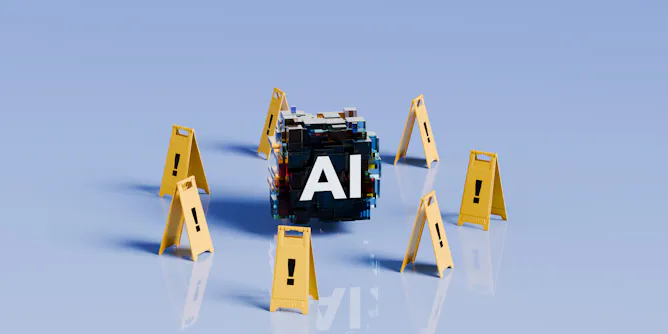
Once powerful AI models are released, it’s nearly impossible to keep them from being misused. Minimizing the risk means making safety the top priority in developing the systems.
Articles on Cyberwar
Displaying 1 - 20 of 52 articles

From disrupting nuclear facilities to throwing national health services into disarray, cyberattackers often target the most secure government computer systems.

The consequences of cyber conflict are primarily felt by civilians, who call for retaliation, fueling cycles of violence.

The army has released a new recruitment video on social media that resembles a Fortnite-style game.
The use of cyber-attacks in Ukraine could have long-term implications for the way wars are carried out.

The Five Eyes alliance is critical to hunting and detecting foreign cyber actors, but tends to work in secret.

The Snake network has been detected in more than 50 countries, including Australia.

Beyond neutralising the cybercriminals behind the Medibank breach, the taskforce will also seek out and attack other potential threats.

Internet infrastructure disruption, targeted cyberattacks and the manipulation of disinformation during the Russian invasion of Ukraine all show that warfare now includes cyberwar strategies.

These days sophisticated malware can spread like wildfire, thanks to transnational businesses and organisations providing bridges across countries.
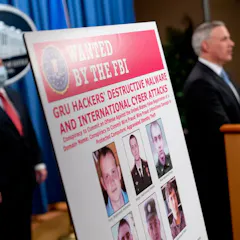
Further cyber exploitation of Ukraine could cause citizens immense distress at this critical moment.
Cyber-attacks are adding to the pressure on Ukraine as it faces Russian troops on its borders.
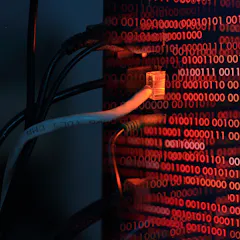
It’s reported the Pegasus spyware can capture a user’s keystrokes, intercept communications, track their device and tap into their camera and microphone.

Cyber attacks have created new dilemmas for philosophers who determine the ethics of war.
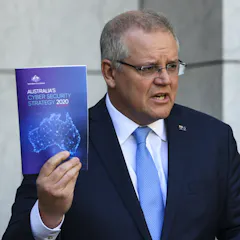
The Australian government’s new cyber security plan moves in the right direction, but success will depend on how it’s executed.

Beyond the obvious risk of financial loss, cyberattacks can weaken our trust in digital infrastructure – and by extension, our trust in public institutions, too.

Legislation expected to be put to Parliament later this year may very well fall short due to COVID-19’s budget impacts. But until we strengthen our cyber defences, we’re all at risk.
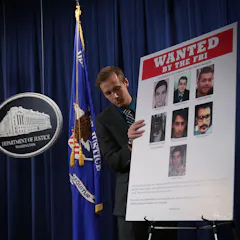
The Iranian military operates cyber espionage and sabotage through a network of dozens of contractors, allowing the state to attack foes while denying involvement.
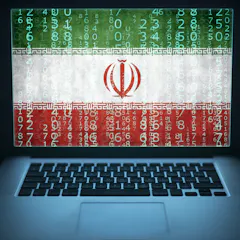
After the assassination of General Qassem Soleimani, further esclation in the conflict between Iran and the US could come in the form of a cyber-attack.
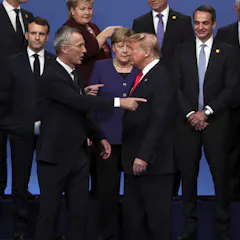
NATO had its 70th birthday party in London at an awkward moment.
Top contributors
-

Associate Professor in Cybercrime and Cybersecurity and Co-Director of the Centre for Cybercrime and Economic Crime, University of Portsmouth
-
Emeritus Distinguished Professor of Defense Analysis, Naval Postgraduate School
-
Director, McCrary Institute for Cyber and Critical Infrastructure Security, Auburn University
-
Deputy Director, Center for Cyber and Homeland Security, Auburn University
-
Professor of Strategic Studies at the Marine Corps University School of Advanced Warfighting; Scholar-in-Residence, American University School of International Service
-
Professor of Cyber Security Practice, Edith Cowan University
-
Director, Centre for Cyber Security Research & Innovation (CSRI), Deakin University
-
Assistant Professor of Computer Science, North Dakota State University
-
Professor of Business Law and Ethics, Indiana University
-
Professor, Faculty of Science and Technology, Charles Darwin University
-
Associate Professor of Critical Media Analysis, School of Communication, Simon Fraser University
-
Associate Professor, Sociology, Athabasca University
-
Research Assistant (National Security College), Australian National University
-
Professor of Computer Science and Engineering, New York University
-
Leader, Complex Systems Science, CSIRO