

The controversy over the misuse of Jordan’s Principle has been used to justify cuts to services, when the real problem is a deep, systemic gap in services for First Nations children.
Articles on Funding
Displaying 1 - 20 of 91 articles

A common reporting structure that combines financial and non-financial information reduces pressures on both donors and NPOs.

Research suggests relationships are key to ensuring home energy upgrade programs work.

Canada must decide what kind of country it wants to be: One that generates new scientific knowledge, or one that waits for other nations’ discoveries.

Africa’s clean energy funding would work much better if projects could borrow on fairer terms, and have longer to pay back loans.

This year, the National Disability Insurance Scheme is expected to cost taxpayers $50 billion. So what needs to change?

Public health depends on long-term planning, and when that planning is interrupted, some programs never recover.

The deal struck between states and territories and the federal government follows a long-running standoff. Here’s what’s been agreed, and what’s still missing.

A lack of access to child care costs the state an estimated $2.7 billion in lost productivity and revenue.

The agency’s budget has grown steadily since the 1960s, fueling an industry that creates lifesaving medicines and attracts billions of dollars in investment.

Commuters have complained about SEPTA’s poor conditions and unstable funding for nearly a century.

Rural communities are being asked to absorb reduced funding and limited flexibility in the NDIS. These changes risk widening the gap city and regional areas.

Most recent debates center on how much attention should be given to the history of the nation’s accomplishments over its darker chapters.

The consequences of shutting down the Institute of Museum and Library Services would be particularly dire for smaller museums and rural museums.

A member of a grant review panel explains the ins and outs of applying for research funding – and the consequences of when the process suddenly stops.

Using ethnicity as a proxy for need is supported by local and international research. The government’s decision to get rid of it will mean worse outcomes for Māori and Pacific New Zealanders.

National Cabinet unveiled a $4.7 billion partnership, starting July 1 2025, to address domestic violence. It’s funding that’s sorely needed and enthusiastically welcomed, but needed immediately.
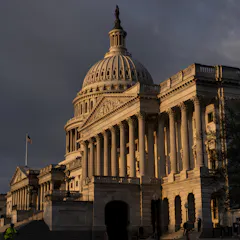
Research funding is down in recent years despite promises made with the CHIPS and Science Act.

Changing a culture is hard to do.

It turns out that handing over taxpayer dollars to billionaire owners tends to be far less popular among regular citizens than among well-connected government officials.
Top contributors
-

School Education Program Director, Grattan Institute
-
Post Doctoral Researcher, Graduate School of Business (GSB), University of Cape Town
-
Professor of Higher Education Policy, Monash University
-
Professor of Family and Sexual Violence, RMIT University
-
Principal Fellow, Department of Paediatrics, The University of Melbourne
-
Vice-Chancellor, University of Technology Sydney
-
Extraordinary Professor, University of the Western Cape
-
Research Fellow/Research Uptake Officer of the Health Policy Research Group, University of Nigeria
-
Senior Lecturer in Entrepreneurship and Innovation, University of Hull
-
Professor, Australian Catholic University
-
Associate professor, University of Cape Town
-
Assistant Professor of Justice, Law & Criminology, American University School of Public Affairs
-
Vice-Chancellor of UNSW, Chair of the Group of Eight, UNSW
-
Associate Professor Health Economics, The University of Melbourne
-
Intern, Grattan Institute