

Protest is a way to keep potential abuses of the rule of law in check. But what happens if citizens and authorities feel protesters go too far in violating the rule of law?
Articles on Freedom convoy
Displaying 21 - 40 of 84 articles

Danielle Smith’s win in the UCP leadership race follows the populist playbook. Will her time in office be a brief interlude, or the start of a significant challenge to national unity?

By focusing on issues that pertain to ordinary Canadians, Pierre Poilievre could be offering a compelling alternative to Justin Trudeau’s unpopular Liberals now that he’s won the Conservative leadership.

Even though they lack the profile of Québec sovereigntists, Alberta separatists are positioned to exert significant political influence on intergovernmental relations in the years to come.

Season Four of ‘Stranger Things’ shows how easily people are influenced when they’re clamouring for answers during times of uncertainty.

The protests in Ottawa are becoming a regular occurrence, so preparations are under way to prevent disruption in the city during Canada Day celebrations.

The ‘freedom convoy’ provides a way to express the emotional self-interest of Canadians — mostly white men — who feel they are losing their rightful place in Canadian society.
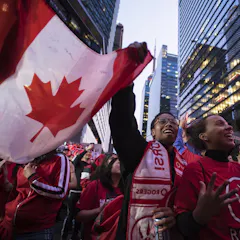
What does it mean to be a settler of colour in Canada? Has the symbolism of the Canadian flag changed since the Ottawa convoy?

Trying to convince people to trust the basic institutions of Canada and each other is not enough. Economic divisions create a trust divide that threatens Canadians’ way of life.

Regulating online hate speech can have unintended consequences, such as reinforcing right-wing narratives and further marginalizing vulnerable communities.

As COVID-19 continues to evolve, surprise, disappoint and frustrate us, efforts by politicians to pretend it’s behind us is a dangerous form of gaslighting that will deepen societal divisions.
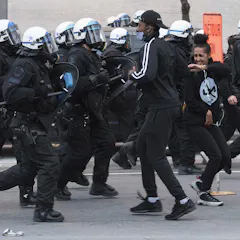
The large budgets allotted for urban policing must be reconsidered so that communities can explore safer alternatives.

Our freedom is limited as soon as our speech and behaviour become harmful to other people.

The “freedom convoy” was a culmination of years of persistent mobilization by far-right networks whose growth intensified as they digitally tapped into COVID-19 related grievances.

Long-term assessments of the trucker convoy will depend less on questionable interpretations of individual freedom and more on whether the state’s fundamental obligations were seriously threatened.
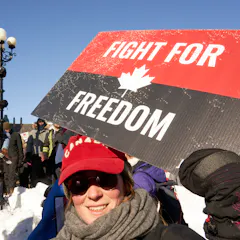
Framing vaccines as an infringement of liberty is a powerful tactic, but obscures health and political factors that may actually drive resistance.
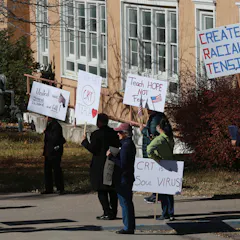
A vital step in achieving the kind of action and change that CRT proposes is for each of us to be intentional and steadfast in our convictions to dismantle racist and oppressive power structures.

The wave of protests across Canada against vaccine mandates are signs of growing tensions that the federal government doesn’t represent the views of many people. It’s time for election reform.
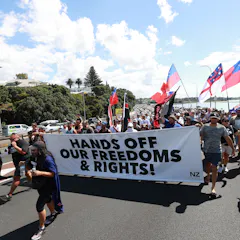
There is a difference between ‘negative liberty’ and ‘positive liberty’. Real freedom involves unavoidable trade-offs between the two.
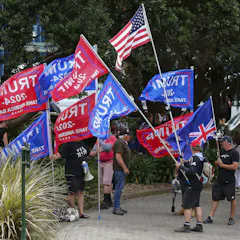
New Zealand has a high concentration of extremist alt-right groups relative to similar countries. The challenge now is to head off hate crime and violence.
Top contributors
-

Associate Professor of Disaster and Emergency Management, York University, Canada
-
Professor, Health Sciences, Simon Fraser University
-
Professor of Political Science, University of Calgary
-
Instructor, Legal Studies and Criminology, Kwantlen Polytechnic University
-
Professor, School of Public Policy and Administration, York University, Canada
-
Associate Professor, Political Science, University of Northern British Columbia
-
Assistant Professor, Political Science, University of Windsor
-
PhD Candidate, Political Science, Western University
-
Adjunct professor, Organizational Psychology, Adler University
-
Professor of Law, University of Waikato
-
Adjunct Professor, Natural Resource Institute (NRI), University of Manitoba
-
Associate Professor, Politics, Western University
-
PhD Candidate, Political Science, McMaster University
-
Professor of Communication Studies; Research Chair on Intersectionality, Violence and Resistance, Concordia University
-
PhD Candidate, Department of Sociology, University of Toronto