
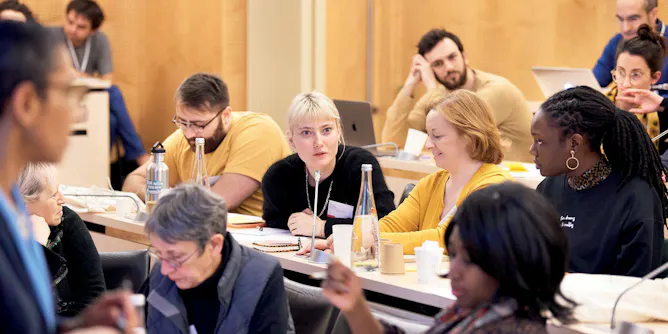
Decision-making bodies created by random selection, citizens’ assemblies are creating a sense of optimism about democracy among those who have heard about or taken part in them.
Articles on France
Displaying 301 - 320 of 1023 articles

The future of Nato, relations with China and cooperation over energy were all on the table as well as international trade.

Language-learning research in the Netherlands has determined that using a foreign language rather than just memorizing its grammar can transform how students progress.
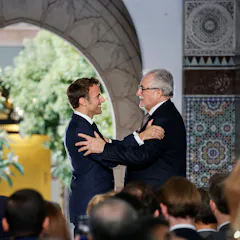
Liberal schools of thought largely inform how Muslims are viewed across Europe, research finds.
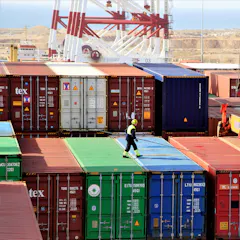
Despite gender equality progress being made in many male-dominated fields, some professions like longshoring are still difficult for women to break into.
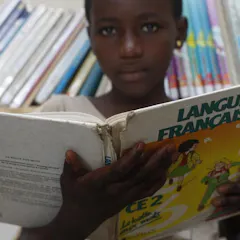
As a language of instruction, French has long held a prominent place in Senegal’s institutions and media. But Wolof, the most spoken national language, has regained its lost places.

French has historically been a language of human rights. That’s why the Québec government should promote it as a tool of a human rights-based civic education, not force it on newcomers.
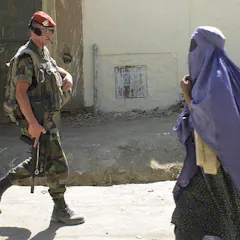
Pictures of women in war play a pivotal role in the battlefield of political ideas, argues a feminist historian who examines how images and attire are used and seen in war zones and occupied lands.

From electricity to X-rays, the Doppler Effect and even quantum theory, Proust’s writing is littered with physics references.

A different future will not be possible without reverence, respect, reciprocity and responsibility towards the Earth. On this issue, Indigenous Peoples have a lot to share.
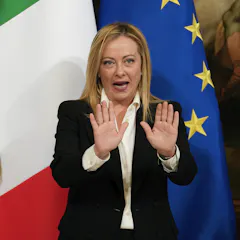
The so-called New Right is aiming for an ideological renewal of right-wing politics by focusing on cultural identity and the politics of belonging. Here’s why that’s so ominous.
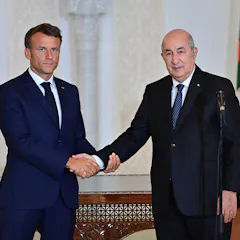
France’s ‘renewed partnership’ with Algeria may be less about exploring a difficult and painful past and more about pressing political concerns.

A recent French Senate report calling on a ban on alcohol use while hunting has prompted the wrath of the country’s hunting lobby. Do its arguments hold water?

Approximately 280 million people in the world suffer for depression. Despite this, the disorder remains poorly explained and is often difficult to treat. Ketamine could offer an innovative approach.

A teenage domestic servant showed signs of possession, and a miller was accused of witchcraft. Considering records of these events helps clarify what we can and cannot know about the past.

Region-level data from France indicate that some masters-level specialities dominated by women have low levels of remuneration once in employment.

France’s nuclear energy supply and public support schemes for households have in particular helped to limit the rise in prices.

Cultural omnivores are economically and culturally privileged people who can enjoy both “highbrow” and “lowbrow” cultural products, like good and bad coffee, simultaneously.

The era of hosting mega-sport events because they increase tourism may be over.
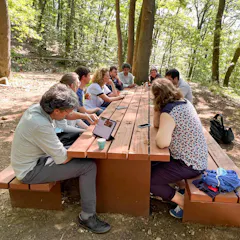
To think about new ways of transmitting science and to really innovate how we teach, the first step is creating an appropriate dialogue format. From there, everything becomes possible.
Top contributors
-

Associate Professor in French and Francophone Studies, University of Nottingham
-
Senior Lecturer in Politics, University of Bath
-
Senior Lecturer in International Relations and Politics, Aston University
-
Associate Professor, School of History, ANU / Chercheur Associé at the Centre d’Histoire de Sciences Po, Australian National University
-
Reader in French Studies, University of Warwick
-
Senior Lecturer in French and Francophone Studies, Bangor University
-
Associate professor in Politics and International Relations, Leeds Beckett University
-
Research Fellow at the University of the Free State, South Africa and Assistant Professor in the History of International Relations, Utrecht University
-
Historien, Université Clermont Auvergne (UCA)
-
Professor of Politics & Co-Director, Aston Centre for Europe, Aston University
-
Visiting Fellow, ANU Centre for European Studies and Department of Pacific Affairs, Australian National University
-
Professeur, UMR ISYEB (Institut de Systématique, Évolution, Biodiversité), Muséum national d’histoire naturelle (MNHN)
-
Dean of Programs, EM Lyon Business School
-
Professeur émérite de science politique, Sciences Po Grenoble, Auteurs historiques The Conversation France
-
Rédacteur en chef, coordination internationale et technique, The Conversation France