

Yvon Chouinard’s gift is unusual due to its structure but is also part of a trend. Many billionaires and large foundations are now funding these causes.
Articles on Foundations
Displaying 21 - 40 of 55 articles
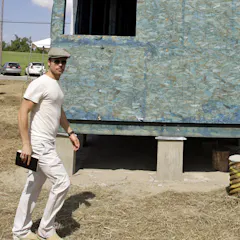
The low-income homebuyers who obtained these homes were deprived of the financial security they were promised. They’re now eligible for at least $25,000 in reimbursements for repairs.
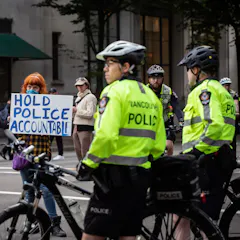
The greedy tendencies of police departments help illustrate why public police funding is a major problem today in Canada and the United States.

This growing trend aims to shift some of the power funders typically wield to the groups getting their money.

Decades of data indicate that over time, the foundations gave less to the founder’s own community and religious causes. But the share of their donations supporting social movements rose.

Asking for input is more common than letting stakeholders help set a foundation’s priorities or giving them any say where grant money flows.

The investor has already given much of his fortune to charity and has pledged to donate nearly all of the rest.

Two scholars of philanthropy and geography who reviewed the numbers see cause for concern about the agility and priorities of grantmakers during a crisis.

For every 0.1°C rise in temperature, the number of sinkholes increases by 1 to 3%.
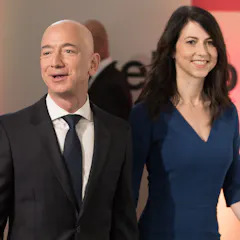
While support for social services and historically black colleges and universities rose sharply, these donors spent a tiny fraction of what the government distributed to people who needed help.

Nonprofits are being forced to do more with less money, which may force many of them to close within the next couple of years.
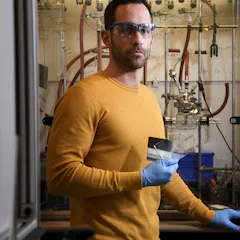
Similar arrangements already support the National Park Service, the National Institutes of Health and other federal agencies.

Due to a ‘once-in-a-century crisis,’ five big foundations are spending more of their assets on grants than usual. Some are issuing bonds to finance their extra support for nonprofits.
It’s too soon to say what will happen with philanthropy in 2020, but looking at 2019 may offer some clues.

In past recessions, donors have tightened their pursestrings even as the need has grown. But two scholars explain why, at least for foundations, there’s room for more generosity in tough times.
Under a settlement reached with New York authorities, he must give US$2 million to nonprofits out of his own pocket. And if he wants to start another foundation, Trump must submit to close supervision.
Congress can fix this by updating the tax code.

The $4 billion that foundations are pledging to spend within five years amounts to less than 1 percent of what businesses and governments spend on global warming every year.
Without credible news and information, a healthy democracy is not possible.

When organizations dedicated to doing good make money their top priority, they get into trouble.
Top contributors
-

Interim Director of Data & Research Partnerships at the Lilly Family School of Philanthropy, Indiana University
-
Professor of Accounting, The Ohio State University
-
Professor of Law, University of Pittsburgh
-
Associate Director of Research, Lilly Family School of Philanthropy, and Managing Editor, Giving USA, Indiana University
-
Honorary Fellow, UTS Business School, University of Technology Sydney
-
Professor of Public Administration, Binghamton University, State University of New York
-
Glenn Family Chair Emeritus of Economics and Philanthropic Studies, Indiana University
-
Doctoral candidate in Public Policy and Management, University of Washington
-
Professor of Law, Loyola University Chicago
-
Professor and Shapiro Chair of Public Policy and Public Administration, Trachtenberg School, George Washington University
-
Professor of Economics, Public Policy and Public Administration, and International Affairs, Associate Director, Trachtenberg School, Co-Director: George Washington University Regulatory Studies Center, George Washington University
-
Professor, School of Communication; Executive Editor, Investigative Reporting Workshop, American University School of Communication
-
UNESCO Chair in AI Ethics & Governance, IE University
-
Professor of Law and Director of the Center for Professional Ethics, Case Western Reserve University
-
Professor of Philanthropic Studies, Indiana University