
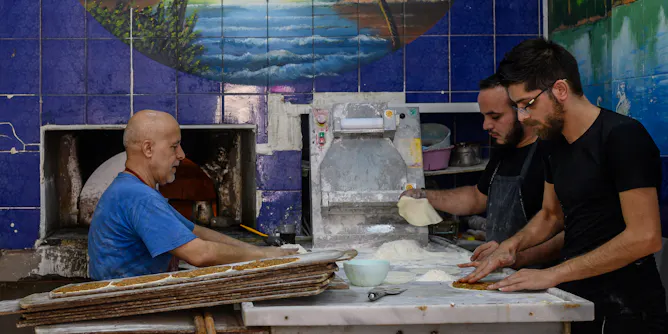
Research into these entrepreneurs may carry lessons for societies and governments around the world.
Articles on Forced migration
Displaying all articles
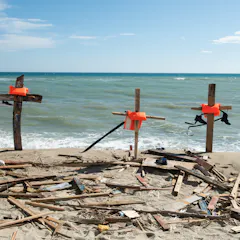
New tech tools are more intrusive and subtler than physical barriers. They invade migrants’ privacy and are a threat to personal security.
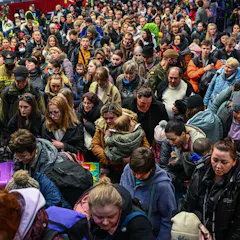
Putin has a history of forcing civilians to migrate during a conflict, part of a broader strategy to overwhelm other countries with new refugees and destabilize their economies.

Refugee camps should only be a temporary solution. They’re no place for ongoing health care.
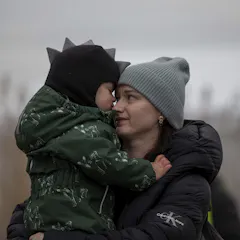
Children live through the same wars as adults. The effects of the Russian invasion of Ukraine on children will have long-lasting effects, and underscores the urgency of a peaceful resolution now.

Gurnah’s novels delve deeply into family separation, endless betrayals of core familial relations, and the inexorable pull of the lost past.

Climate change is a true existential threat for small island nations, but the US has done little to help the Marshall Islands, which it administered for decades.

New research with survivors of sexual violence who have been forced to migrate reveals difficulties of COVID-19 lockdowns.
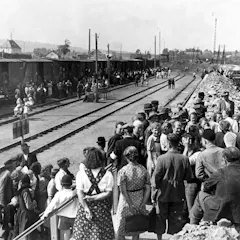
After World War II ended in Europe, millions of ethnic Germans faced an uncertain future. The political repercussions of their expulsion continue even today.

Nicaragua has exploded in violence since mass protests began against President Daniel Ortega in April, with hundreds dead and thousands wounded. Amid such chaos, criminal violence is likely to follow.

The transition into adulthood is challenging for young refugees: they face great adversity while trying to finishing school, find work and enter marriage.

A damning inquiry has revealed the extent of the abuse suffered by British children sent abroad between 1920 and 1970. But it skirts around Aboriginal cultural genocide.
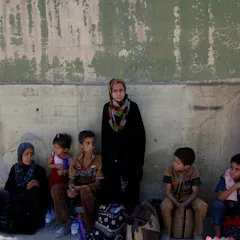
The scale of contemporary forced human displacement is unprecedented and difficult to comprehend. The United Nations High Commission for Refugees (UNHCR) has just reported staggering statistics. As of…
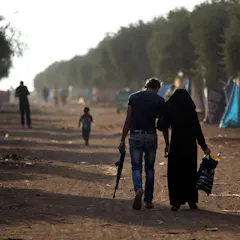
Syrian refugees have been banned from the US for the next 120 days. Whatever happens next, the country they are fleeing will never be the same again.
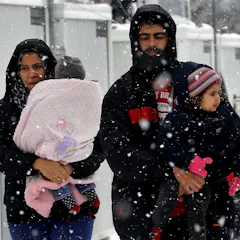
The 60,000 people currently stuck in Greece will probably have to stay there. The EU should help them integrate.
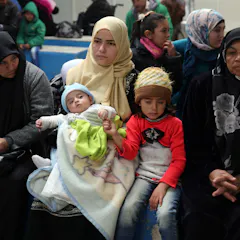
With the many interconnected conflicts within Syria continuing, and with routes to safety increasingly blocked, what can Syria’s 4.8m refugees expect in this ‘new’ year?
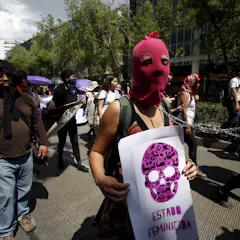
More than 44% of Mexican women face violence in their homes. Some of them become asylum seekers in the United States.
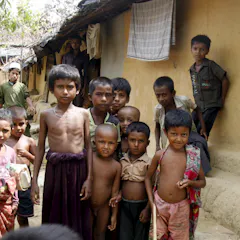
Unless managed more effectively, forced migration will have permanent and intensifying negative impacts on countries across the globe.
Top contributors
-

Researcher, Research Centre for Politics, Indonesian Institute of Sciences (LIPI)
-
Post-Doctoral Researcher, University of Dundee
-
Associate Professor and Head of Humanitarian Research Program, Australian National University
-
Honorary Enterprise Professor in the School of Social and Political Sciences, The University of Melbourne
-
Professor in Human Rights and International Law, University of Newcastle
-
Lecturer in Emergency Management, University of Tasmania
-
Visiting Fellow, Crawford School of Public Policy and Visitor, Regnet School of Regulation and Global Governance, Australian National University
-
Lecturer in law, University of Newcastle
-
Deputy Chief Executive, Institute of Strategic and International Studies
-
Assistant Professor of International Affairs, Qatar University
-
Canada Excellence Research Chair in Migration and Integration, Toronto Metropolitan University
-
Postdoctoral Scholar, University of California, Santa Barbara
-
Director of the International PhD Program in Human Rights and Peace Studies, Institute of Human Rights and Peace Studies, Mahidol University
-
Professor of Migration and Refugee Studies and Co-Director of the Migration Research Unit, UCL
-
Director of Research, Florida International University