
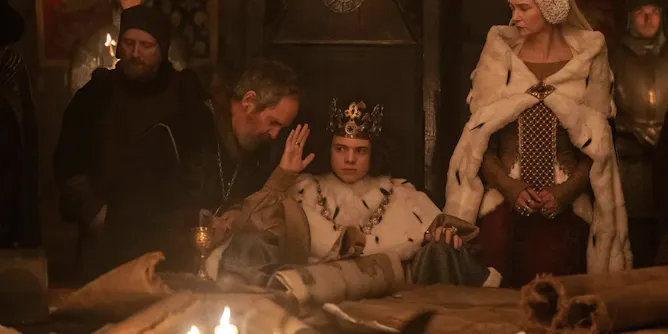
The English Peasants’ Revolt of 1381 wasn’t an isolated outburst. Across medieval Europe, ordinary people challenged the authority of rulers who failed to live up to their end of the bargain.
Articles on Florence
Displaying all articles
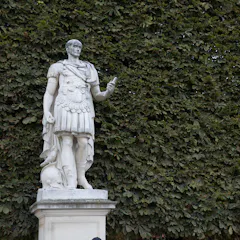
Renaissance philosopher Niccolò Machiavelli dissected the threats authoritarian figures pose to representative government.

The baby drop box is a revival of centuries-old cultural practices from the Italian Renaissance when reproductive rights were zero.
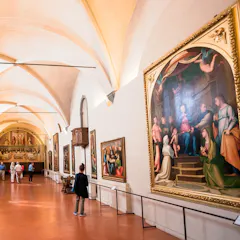
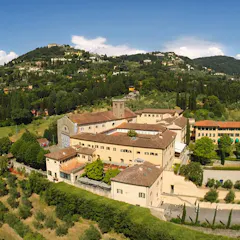
The Renaissance San Marco convent, now a museum, is where Fra Angelico lived and painted under the patronage of Cosimo de’ Medici. It was also where Savonarola proclaimed the Bonfire of the Vanities.
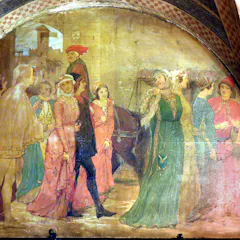
Written between 1348 and 1353, the Decameron is a prescription for psychological survival, a way of mentally distancing from today’s death counts and grim economic forecasts.
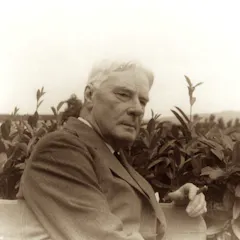
There’s a reason many today have never heard of Norman Douglas: After his death, more and more came forward with stories of his sexual relationships with boys, and he soon faded into obscurity.
For the UK government, the symbolism of leaving an institution associated with the EU seems to trump all other considerations.
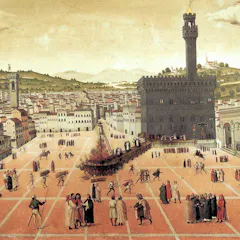
In 1497 Girolamo Savonarola burned books and art in Florence in the most infamous act of European cultural desecration. A year later, he met the same fate.

Pearls of wisdom for a prince will serve a prime minister, too.
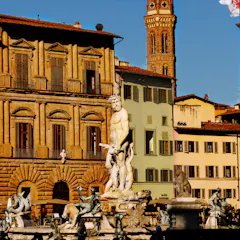
With such a colourful political past, the British prime minister will be hoping for a show of substance in choosing the Tuscan city.
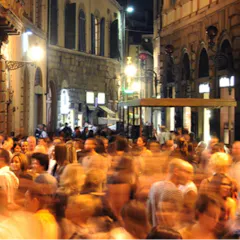
One person’s high density may be another’s sprawl; the same tall building may be experienced as oppressive or exhilarating; a “good crowd” for one can be “overcrowded” for another.
Top contributors
-

Directeur d'ESPOL, Professeur de Science Politique, Institut catholique de Lille (ICL)
-
Honorary Professor, Edith Cowan University
-
Teaching Fellow, School of European Languages, Culture & Society, UCL
-
Senior Lecturer in Urban Planning and Urban Design, The University of Melbourne
-
Professor of Architecture and Urban Design, The University of Melbourne
-
Assistant Professor of Art History, OCAD University
-
Associate Professor in Writing Studies, Discipline of English and Writing, University of Sydney
-
Joanna Mendelssohn is a Friend of The Conversation.
Honorary Senior Fellow, School of Culture and Communication, The University of Melbourne
-
Professor of History, University of Victoria
-
Professor of Political Science, Tufts University
-
Professor Emerita of Medieval History, University of Rhode Island