
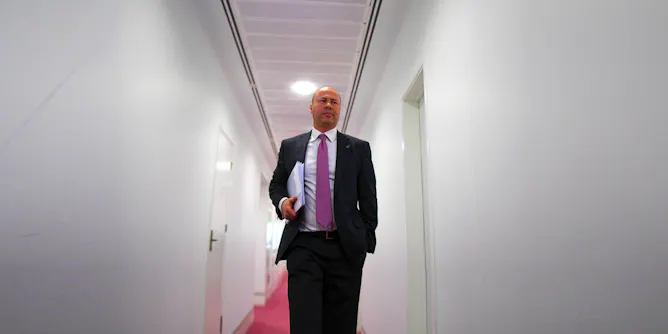
The government has done a good job so far, but it will have to direct future support to the Australians most likely to spend.
Articles on Fiscal policy
Displaying 41 - 60 of 107 articles

Easing off when the unemployment rate is 6% would leave us worse off than we’ve been in decades.

With their different but equally conservative income tax policies, both Labour and National ask voters to consider their own appetite for risk.

While those on the left, right and middle worry about the federal deficit, the real world that we live in is in trouble. The fiscal prudes are fretting about the wrong issues.

The Reserve Bank Australia has exhausted the limits of monetary policy, There’s no magic pudding, says governor Philip Lowe.

He is trying to transition out of stage one while drawing up stage three.

As state and local governments lure businesses to their shores with financial incentives, a recent study finds that two forms of stimulus spur growth more than others.

There are two key questions regarding Canada’s fiscal sustainability during the pandemic. Can we afford to provide short-term financial support to Canadians? And how quickly will our economy recover?

We’re running out of interest rates to cut to keep the economy from sinking. Before the next recession occurs, we need to come with an effective approach to monetary policy.
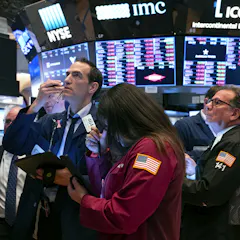
The Fed slashed interest rates to near zero but, just as in 2008, it will require unprecedented action to calm panicky markets.

The Fed and Congress have little ammunition available for fighting an economic downturn if COVID-19 triggers one.
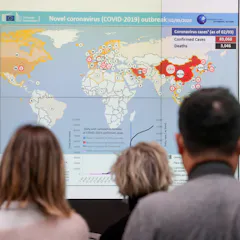
The US Fed’s surprise rate cut might not achieve a lot. But it definitely sends a message the COVID-19 virus crisis is a really big deal.

Modern Monetary Theory allows governments more freedom to run deficits, freedom the Australian government might need.
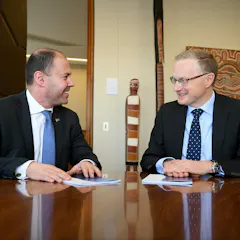
Every one of the 13 economists surveyed by The Conversation thinks more stimulus is needed. None think it should all come from the Reserve Bank. Most think the budget surplus can wait.

Ross Gittins on the government’s “surplus obsession”
The Conversation, CC BY29.3 MB (download)
As the Australian economy continues to struggle, many argue that stimulus is needed, urging the government to abandon its "surplus obsession".

In many countries people are now paying more for bonds than they will receive at maturity. These negative interest rates should make it a good time for investment.
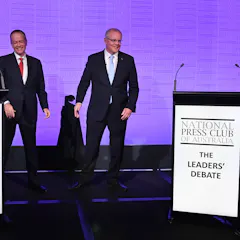
The state of budget-balance fetishism in Australia means political leaders promise to balance the budget, no matter what.

Last time Australia got lucky. We are unlikley to get lucky again.

When an elected leader turns autocratic, the economy tends to suffer. That’s because, in a functioning democracy, economic policy is made jointly, with lawmakers playing a key role.

South Africa’s President, Cyril Ramaphosa, needs to quickly address key challenges to restart the economy.
Top contributors
-

Scientia Professor of Economics, UNSW
-
Professorial Fellow, University of Canberra
-
Professorial Research Fellow, Melbourne Institute, The University of Melbourne
-
Senior lecturer, Canberra School of Government, University of Canberra
-
Associate Professor, School of Economics, University of Sydney
-
Professor of Economics, University of Canberra
-
Dean of Business School, University of Southern Queensland
-
Associate Professor, Torrens University Australia
-
Professor of Economics, University of the Western Cape
-
Industry Professor, University of Technology Sydney
-
Emeritus Professor of Economics (Griffith University) and Teaching Associate (University of Queensland), Griffith University
-
Lecturer, Public Sector Finance, University of Canberra
-
Program Director, Trade and Investment, United States Studies Centre, University of Sydney
-
Professor of Economics, Monash University
-
Professor of Economics, City St George's, University of London