
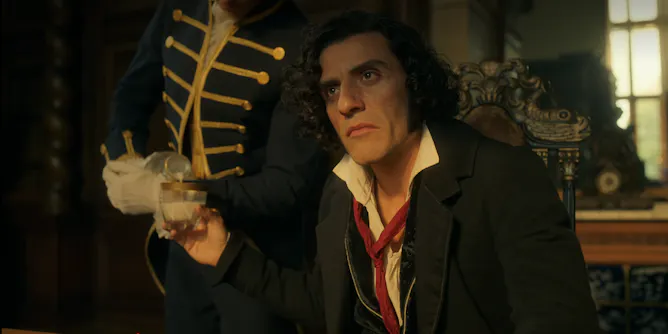
Despite its original association with purity, it has become somewhat of a trope to put the humble milk glass in the hands of the ‘bad guy’.
Articles on Film theory
Displaying all articles
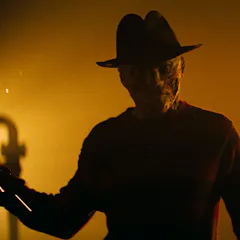
For decades, various kinds of disability have been used as ‘scary’ metaphors in horror. But a new wave of filmmakers is challenging this problematic framing.

In 1975, Laura Mulvey wrote an essay that reshaped feminist film theory. Its ideas still echo today, in every slow-mo entrance and lingering camera shot.
Great film directors can create and convey philosophical concepts through imagery, just as great philosophers do through language.

POV shots can be extremely effective, presenting an entirely new way of looking at a character, or their motivations.

A new book explores the enormous Alien franchise spawned by the 1979 film.

It would be easy to interpret the Wachowskis’ films as innately trans, but in doing so, we might be relying too heavily on auteur theory.
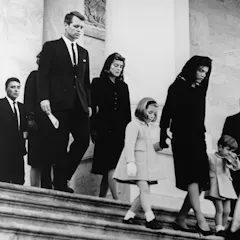
The process of coming to terms with a loss is central to these films, which are aching and inventive renderings of complex feelings and moments.
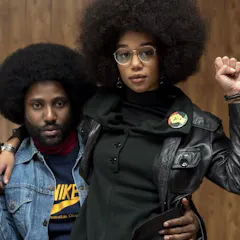
BlacKkKlansman is more than a good story: it expertly weaves together comedy with serious drama to bring the story of past racism to illuminate our present day issues.
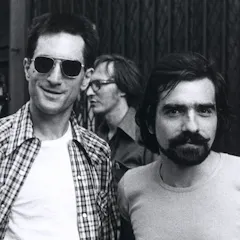
From ‘Mean Streets’ to ‘Vinyl’, from The Ronettes to The Clash, music has long been a muse to film director Martin Scorsese. He plays it on set, conceives sequences with certain songs in mind and uses it to chart his characters’ changing fortunes.
Top contributors
-

Associate professor in Cinema and Media Studies, RMIT University
-
Professor, Departments of English Langauge and Literature & Communication Arts, University of Waterloo
-
Lecturer, Department of Literature Film and Theatre Studies, University of Essex
-
Academic Tutor in Media and Communications, Swinburne University of Technology
-
Professor of Film Studies, Bangor University
-
Lecturer in Film and Television, University of Bristol
-
Teaching Associate in Media and Cultural Studies, University of Nottingham
-
PhD Candidate in Philosophy, Deakin University
-
Senior Lecturer in Creative Industries & Chief Investigator at QUT Digital Media Research Centre (DMRC), Queensland University of Technology
-
Associate Professor of French Studies, Adelaide University
-
Professor in Internet Studies, Curtin University
-
Research Fellow, School of Media, Creative Arts and Social Inquiry, Curtin University
-
PhD Candidate, School of Humanities, The University of Western Australia