
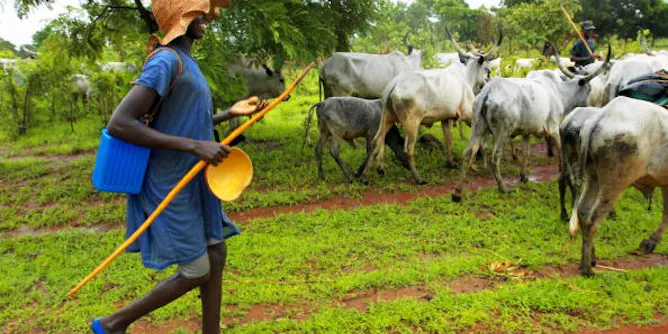
Farmer-herder conflict is taking its toll on productivity in northern Nigeria. Efforts to solve this problem must include all stakeholders and take into account their concerns.
Articles on Farmer-herder conflict
Displaying 21 - 32 of 32 articles
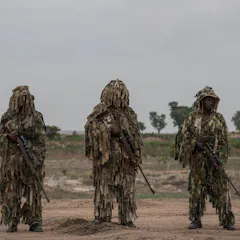
The atrocities and motivation of bandits have assumed insurgent-type criminality. But the Nigerian government is reluctant to label them terrorists or insurgents.
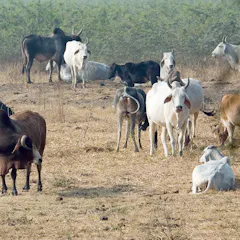
Critics have said that ranching is environmentally unsustainable because it results in land degradation. There are other reasons it’s not the solution.
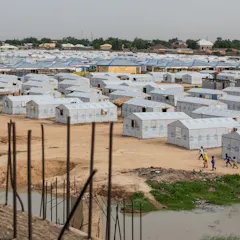
They do menial jobs but also trust in God as a coping strategy.
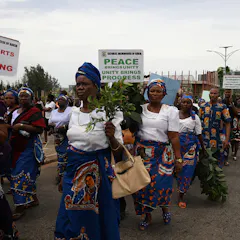
The absence of support from government leaves communities to determine independently how to move forward, what works, and what is sustainable.
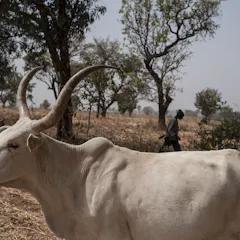
Institutional problems make it difficult to satisfy livestock and crop farmers’ interests, already in contest over agricultural resources.
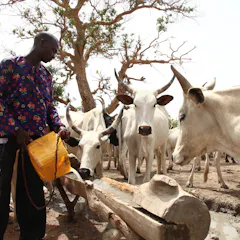
Clashes between farmers and herders in Nigeria have their roots in history and an overriding arc of insecurity, but new challenges are contributing to the problem.

Beyond the struggle for land and water, new triggers of conflict between farmers and herders have emerged in northern Nigeria.
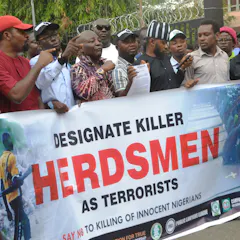
Clashes between farmers and herders in Nigeria have been bloody and protracted, with one side portrayed as victims. But as this study shows, both sides are victims.
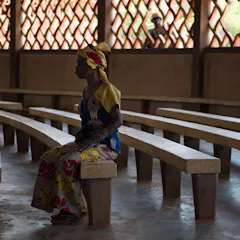
Bad governance and political manoeuvring increase the risk of communal conflicts
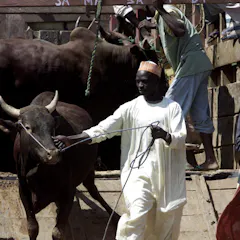
Northern Nigeria’s cattle rustling problem is aggravated by the regions ungoverned forests.
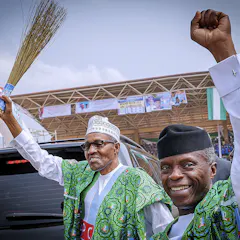
In the end, Buhari possibly won simply because the Peoples Democratic Party wasn’t offering a viable alternative.
Top contributors
-

Lecturer, University of Northampton
-
Leverhulme Early Career Research Fellow, Aston University
-
Research Fellow, Obafemi Awolowo University, Regional Coordinator, Institute for Security Studies
-
Professor of Sociology (Criminology, Victimology and Security Studies), University of Ibadan
-
Lecturer in Political Economy of Violence, Conflict and Development, SOAS, University of London
-
Reader (Associate Professor) Department of Political Science, Federal University of Lafia, Nigeria, Federal University Lafia
-
Researcher, University of Ibadan
-
PhD Candidate in Political Science, University of Oslo
-
Lecturer, Land Management and Land Tenure, University for Development Studies
-
Visiting Scholar in the Department of Political Science and also affiliated to the Centre of Governance Innovation (GovInn), University of Pretoria
-
Research Fellow, International Institute of Social Studies
-
Research fellow, French Institute for Research in Africa, University of Ibadan
-
Senior lecturer, University of Chicago
-
PhD candidate and Research Fellow, University of Ibadan
-
Associate professor, Uppsala University