

New research into the communities of support for Australian families show the benefits of social connection – but some are missing out.
Articles on Family policy
Displaying all articles

While the traditional two-parent two-child family might be the first to spring to mind, Australia’s families are varied. Policy should cater accordingly.

In the 1940s, Britain’s nascent welfare state was designed around male financial responsibility for their families – unmarried mothers were intentionally disregarded.

Childcare subsidies give mothers the choice to work and help reduce the earnings gap between mothers and fathers. In time, it may lead to greater acceptance of working mothers for future generations.
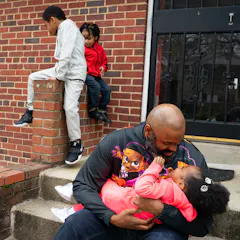
A fatherhood researcher argues that US work policies, income inequality, gender attitudes and health care all make it harder for dads to be highly engaged at home.

Scandinavian welfare states have made it easier for women to reconcile family and career. What’s odd is that Anglophone nations aren’t far behind.

More attention needs to be paid to aligning South Africa’s family policy with the realities of everyday life.
Top contributors
-

Senior Research Fellow, Social Policy Research Centre, UNSW
-
Senior Research Fellow, Social Policy Research Centre, UNSW
-
Research Fellow and Director of Widening Participation, Lancaster University
-
Associate Professor of Sociology and Director of Canadian Studies, Brigham Young University
-
Postdoctoral research fellow, University of Sydney
-
Professor of Economics, University of Bristol
-
Marian Baird is a Friend of The Conversation.
Professor of Employment Relations, University of Sydney
-
Professor of Social Policy, UNSW
-
Associate professor, University of Johannesburg
-
Postdoctoral fellow, Social Policy Research Centre, UNSW
-
Professor of Social Development Studies, University of Johannesburg