

There are many ways to decide what’s ‘fair’ in a given situation. Which one you prefer may depend on what kind of person you are.
Articles on Fairness
Displaying 21 - 40 of 44 articles

Cognitive neuroscientists use brain imaging and behavioral economic games to investigate people’s sense of fairness. They find it’s common to take care of yourself before looking out for others.

When a decision is made and people don’t get the outcome they want, they often tend to see it as unfair. Here’s why.

Unfairness alone is upsetting enough to drive people to punish lucky recipients of unfair outcomes.

We all think we want equality, but in reality it’s often fairness that is more important to us.

Without genuine global leadership the ability of economies to “build back better” after the disaster caused by COVID-19 will unfairly favour wealthier populations and nations.

Lockdown requires that we all act as if we know nothing, even if we are world experts on disease transmission.
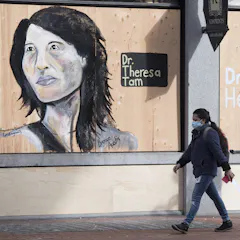
Politicians and public health officials appeal to our sense of fairness in requesting the public’s co-operation in controlling the pandemic. But COVID-19 doesn’t affect everyone equally.
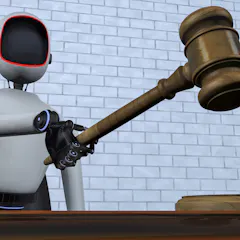
A machine learning expert predicts a new balance between human and machine intelligence is on the horizon. For that to be good news, researchers need to figure out how to design algorithms that are fair.
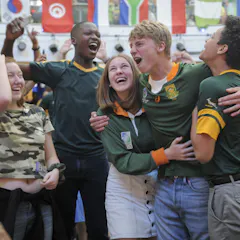
Unity for the wrong reasons reduces social cooperation to whatever happens to benefit a particular person or group, making it a zero-sum game.
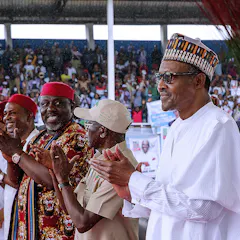
There are question marks over whether Nigeria’s upcoming elections will be credible.

Schadenfreude seems to arise out of envy and a sense of justice. But some psychologists believe a darker impulse is at play.

Unrealistic expectations about what commissions can achieve comes from the fact that they’re often confused with courts of law.
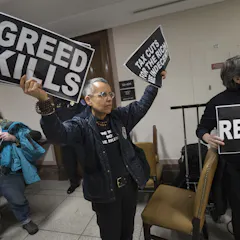
Far from dispelling the notion among Americans that the system is ‘rigged’ against them, Republican tax plans are more likely to make matters worse.
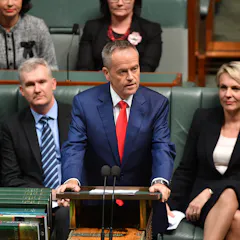
Labor needs to convincingly discredit the 2017 budget to the point that the government cannot use it to help restore its standing in the eyes of voters.

Researchers have come up with a new way to make sure each partner in a business gets their fair share when they decide to split.

Algorithms can discriminate, even when their designers don’t intend that to happen. But they also can make detecting bias easier.

In sports, what’s considered fair play has changed throughout history. At one point, even looking ‘too poor’ was grounds for exclusion.

As technology becomes fully integrated into our everyday lives, we may see athletes as the last vestiges of our humanity.
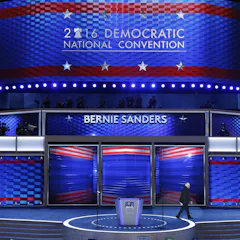
Bernie Sanders may have endorsed Hillary Clinton, but politics as usual has had its day. It’s time for progressivism to move fast.
Top contributors
-

Visiting Researcher, University of Huddersfield
-
Associate Professor in Public Law, University of Cape Town
-
Lecturer in Public Policy, University of Michigan
-
PhD Student in Mathematics, University of Illinois Chicago
-
Senior Lecturer, Durham University
-
Senior Project Manager, Murdoch University
-
Bernard A. Galler Collegiate Professor of Electrical Engineering and Computer Science, University of Michigan
-
Research Associate, Southern Centre for Inequality Studies, University of the Witwatersrand, University of the Witwatersrand
-
Professor of Economics at New York University Abu Dhabi and Distinguished Research Professor, University of Technology Sydney
-
Professor of Economics, University of Alabama
-
Professor of History and Politics, School of Humanities and Social Inquiry, University of Wollongong
-
Research Fellow at the Centre for Human Evolution, Cognition, and Culture, University of British Columbia
-
Professor Emeritus of Public Law, University of Cape Town
-
Vasti Roodt is Associate Professor and Head of PROSPER (Promoting Social and Political Ethics Research) in the Department of Philosophy, Stellenbosch University
-
Professor of Management, University of Essex