
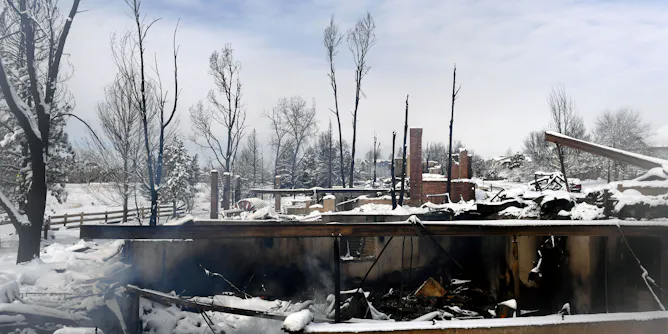
If fossil fuel companies misled the public about the dangers of their products, should they be required to pay for damages from climate-related disasters?
Articles on ExxonMobil
Displaying 1 - 20 of 52 articles

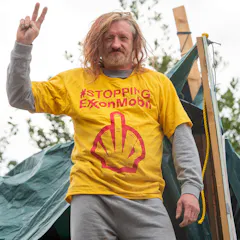
When companies are hit by activists, managers of competitors may fear that their company’s reputation would suffer if their turn comes next.

One law generally shields foreign governments and companies they own from lawsuits in US courts. Another lets many Cuban cases proceed, according to a new ruling.
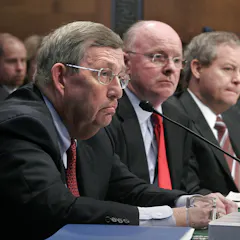
At the heart of combating misinformation is critical thinking and recognizing when you’re being spun for corporate profit.
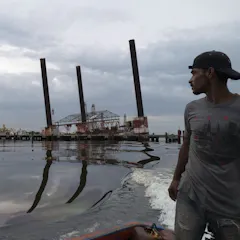
US oil companies have never stopped investing and operating in Venezuela’s petroleum industry, despite many changes in the terms of their engagement.

The US has obstructed climate action for decades – largely due to damaging actions by the powerful fossil fuel industry. But Australia has a chance now to lead.
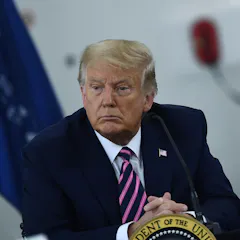
The climate policy pendulum is swinging back again with Trump in office. Money, lobbying and talking about red vs. blue states all play a role in the political and public divide.
The US majors have been doing a much better job of forecasting where oil demand is heading.

Louisiana’s governor made it easier for companies to receive property tax breaks – and schools will likely pay the price.

An estimated 95% of US cities provide economic development tax incentives to woo corporate investors, taking billions away from schools.

An estimated 95% of US cities provide economic development tax incentives to woo corporate investors, taking billions away from schools.
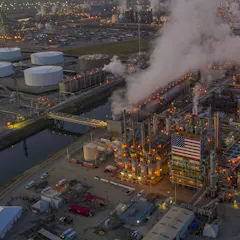
California is the world’s fifth-largest economy. Laws tested there often spread across the U.S. and around the world.
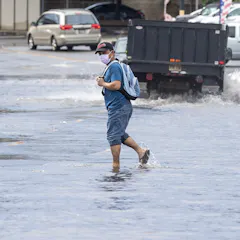
Honolulu, Baltimore, Charleston, S.C. and several other cities harmed by rising seas and extreme weather are suing the oil industry. At stake is who pays for the staggering costs of climate change.

An alternate timeline that ends with a Nobel prize for Exxon’s CEO.
Businesses can spend huge amounts of money to influence Congress. But sizable lobbyist and campaign donations also go to state campaigns and lawmakers to influence policymaking.

Sustainable investing’s credibility took a hit when the S&P 500 ESG index dropped the electric vehicle-maker but kept the oil giant. The SEC is now considering new disclosure rules.

Buyers are avoiding Russian oil in response to the war in Ukraine. Can smaller producers leverage this moment to strike favorable deals with big oil companies?
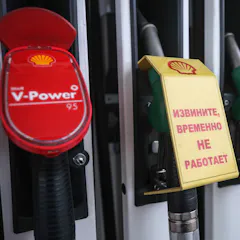
The world’s largest energy companies are used to doing business in risky places with difficult partners. But with war in Ukraine, preserving their reputations outweighs profits.
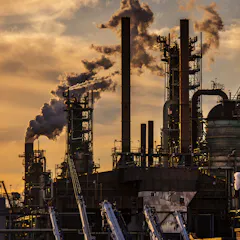
Transcripts and internal documents show how the industry shifted from leading research into fossil fuels’ effect on the climate to sowing doubt about science.
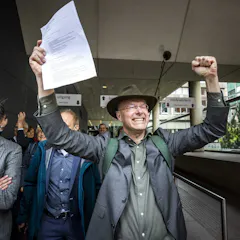
To date, courts have often been reluctant to interfere in what is viewed as an issue best left to policymakers. These recent judgements, and others, suggest things are changing.
Top contributors
-

Director, Energy, Climate Justice, and Sustainability Lab, and Research Professor, New York University; Tufts University
-
Distinguished Emeritus Professor of Management, University of California, Davis
-
Professor of Government, The University of Texas at Austin
-
Professor of Law Emeritus, Vermont Law & Graduate School
-
Professor of Education Policy & Law; Director of the National Education Policy Center, University of Colorado Boulder
-
Assistant Professor of Landscape Architecture & Urban Planning, Texas A&M University
-
Freelance Reporter and Editor, The Conversation
-
Professor of Psychology, Biological Sciences and Environmental Studies, USC Dornsife College of Letters, Arts and Sciences
-
Assistant Professor of Government and International Affairs, Augustana University
-
Professor of Sustainable Science, Technology and Commerce and Business Economics, University of Michigan
-
Assistant Professor of Management, DePaul University
-
Jim Moran Professor of Strategic Management, Florida State University
-
Senior Research Fellow, Melbourne School of Psychological Sciences, The University of Melbourne
-
Professorial fellow, Monash University
-
Professor of Law, The University of Texas at Austin