

The US and its allies have long used violence and ‘targeted killings’ to further their foreign policy aims.
Articles on Extrajudicial killings
Displaying 1 - 20 of 32 articles
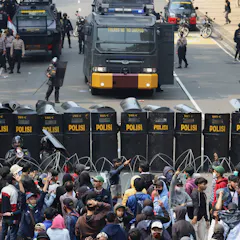
Large-scale protests occur few times in Indonesia aimed at parliament. But police use excessive force to disperse mass, killing a civilian.

Kenya now needs to rethink its approach by targeting police funding to improve the poor working environment.
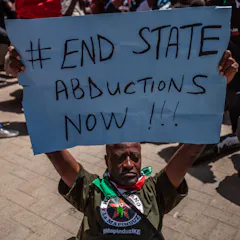
Citizens considered a threat to the government’s survival have become targets for enforced disappearances.
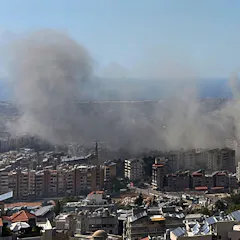
As the ground war in Lebanon heats up, how did it happen and where might it all end up?
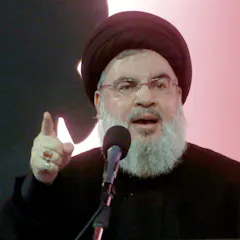
Over the past two decades, the west has begun to present these extrajudicial killings as ‘justice’ with scant regard for international law.
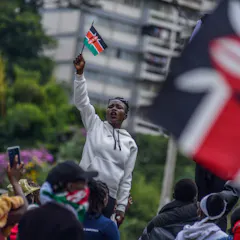
Significant transitions in Kenya have occurred through the voices of the masses rather than formal political structures.
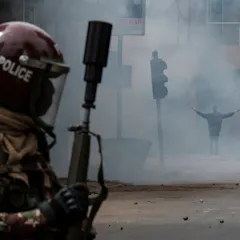
Reforms have failed to transform an authoritarian police force into a democratic one.

Due to limited interactions with the police, Kenyans in rural areas are less likely to see the police as relevant actors.
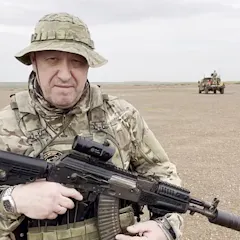
Russia is not interested in helping Africa to prosper or achieve stability, but as a theatre for advancing the Kremlin’s geostrategic interests.

Intelligence reports offer information that can avert threats to national security or promote national interests.
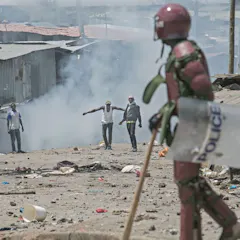
Political protests in Kenya have become insular, sectarian, tribal and unashamedly personality driven.

Alternatives to violent policing already exist in the daily practices of Nairobi residents who don’t depend on the police for safety.
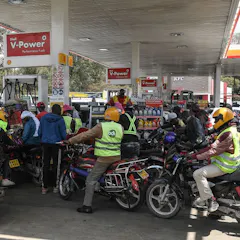
With Uhuru Kenyatta leaving office to make way for a new leader, it was always going to be an eventful year for Kenya.

To move towards justice and peace, Kenya must disband all police units implicated in unlawful violence and punish criminal officers.
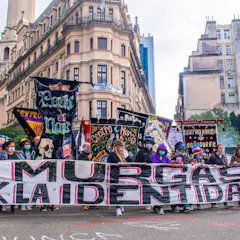
Instigated by multiple governments in South America, Operation Condor resulted in hundreds, potentially thousands, of human rights violations and extrajudicial killings.

The study highlights the flimsy boundaries between different forms of violence: torture and extrajudicial punishment, lawful arrest, and an unlawful kidnapping.

All terrorism in the region has domestic origins but is linked to regional and international events.
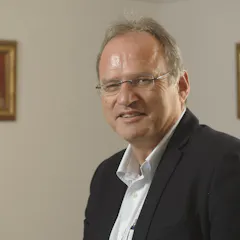
From his positions at the United Nations, Professor Heyns made a huge impact on the protection of the right to life and the right of peaceful assembly.
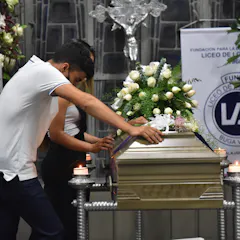
Despite a landmark deal in 2016 which brought an end to five decades of conflict, an upsurge in mass killings is threatening peace in Colombia.
Top contributors
-

Professor in Inclusive Education, Hague University of Applied Sciences
-
PhD Candidate, Justice Studies, Charles Sturt University
-
Adjunct Associate Professor, Departnent of Social Sciences, Pwani University
-
Lecturer in Criminology, Edith Cowan University
-
Research Fellow, Institute of Arab and Islamic Studies, University of Exeter
-
Lecturer and Teacher, Department of Politics and International Relations, Cardiff University
-
Professor of Politics & Head of the Department of Asian and International Studies, City University of Hong Kong
-
Dean of the Faculty of Law, Universitas Katolik Indonesia Atma Jaya
-
Research fellow, Thammasat University
-
Reader (Associate Professor) Department of Political Science, Federal University of Lafia, Nigeria, Federal University Lafia
-
Adjunct Professor, Roosevelt Public Policy Institute at Hunter College, City University of New York
-
Assistant researcher, University of Sydney
-
International Relations Scholar, University of the Witwatersrand
-
Lecturer in International Politics, University of Stirling
-
Associate Professor, Centre for Deliberative Democracy and Global Governance, University of Canberra