
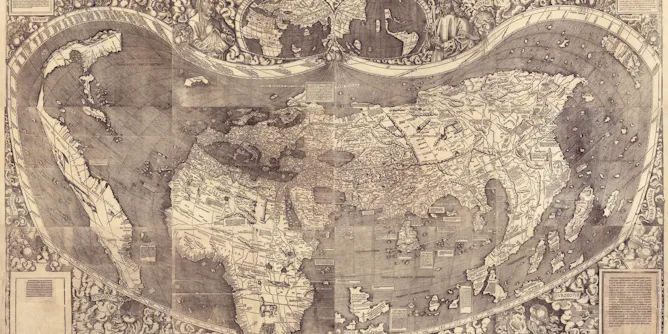
The International Geography festival puts Saint-Dié on the map, but its map-making history dates back to the early 16th century, when the French town in the Vosges was a hotspot for scholarly geographical research.
Articles on Explorers
Displaying all articles
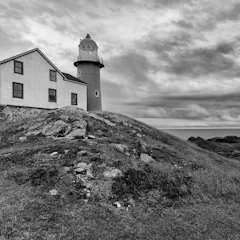
Women’s presence in ‘the wild’ has always been contested, in myth, storytelling and sexist attitudes in the media that persist to this day.
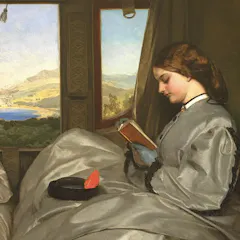
Before GPS, maps weren’t just functional – they were part of the adventure.
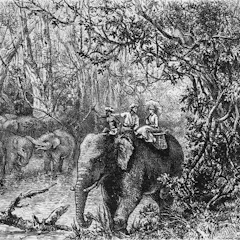
In the 19th century, several English women wrote accounts of their world travels. While considered by some as second-rate travellers, they were just as restless as their male contemporaries.

The new discovery echoes a mission in 1931, when a five-day zeppelin flight sent robots to the stratosphere and redrew the maps of the high Arctic.
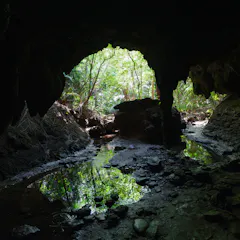
Caves form over millions of years, as a result of flowing water slowly working away at ‘soft’ calcareous rock.
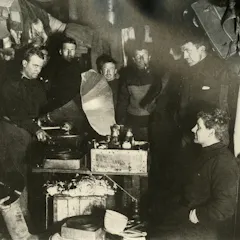
A strong mind was key to surviving the monotony faced by Antarctic explorers enduring the isolation of long, remote winters.
Travel and philosophy have enjoyed a quiet love affair for centuries.

Christopher Columbus’ 1492 voyage was really a journey into the unknown. Centuries of conventional wisdom had conditioned him to believe that bizarre beasts and ‘monstrous men’ would be awaiting him.
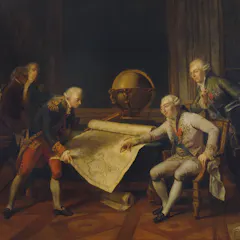
The French La Pérouse expedition left Botany Bay in 1788, and then vanished, rumoured to be wrecked in the Solomon Islands. But an Indian newspaper article might reveal the fate of its survivors.
Top contributors
-

Honorary Senior Lecturer, School of Culture, History and Language, Australian National University
-
Distinguished Professor and Professor of the Humanities, USC Dornsife College of Letters, Arts and Sciences
-
Lecturer in Hydrogeology, School of Environmental and Life Sciences, University of Newcastle
-
Profesora y Coordinadora de las Especialidades de Lengua Extranjera y Lengua y Literatura Española en el Máster Universitario de Profesorado de la Universidad Internacional de Valencia (VIU), Universidad Internacional de Valencia
-
Assistant Professor of History, Texas Tech University
-
Associate Professor of Philosophy, author of The Meaning of Travel: Philosophers Abroad (2020), Durham University
-
Emeritus Professor of Atmospheric Sciences, University of Hawaii
-
Reader (Associate Professor) in Tourism, Culture and Society, University of the West of Scotland
-
Senior Lecturer in Journalism, City St George's, University of London
-
Docteur en histoire, Ingénieur de Recherche au Centre de Recherche Universitaire Lorrain d'Histoire, Université de Lorraine