
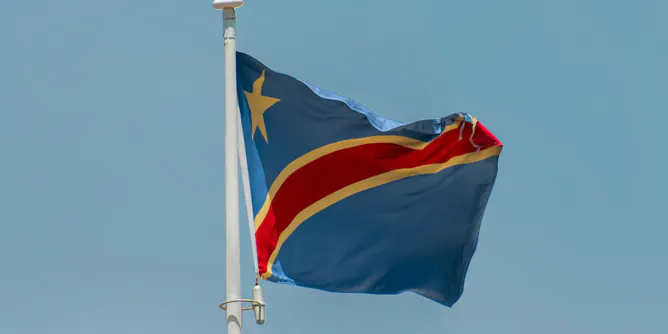
Every year on August 2, the Congolese community around the world observes a day of remembrance for the victims of the genocide perpetrated against the people of eastern DRC for economic gain.
Articles on ethnic conflict
Displaying 1 - 20 of 24 articles

The civil war is often described as an ethnic or tribal conflict. But it’s more complicated than that.
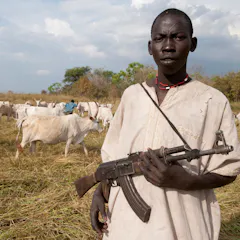
Attempts to encourage peaceful dialogue are hampered by the generational legacies of ethnic conflict, including South Sudan’s long history of violent cattle raiding.

Rwanda’s majority Hutu have over time reported feeling more represented by a Tutsi-dominated government.
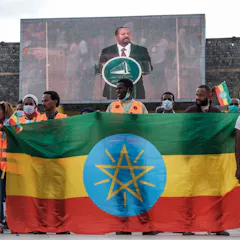
After more than 30 years of federalism, ethnic conflict in Ethiopia hasn’t been resolved – but neither has the country disintegrated.
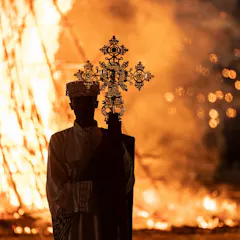
News coverage of Ethiopia’s ethnic conflicts has overshadowed the growing tensions and polarisation between religious communities.
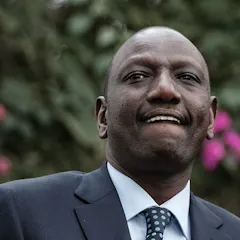
As an outlier in Kenya’s political power matrix, Ruto was elbowed out by the establishment. But he has somersaulted back by appealing directly to the masses.

At the centre of the persisting violence in the north-central region of Nigeria is bad governance.

Western leaders learned the hard way 25 years ago that conflict in the Balkans can become ethnic cleansing. Add Russia into the mix, and Montenegro’s new problems are US and European problems, too.
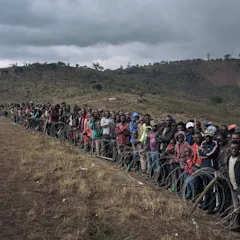
Because ethnic territories are a major source of political friction and persecution in the world, it’s important to investigate how they are created and used in conflicts.

As ever, civilians are caught in the middle of warring ethnic groups in this strife-torn region of Ethiopia.

Drivers and cyclists develop distinct identities of themselves and others in ways that mirror the formation of ethnic identities. And on-road segregation runs the risk of reinforcing this process.
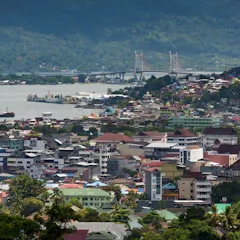
Comparing real Maluku and synthetic Maluku (a Maluku without prolonged conflicts) shows that Maluku could have 60.3% more economic growth had it not experienced conflicts.
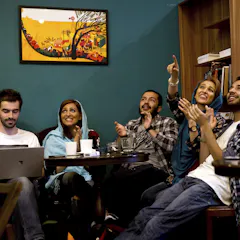
Unlike its neighbours, Iran’s different ethnic groups live in relative peace and harmony. Given terrorism is often spurred by ethnic conflict, will Iranians be spared further terrorist attacks?
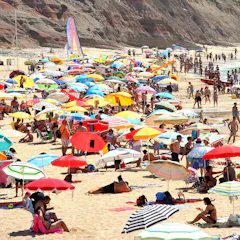
In many ways, the conflict we see on our beaches may be a small price to pay for the free and open access to our beaches, which Australians have long fought to preserve.
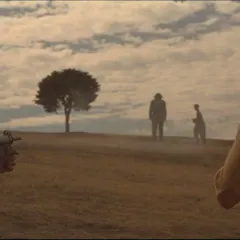
Cinema can be instrumental in opening up dialogue on collective culpability for the past. Manchevski’s Before the Rain and Angelopoulos’ Ulysses’ Gaze are perfect examples of this.
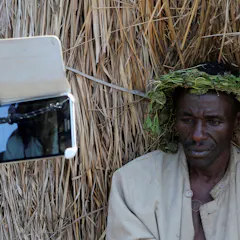
It comes as no surprise that nationhood in Uganda is still an elusive idea. Many people associate with their ethnic groups more affectionately than with their country.
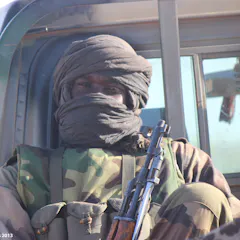
With northern Mali mired in conflict, increasing instability in the centre of the country is worrying observers. The attitude of the Malian authorities holds the key to defusing these tensions.
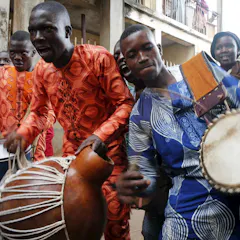
Ethnic divisions persist in countries like Nigeria not because the ‘cultures’ of those countries are predisposed to ethnic strife, but as a result of a weak state.
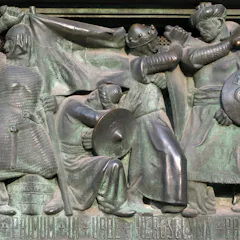
We need to change our outlook if we are going to improve international relations.
Top contributors
-

Maître de conférences sur les conflits internationaux, University of Kent
-
Professor of Law, L’Université d’Ottawa/University of Ottawa
-
PhD candidate, University of Technology Sydney
-
Professor of Research, Foundations & Higher Education, Northern Arizona University
-
Assistant researcher, University of Sydney
-
Departmental Lecturer in Political Philosophy and Public Policy, University of Oxford
-
PhD candidate, Sociology, Laval University, Université Laval
-
Professor of Anthropology and Law, Gladstein Distinguished Chair of Human Rights, University of Connecticut
-
Associate Professor, Faculty of Business, Government and Law, University of Canberra
-
Jimmy Spire Ssentongo is an Associate Dean (Research and Publication), School of Postgraduate Studies and Research at Uganda Martyrs University, Uganda Martyrs University
-
Lecturer and Teacher, Department of Politics and International Relations, Cardiff University
-
Chargé de cours, Institut national des langues et civilisations orientales (Inalco)
-
Professor of New Testament Studies, University of Exeter
-
Lecturer in European Studies, University of Sydney
-
Principal Research Fellow, University of Wollongong