
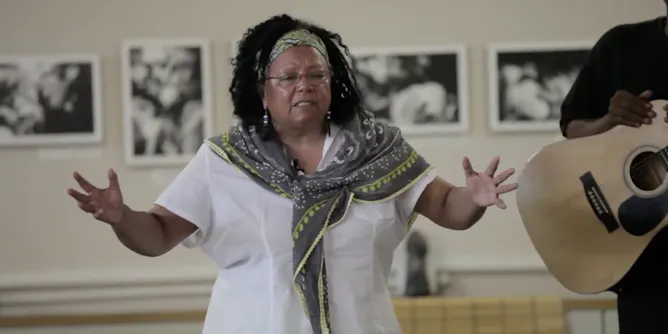
Her poem I’ve Come to Take You Home was written into French law. It deals with the repatriation of the remains of Sarah Baartman.
Articles on Enslaved people
Displaying 1 - 20 of 22 articles
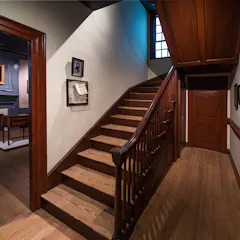
The staircase was originally acquired due to its craftsmanship. Only later did scholars realize that it was where Harriet Jacobs suffered abuse at the hands of her enslaver.

As many as 10% of enslaved people on St. Croix escaped. Where they went has remained a mystery, but scientists are using new mapping technology to find answers.

Collards may have arrived in southern Morocco via early Muslim traders, and Morocco may have been a stop in the journey the vegetables took to America.
To stop a crime, it helps to understand who these criminals are and how they think.

Whether it was spent feasting or plotting escapes, the week between Christmas and the new year offered a rare opportunity for enslaved men, women and children to reclaim their humanity.
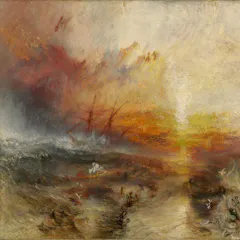
A new archival study uncovers details about Lloyds of London’s role in the transatlantic slave trade. Whether historical or political, reparatory justice relies on such historical evidence.
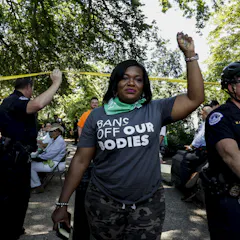
In the US, white men have long had the power to make decisions about women’s reproductive health care. Those decisions have often been especially harmful to Black women.
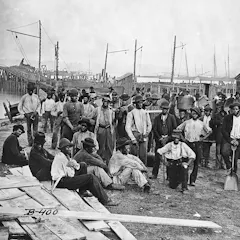
While a Florida curriculum implies that enslaved Africans ‘benefited’ from skills acquired through slavery, history shows they brought knowledge and skills to the US that predate their captivity.
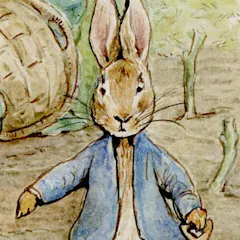
Beatrix Potter’s silence concerning her sources means the Brer Rabbit folktales that helped create her stories are passed over without acknowledgement or celebration.

Two food scientists, an entomologist, an anthropologist, a veterinarian and a historian walk into a bar (of chocolate) and tell bitter and sweet stories of this favorite treat.

By raising the Mauritian flag on the Chagos Islands, the east African nation has reasserted – if only symbolically – its claim to sovereignty.
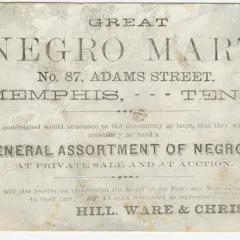
By the time slavery ended, over 1 million enslaved people had been forcibly moved in the domestic slave trade across state lines. Hundreds of thousands more were bought and sold within states.
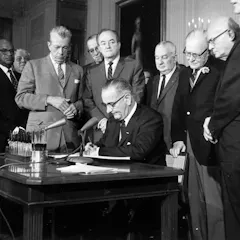
A scholar of race and racism explains what critical race theory is – and how many people get it wrong.

Many Americans first heard of Elizabeth City, North Carolina, when protests began after Andrew Brown Jr. was killed by sheriff’s deputies. But the city has a long history of fighting racial injustice.
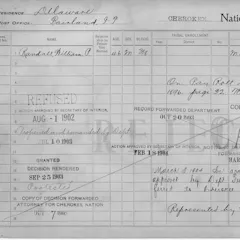
When the Cherokee Supreme Court ruled that tribal elected officials no longer had to be Cherokee “by blood,” it was the latest chapter in a long-running fight over who controls tribal citizenship.
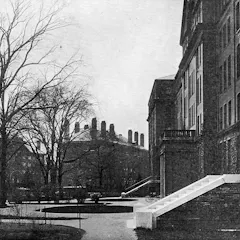
Proposed legislation would identify and protect African American cemeteries. But it wouldn’t cover the remains of thousands of Black people in museum collections.
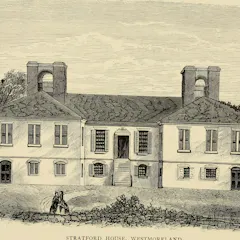
There’s a bittersweet history to chocolate in America. At one plantation museum in Virginia, the story of enslaved chocolatier Caesar shows the oppression that lay behind the elite’s culinary treat.
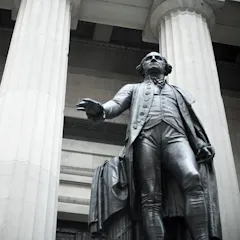
For his first presidential Thanksgiving, George Washington aimed to pull his country together in the face of the many internal divisions that could yank it apart.
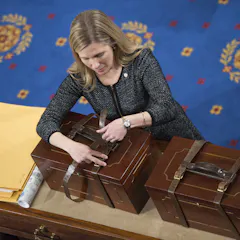
With a Supreme Court ruling rejecting one of the founders’ two reasons for creating the Electoral College, only one reason remains: racism.
Top contributors
-

Visiting Scholar, University of California, Berkeley
-
Professor of Critical Race and Ethnic Studies, Miami University
-
Assistant Professor of Philosophy, Affiliate, Institute for Intelligent Systems, University of Memphis
-
Assistant Professor of Political Science, University of Maryland, Baltimore County
-
Clinical Assistant Professor of Veterinary Clinical Sciences, Oklahoma State University
-
Professor of Anthropology, Rochester Institute of Technology
-
John L. Nau III Professor in the History of the American Civil War, Emeritus, University of Virginia
-
Senior Food Scientist at the CSU Spur Food Innovation Center, Colorado State University
-
Doctoral Student in Anthropology, American University
-
Professor of American History, Università di Torino
-
Professor of Food Science and Technology, The Ohio State University
-
Associate Research Professor of Anthropology, University of Colorado Denver
-
Senior Lecturer, School of Law and Politics, Cardiff University
-
Assistant Professor of History, Elizabeth City State University
-
Reader in Postcolonial Literature, Leeds Beckett University