

The franchise business model could be undermined by proposed laws which make franchisors and franchisees jointly responsible for wage underpayments.
Articles on Employees
Displaying 181 - 200 of 213 articles

Employees who ‘cut corners’ at work tend to be morally compromised, low in conscientiousness, self-focused and impulsive.

Burnout is a growing problem for the modern workplace. It has an impact on organisational costs, as well as employee health and well-being.

New research used a method that predicts divorce to pick up the signs that an employee will stay or leave their job.

If the government is going to get people out of poverty, it needs to focus less on getting people into work and more on where business is growing.

Research shows shared work spaces are not just distracting but bad for workplace friendships.

There’s a widening global crisis in the legitimacy and credibility of leadership. It can be attributed to five sources: unable; unintelligent; immature; immoral and/or destructive leadership.
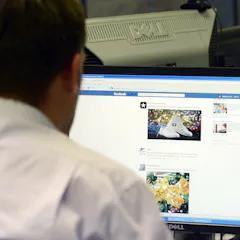
Employers are increasingly using potential employees’ social media accounts to determine their suitability for jobs. A new study finds employees are uncomfortable with this but accept the practice.

An open-plan office is not all it’s cracked up to be but the alternative, segmented spaces, has its downsides as well.

Research shows pregnant women are still being discriminated against in unfair dismissal cases, when employers say they are redundant.

7-Eleven’s decision to take charge of the compensation process for underpaid workers highlights the problems with voluntary commitments and underlines the need for increased legal accountability.

While there has been a rise in contracting out and ‘disruptors’ such as Uber, employment is an will remain the dominant method of business operation in a capitalist setting.

In an increasingly individualised workplace, unions can no longer rely on organising tactics to survive. Instead, they need to undertake a major “rebranding”.

Even though union membership has dropped to just 15%, unions still have an important role to play in ensuring that workers have meaningful input into how their workplaces are run.

Workplace democracy is declining, but the idea that this is the fault solely of unions or employers is misguided. Widespread reform is needed.

Employees who admitted to being emotionally manipulative in a survey may also be perceived as being emotionally intelligent in their workplaces, a study has found.

Some suggest half of current jobs will be lost to automation over the next decade or two. But it’s far too early to pit man versus machine.

Employers need to move beyond promoting mental health to preventing psychological harm at work.

Australian discrimination laws offer some protection for employees wanting to disclose their mental illness, but it doesn’t make the decision any easier.

New data shows Australians are spending more on mental health services and with costs to business in the millions, it’s time employers realised good mental health is good for the bottom line too.
Top contributors
-

Laurie Carmichael Distinguished Research Fellow at the Centre for Future Work, Melbourne; and Professor Emeritus, Griffith Business School, Griffith University
-
Professor and Director of Labor and Employment Studies, San Francisco State University
-
Associate Professor of Business and Society, Gustavson School of Business, University of Victoria
-
Professor of Business Law, Indiana University
-
Professor of Management, Co-Director of the MIT Sloan Institute for Work and Employment Research, MIT Sloan School of Management
-
DANCAP Private Equity Chair in Human Organization, Western University
-
Professor of Law, University of Oregon
-
Distinguished Professor and Borden Chair of Leadership, Smith School of Business, Queen's University, Ontario
-
Professor of Economics and Labor-Employment Relations, Penn State
-
Professor of Sociology and Canada Research Chair, University of Toronto
-
Associate Professor, University of Cape Town
-
Professor, Business and Management, Queensland University of Technology
-
Senior Research Associate, Oregon Health & Science University
-
Professor and Ken Croft Chair in Management, Haskayne School of Business, University of Calgary
-
Senior Lecturer, Graduate School of Business and Law, RMIT University