
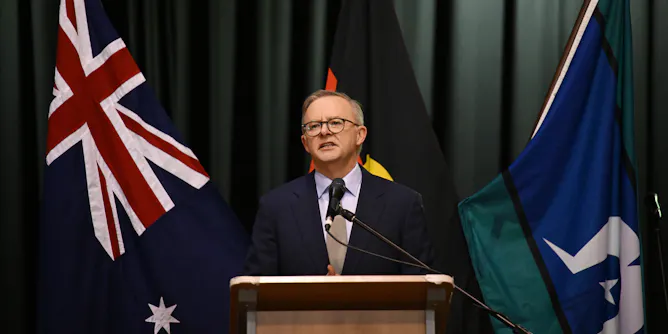
Michelle Grattan discusses the political week that was with Chris Wallace, Professor at the University of Canberra.
Articles on Emmanuel Macron
Displaying 101 - 120 of 293 articles
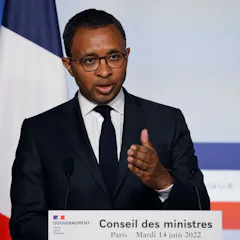
Considered a pioneer of “Black Studies à la française”, Ndiaye’s appointment comes at a time when issues in race and gender have divided the French political class and public opinion.
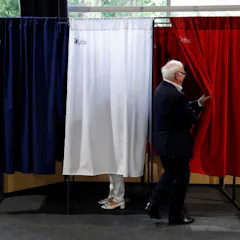
The results of the second round resulted in a historic record of seats for the RN and an even greater polarisation of political life within the National Assembly itself.
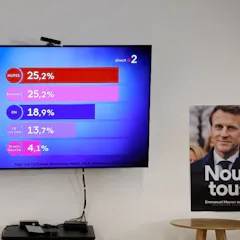
Amid record abstention, the left-wing NUPES coalition performed well against the presidential coalition.

Both Macron and Madonna have expressed concerns about genetic privacy. As DNA collection and sequencing becomes increasingly commonplace, what may seem paranoid may instead be prescient.
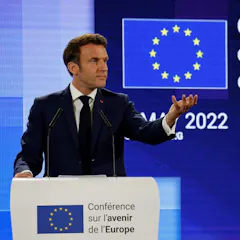
Inspired by François Mitterrand’s idea of a European confederation, French president Emmanuel Macron has outlined the idea of a political body that would be separate from the EU.
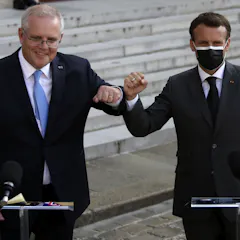
It all started to unravel for the prime minister when the French president accused him of lying to him.
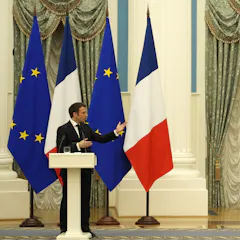
New research on diplomacy and backroom bargaining suggests diplomatic efforts are unlikely to be successful with Vladimir Putin. That’s why Emmanuel Macron’s diplomacy attempts aren’t working.
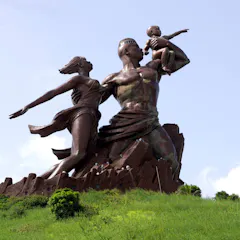
Senegal’s colonial heritage has been interpreted to conceive an African future, turning colonial heritage into an archive of a possible Afrotopia.
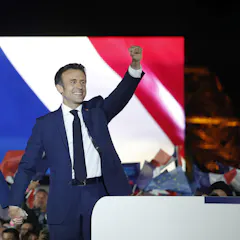
France faces multiple problems at home and on the world stage.
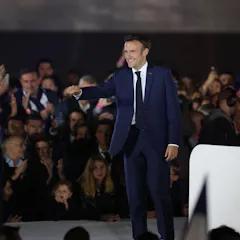
Emmanuel Macron’s success validates a strategy aimed at making him appear as the champion of the “progressives”, but it has only partially worked.
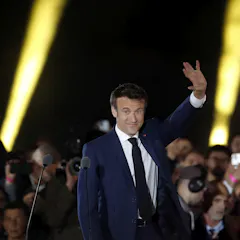
The next five years are going to be harder than Emmanuel Macron’s first term.
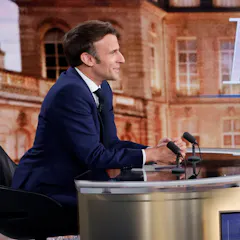
With the collapse of traditional politics, voters must vote with their heads rather than their hearts at every stage.
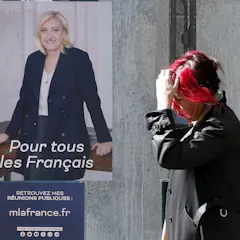
French voters face a stark choice at the polls, but many are saying ‘non’ to both candidates.
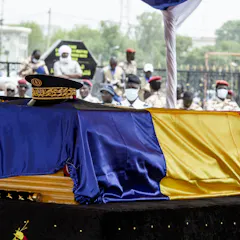
Talks being facilitated by Qatar will determine whether Chad will be peaceful or once again be torn apart by armed conflicts.
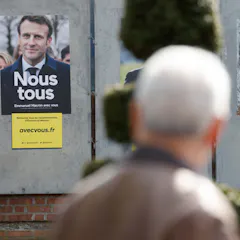
The first round of the French presidential elections leaves the country’s party system in tatters and voters divided along three poles. What will happen in the second round is now anyone’s guess.
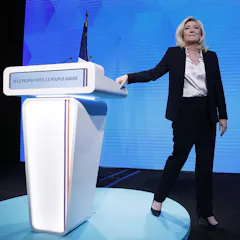
Jean-Luc Mélenchon was the great success story of the first round. The question now becomes – who gets his votes in the second?
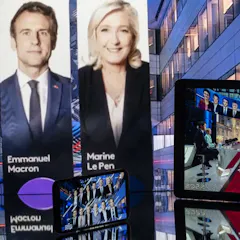
The dynamics of the “strategic vote” in France have amplified the restructuring of the political field around three major poles: centrist, identitarian and far left.

While many progressive movements have organised online, conservatives dominate because of better organisation, capital, and social inequality. France’s presidential elections are a case in point.
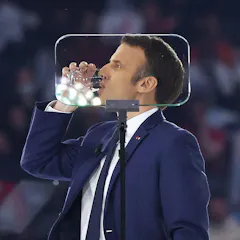
The president’s business reforms are not to everyone’s liking, but they seem to be producing results.
Top contributors
-

Associate Professor in French and Francophone Studies, University of Nottingham
-
Associate Professor, School of History, ANU / Chercheur Associé at the Centre d’Histoire de Sciences Po, Australian National University
-
Professorial Fellow, University of Canberra
-
Historien, Université Clermont Auvergne (UCA)
-
Senior Lecturer in International Relations and Politics, Aston University
-
Research Fellow at the University of the Free State, South Africa and Assistant Professor in the History of International Relations, Utrecht University
-
Assistant Professor, School of Politics and International Relations, University College Dublin, University College Dublin
-
Hurst Senior Professorial Lecturer, Co-Director Transatlantic Policy Center, American University School of International Service
-
Associate Professor, School of Politics and International Relations, University of Nottingham
-
Professor of Critical Cultural & International Studies, Colorado State University
-
Doctorant en science politique, Université de Montréal
-
Chercheur en science politique - CEVIPOF, Sciences Po
-
Professor of French and European Studies and Director of Loughborough University London's Institute for Diplomacy and International Affairs, Loughborough University
-
Senior Lecturer in French and Politics, Northumbria University, Newcastle
-
Professeure de stratégie et comportement des organisations, directrice de Kedge Arts School, Kedge Business School