
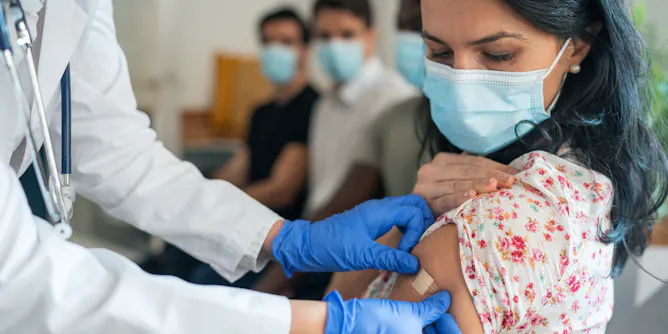
The CDC’s endorsement of the reformulated COVID-19 booster shots represents a major step in the effort to get more Americans boosted.
Articles on Emergency Use Authorization
Displaying 1 - 20 of 22 articles
New data on the second booster suggests the older you are, the more you need it.
Moderna will ask the FDA to allow emergency use for its vaccine in children as young as 6 months, a step many parents have been anticipating.
Fault lines between the FDA and CDC regulatory processes have been on full display in the decisions over which groups of Americans should receive the Pfizer booster shot.
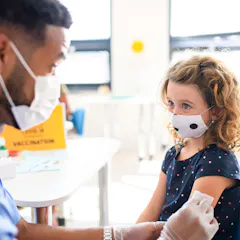
An infectious disease doctor explains the science behind COVID-19 vaccines at a level that children – and adults – of all ages can understand.
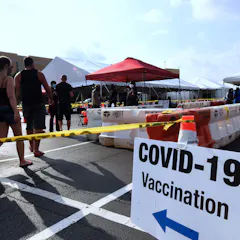
While emergency use authorization gets vaccines out to the public more quickly, it doesn’t skip any steps that full approval requires.
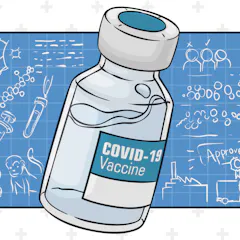
Ongoing tracking is meant to spot very rare risks – like the connection between the Johnson & Johnson shot and Guillain-Barré syndrome. And it relies on public reporting.
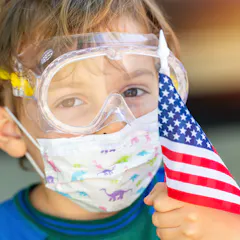
As many teens and adults in the US restart their social lives, parents of children under the age of 12 wonder when their kids will also be able to experience the freedom that comes with vaccination.
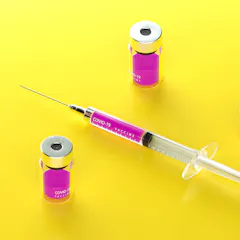
So far, most vaccines in the US are mRNA vaccines. These represent a new technology and are likely to take over the vaccine world. But how do they work? What are their weaknesses? Five experts explain.
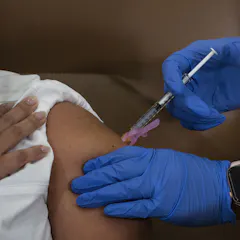
The federal agency in charge of enforcing discrimination laws in the workplace said ‘yes,’ but there are some important exceptions and limitations.
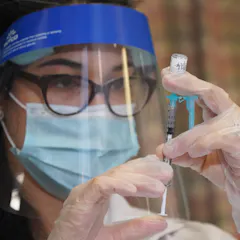
Now that two COVID vaccines have been authorized by the FDA, questions arise. Today, a physician from Indiana University School of Medicine answers five reader questions.
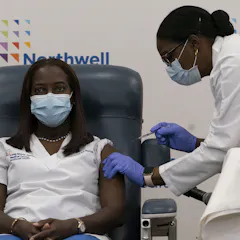
A serious allergic reaction was reported in a health care worker in Alaska after she received the COVID-19 vaccine. Does this mean that people with allergies need to be concerned? An expert answers.
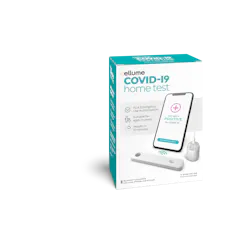
A new over-the-counter COVID-19 test has been authorized by the FDA. Though it can be used to test people with and without symptoms, moderate cost and limited production mean it isn’t a game-changer.
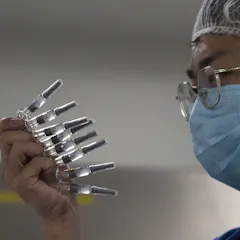
Health systems around the US are on the cusp of receiving COVID-19 vaccines. At the end of this months-long effort are the nitty-gritty details of how health care providers are giving people the vaccine.
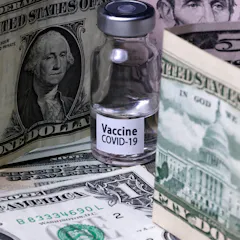
Millions of Americans say they won’t get the vaccine. Will money change their minds? And is luring them with cash the right approach?
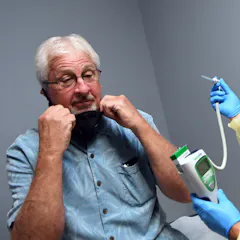
The vaccines that will first be used to prevent the spread of COVID-19 will have gone through a special approval process with the FDA. but just what is this expedited process?
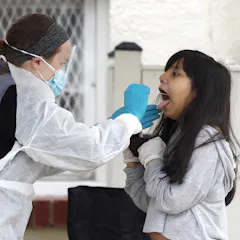
In September, production of rapid tests really ramped up in the US. But due to low accuracy and massive numbers needed, these tests alone are unlikely to have much of an effect on the pandemic.
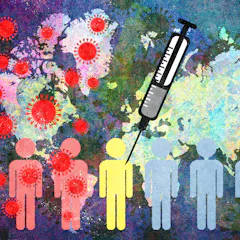
Because Pfizer-BioNTech and Moderna vaccines have been developed in record time, many wonder whether companies cut corners or compromised safety.
With COVID-19 cases soaring across the US and worldwide, the need for a vaccine could not be greater. Here’s where we stand on vaccine development, including positive results from Pfizer’s trial.
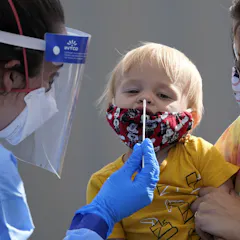
The new BinaxNOW antigen test is quick, easy, accurate and cheap. It could solve the US testing problem, but the emergency use authorization only allows people with COVID-19 symptoms to get tested.
Top contributors
-

Professor of Medicine, University of Virginia
-
Professor of Law, Villanova University
-
Associate Professor of Public Policy, University of Maryland, Baltimore County
-
Adjunct Professor of Epidemiology, University of Texas Health Science Center at Houston
-
Professor of Microbiology, School of Medicine, University of Washington
-
Shah Rising Star Assistant Professor of Chemical Engineering, Herbert Wertheim College of Engineering, UF Health Cancer Center, University of Florida
-
Professor of Medicine, Johns Hopkins University
-
Professor of Pathology, Microbiology and Immunology, University of South Carolina
-
Eugene M. Isenberg Chair in Integrative Studies, UMass Amherst
-
Professor of Law, Saint Louis University
-
Assistant professor of clinical medicine, Indiana University
-
Associate Professor of Pediatrics, University of Virginia
-
Professor of Pediatrics and Human Development at the Michigan State University College of Human Medicine, Michigan State University
-
Associate Dean and Professor of Pharmacy, University of California, San Francisco
-
Instructor of Human Immunology, Emory University