
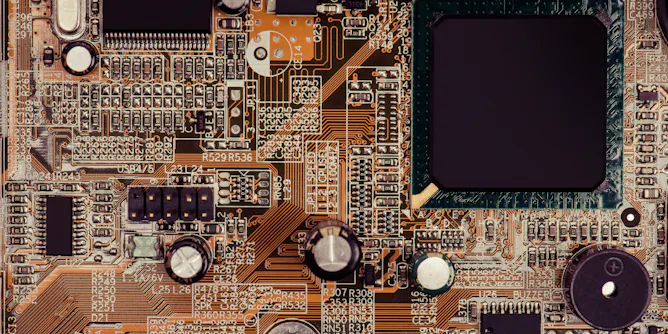
A new study investigated the source of a leak in a ‘miracle measurement’ from 2010 – and engineers found a potential solution.
Articles on Electrical engineering
Displaying all articles
To model the inside of a supercapacitor, my team had to rework a common physics law that most high school students learn.
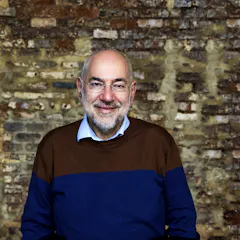
Many speak fondly of how Barry Dwolatzky took them into a derelict disco and enthusiastically explained the tech co-working space he envisioned there.

Deciding on the best system isn’t a simple matter. There’s a bewildering array of jargon to sift through and many elements to consider.

A wireless transmitter uses almost no power and at first glance appears to violate the laws of physics. It’s actually a clever use of physics that could one day transmit data from tiny remote sensors.

Every few centuries the Sun blasts the Earth with a huge amount of high-energy particles. If it were to happen today, it would wreak havoc on technology.

The ubiquity of mobile phones is a defining feature of the 21st century, but it’s been possible to place a phone call on the go since shortly after World War II.
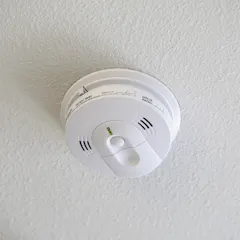
An electrical engineer explains how smoke detectors work, and how to reduce the chances of a false positive.
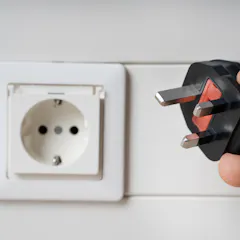
There are 15 different kinds of electrical outlets around the world. One standard would be more convenient, but no one wants to change theirs.

Sensors are everywhere, from your phone to your medicine cabinet. Here’s how they turn events in the physical world into words and numbers.
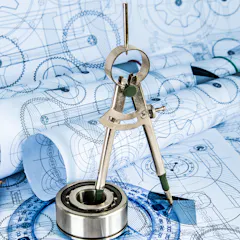
Technological advances and discoveries are moving at a rate faster than engineering education can keep up with. The solution is a revised approach to teaching engineering.
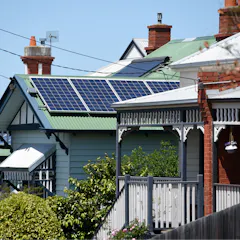
Managing voltage on the electricity network has always been an issue. But solar panels have the potential to make the situation better, not worse as some have feared.
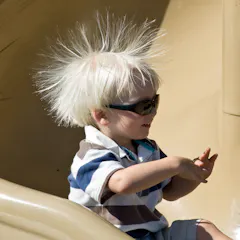
These mini lightning bolts have been known for millennia. Understanding static electricity at the atomic level opens the door for new technologies – as well as ways to cut down on the tiny zaps.
Scientists in the US have developed a calculator from living cells, using old-fashioned analog programming. Their hope is that the technology could be used in the future to program cells to kill cancer…
Top contributors
-

Senior Research Consultant, Institute for Sustainable Futures, University of Technology Sydney
-
Assistant Professor of Physics, University of Maryland, Baltimore County
-
Professor of Electrical Engineering and Computer Science, Massachusetts Institute of Technology (MIT)
-
Professor of Electrical and Computer Engineering,, University of Utah
-
CEO, UNSW Energy Institute, UNSW
-
Director of Energy Studies, University of Florida
-
Assistant professor of electrical engineering, University of South Carolina
-
Assistant Professor of Chemical and Biological Engineering, University of Colorado Boulder
-
Associate Professor of Electrical Engineering, University of Tennessee
-
Senior Lecturer, Electronic and Electrical Engineering, Stellenbosch University
-
Professor of Electrical Engineering, Arizona State University
-
Professor in Engineering, Stellenbosch University
-
Ph.D. in Electrical Engineering, Binghamton University, State University of New York
-
Assistant Professor of Electrical Engineering, Stanford University
-
Assistant Professor, Systems and Computer Engineering, Carleton University