
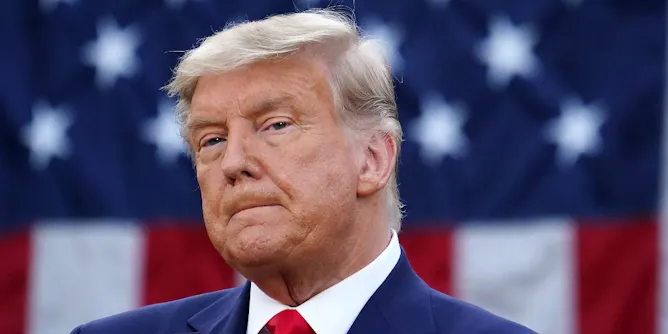
The transition between Donald Trump and Joe Biden has formally begun, yet the outgoing president still refuses to concede. How far can he go and has such a situation been experienced in American history?
Articles on Electoral College
Displaying 41 - 60 of 79 articles

President Donald Trump may be trying to get state lawmakers to shift the outcome of the presidential election.
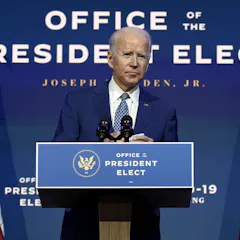
Wisconsin proved to be the ‘tipping point’ state in the US presidential election, which Joe Biden won by just 0.6% - despite being likely to win the popular vote by 4-5%.

As Donald Trump continued to stoke his base with false allegations of a ‘rigged’ election, violence at the U.S. Capitol shows America has devolved into a fragile state.
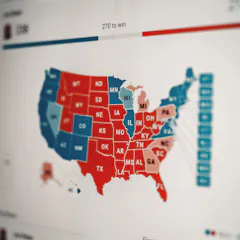
What did this year’s election maps rightly or wrongly tell us?
Judges are generally reluctant to decide elections, as the Supreme Court controversially did in 2000. As a result, Trump’s flurry of litigation could wind up throwing the election to the House.
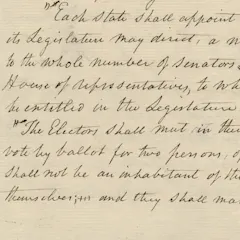
Three approaches were debated during the Constitutional Convention – election by Congress, selection by state legislatures and a popular election, though that was restricted to white landowning men.

The result of the 2020 US election remained unclear.
The polls and pundits say Joe Biden will win, but they’ve been wrong before. So what will be the early indicators of whether Donald Trump stays or goes?
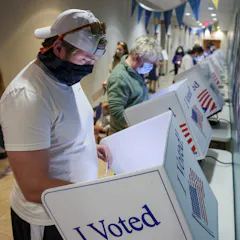
The majority voting system in the United States, as in virtually every country in the world, imperfectly reflects voter preferences and could once again benefit Donald Trump.
Federal election law is riddled with uncertainties. And that’s not a good situation for the country if it finds itself in the middle of a contested election.
The presidential election outcome seems to be at least partially in dispute. Six scholars provide a history of contested elections in the US and explain what happens when the results are challenged.
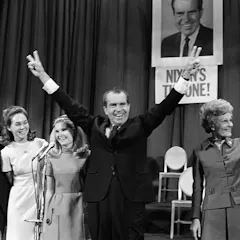
There are similarities between the law-and-order language used by the 1968 and 2020 presidential candidates and the racial tension and political polarization both years. But much is different.
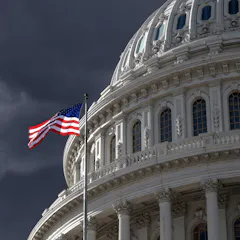
Biden and Trump are both preparing for a court battle in November. But when the Electoral College produces no clear winner, it’s the House of Representatives that’s supposed to select the president.
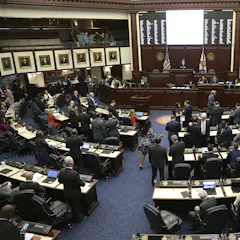
This is not the first time the prospect of state legislatures ignoring the popular vote and appointing their own slate of electors has arisen.
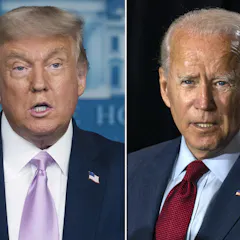
The polls are predicting a comfortable win for Joe Biden over Donald Trump. But if this election sees the same polling errors as in 2016, Trump’s chances of re-election are higher than we think.
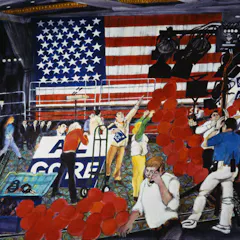
No, it’s not the TV news networks. The American election certification process is a lot more complicated than that.
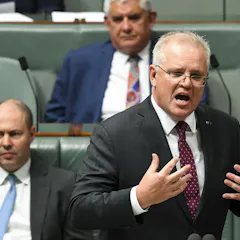
Labor had its best results in the Newspoll since late April, perhaps reflecting how people view Morrison’s handling of the aged care-coronavirus debacle.
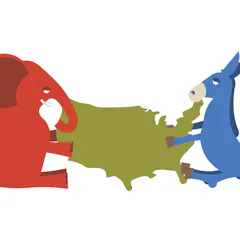
Internal party rules make it harder to attract independents, who make up about one-third of US voters.
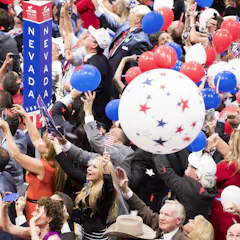
Political conventions used to pick presidential nominees in private. Now the public picks the nominee and then the party has a big party at the convention, writes a scholar of US elections.
Top contributors
-

Professor, Political Science Department, College of the Holy Cross
-
Election Analyst (Psephologist) at The Conversation; and Honorary Associate, School of Mathematics and Statistics, The University of Melbourne
-
Professor of Political Science, LaGrange College
-
Associate Professor of Political Science, Westminster College
-
Professor of Law, University of Notre Dame
-
Senior Fellow, Miller Center, University of Virginia
-
Lead Academic Teacher - Politics & Social Science (Swinburne Online), Swinburne University of Technology
-
Executive Director of the Sine Institute of Policy and Politics, American University
-
Associate Professor of Political Science, Erie Campus, Penn State
-
William Nelson Cromwell Professor of Jurisprudence and Political Science, Amherst College
-
Interim Dean and James F. Ackerman Professor; College of Education, Purdue University, Purdue University
-
Assistant Professor of Political Science, Gettysburg College
-
Assistant Professor of Political Science, University of Maryland, Baltimore County
-
Professor of American Civics, University of Tennessee
-
Emeritus Faculty, US government and politics specialist, Australian National University