
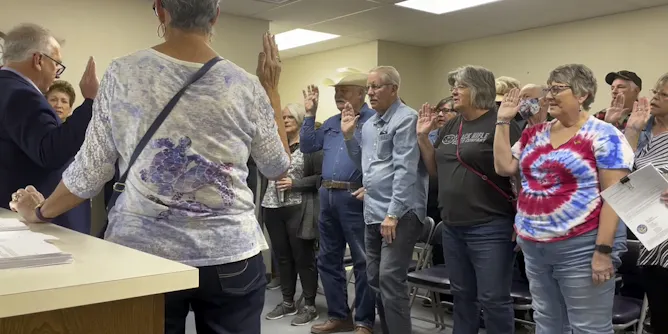
Amid discussion of how best to conduct and tally a hotly contested election that is potentially subject to nefarious meddling, three experts explain the basics.
Articles on Election integrity
Displaying 21 - 40 of 57 articles
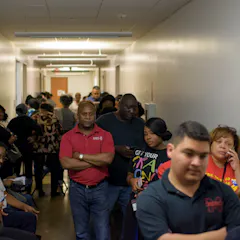
A 2014 US Presidential Commission set a guideline that voters should not have to wait more than 30 minutes to cast their ballots. In some voting districts, it’s taking longer than an hour.
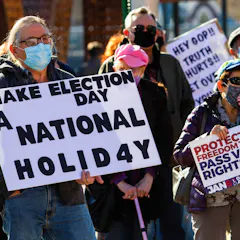
Voting rights are the subject of intense conflict between Democrats and Republicans. Does the degree of political outrage match the threat to voting rights?
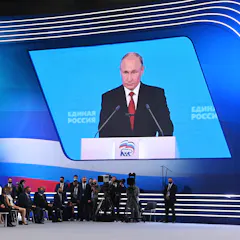
Despite a 27% approval rating, Putin’s United Russia party can maintain its legislative majority in September through manipulation and fraud, says an expert on Russian elections.
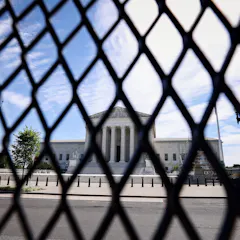
The court upheld two Arizona laws that limit when, where and how people can vote.The ruling further guts the Voting Rights Act at a time when many US states are passing more restrictive voting rules.
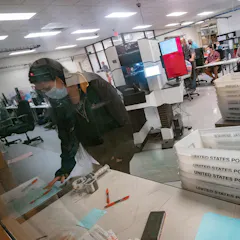
In Brnovich v. DNC, the court will decide whether two Arizona rules unfairly hurt poor, minority and rural voters. The ruling could determine the fate of many states’ restrictive new voting laws.
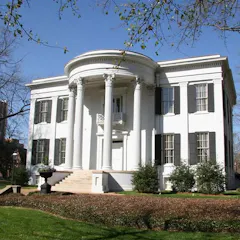
Since 1890, Mississippi has required candidates for statewide office to win not only more votes than opponents across the whole state, but also in every legislative district.
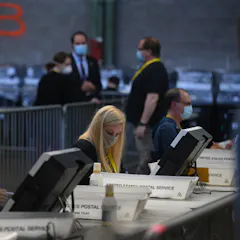
As vote counts tick upward, people may have questions about why one candidate does better with mail-in votes or in-person ballots. Here are the answers, and an explanation of how the counting happens.

An army of volunteers is working at the polls and behind the scenes to ensure election 2020 runs smoothly and safely. Here’s whom to turn to if things go wrong.
The presidential election outcome seems to be at least partially in dispute. Six scholars provide a history of contested elections in the US and explain what happens when the results are challenged.
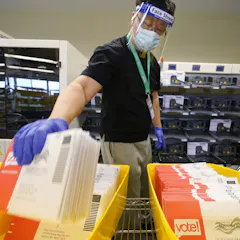
The rules governing how mail-in voting works and how ballots can be rejected differ state by state. In a close election, this could prove pivotal to deciding who wins.
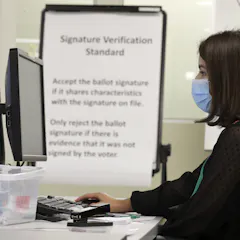
It’s not just whether the US Postal Service can handle the load. In 2020 primaries, states have had trouble distributing, collecting and counting mailed-in ballots.
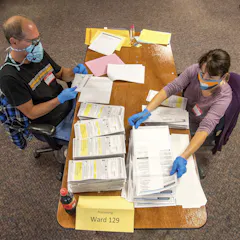
The mail-in voting process has several built-in safeguards that make it hard for one person to vote fraudulently, and even more difficult to commit large-scale voter fraud.

No, it’s not the TV news networks. The American election certification process is a lot more complicated than that.
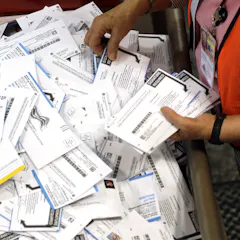
Oregon’s experience shows that mail-in voting can be safe and secure, providing accurate and reliable results the public can be confident in.
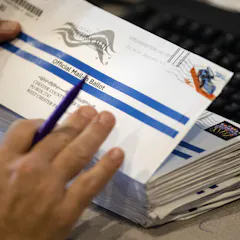
Voting by mail is rarely subject to fraud, does not give an advantage to one political party over another and can in fact inspire public confidence in the voting process.
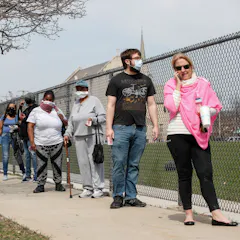
In many states, any voter can ask for an absentee ballot and mail it in – but in others, there are stricter rules about who can vote by mail.
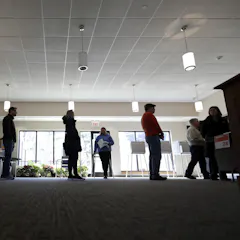
Most states have rules that could preserve the integrity of an election while also allowing social distancing.

Co-opting internet-connected devices could disrupt transportation systems on Election Day, stymie political campaigns, or help make information warfare more credible.
With electronic voting and vote-counting machines susceptible to hacking, paper ballots ensure recounts are possible – and accurate.
Top contributors
-

Senior Research Scholar for Cyber Policy and Security, Center for International Security and Cooperation, Stanford University
-
Law Professor in Constitutional Law, Criminal Law, Election Law, University of Memphis
-
Associate Professor, Political Science, University of Pennsylvania
-
Professor of Constitutional Law, New York University
-
Professor of Law, University of Notre Dame
-
Associate Professor of Political Science, University of California, San Diego
-
Assistant Professor of Political Science, Washington State University
-
Voting Rights Researcher, Democracy Project, Brennan Center for Justice, New York University
-
Deputy Director, Democracy Program, Brennan Center for Justice, New York University
-
C.O. Johnson Distinguished Professor of Political Science, Washington State University
-
Professor of Business Law and Ethics, Indiana University
-
Assistant Professor of Computer Science and Computer Engineering, Vanderbilt University
-
Associate Professor of Political Science, University of Pittsburgh
-
Professor of Communication, University of Illinois Urbana-Champaign
-
Executive Director of the Sine Institute of Policy and Politics, American University