
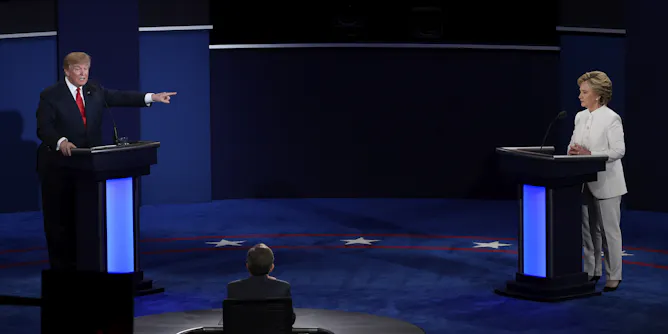
Amid all the Mueller report uncertainty, one thing is clear: Donald Trump did some wildly improper things to win the presidency. So did Thomas Jefferson, Andrew Jackson, JFK and George W. Bush.
Articles on Election campaigns
Displaying 41 - 60 of 65 articles
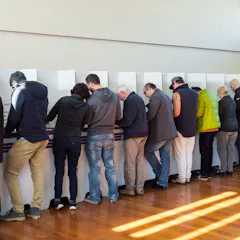
After the 2016 US election and ensuing Cambridge Analytic scandal, there was a lot of scaremongering around digital election campaigning. But this hysteria is, for the most part, unfounded.

Election campaigns inspire hope, but they can also quickly lead to political despair. A scholar says young citizens can learn how to take positive action and stay hopeful.

Opera goers are high multiplier voters. Win them over and you might get a few more supporters along the way.

Eminem is back and raging at Donald Trump - but for once the president has not retaliated. Maybe Slim Shady is just a bit too much like his core supporters.
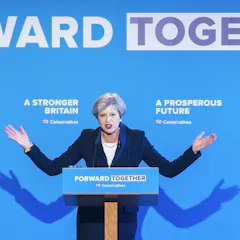
Making manifesto promises is a misleading trend that is distorting the role of politicians and parliament

What can future politicians learn from the president-elect’s social media presence while on the campaign trail?

The major parties seem to be having considerable difficulty drawing lessons from the recent election campaign. Of course, there are many. The most obvious, but probably the most difficult for them to accept…
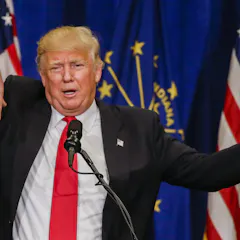
The faultlines in democratic politics are clear. On one side is a system of democracy that is bad at making people feel represented. On the other are anti-politician performers like Donald Trump.

Eight weeks of deadlines, debates, press releases, public appearances and handshaking. What should politicians and their teams do to stay healthy and sane?
Longer campaigns suggest the government is confident in its ability to debate the issues, but also give it more chances to get caught out.

Data journalism and visualisation can help ordinary citizens understand complex issues in their societies more deeply. And that drives democracy.
The US’s long history of inventive campaign soundtracks seems lost on this year’s contenders.
Political campaigns today are presented as products of bottom-up participation, not top-down direction. But even if a campaign appears grassroots-driven, it’s likely to be run from the centre.
About 49 million young people are eligible to vote, representing a major potential political force. So, what can universities do to increase their turnout?
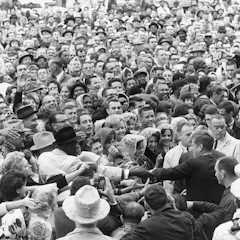
Songs no longer relay party platforms. Instead, they’re used to promote “celebrity” candidates.
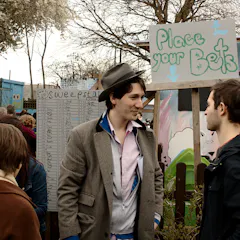
Pollsters don’t aim to predict the results, but that doesn’t stop the media trying. Maybe they should ask William Hill who will win instead.
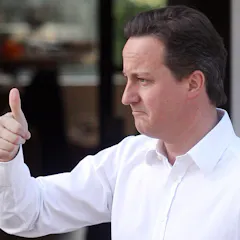
News that the Conservative Party has been spending more than £100,000 a month on Facebook advertising has its supporters and rivals all wondering if this is money well spent. It seems like a lot of money…
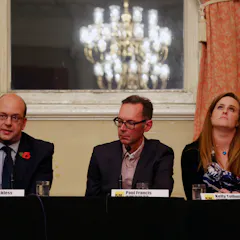
You don’t want to vote for him. He grew up in London and went to Oxford, to study politics (of all things). He’s worked as a banker and as a political researcher. And he only moved here to become an MP…
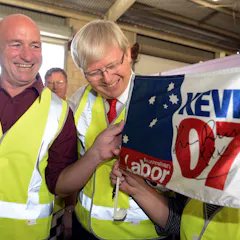
Australian election campaigns are facing another revolutionary change, which has the potential to transform the electoral contest, redefine campaign funding and even revive political parties. The “micro-targeting…
Top contributors
-

Honorary Senior Lecturer, School of Social and Political Sciences, University of Sydney
-
Associate Professor of Politics and Journalism, Griffith University, Griffith University
-
Assistant researcher, University of Sydney
-
Lecturer and Teacher, Department of Politics and International Relations, Cardiff University
-
Senior Lecturer in Communication, Griffith University
-
Chair in Sustainable Enterprise, UTS Business School, University of Technology Sydney
-
Honorary Senior Lecturer, Institute of Local Government Studies, University of Birmingham
-
Associate Professor of History, Purdue University
-
Professor and Chair, Tax and Transfer Policy Institute, Crawford School of Public Policy, Australian National University
-
Professor of Creative Media Production and Chair, Department of Media, Arkansas State University
-
Emeritus Professor of Political Communication, University of Leeds
-
Associate Vice President for Entrepreneurship and Innovation, Clemson University
-
Doctoral Candidate, Australian National University
-
Professor of Political Science, The University of Melbourne
-
Scientia Professor of Economics, UNSW