
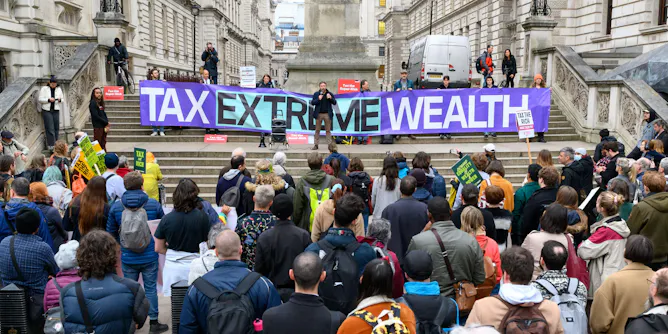
The case for taxing wealth has historically come from the political mainstream – so why is it so unpalatable now?
Articles on Economics
Displaying 61 - 80 of 831 articles
The Supreme Court’s trade case isn’t just about tariffs. It’s about who sets economic policy in a democracy.

What are the actual impacts of mega sporting events like the World Series and FIFA World Cup?
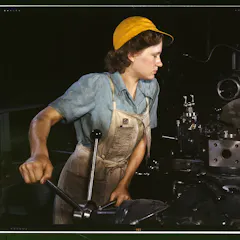
The Protestant Ethic and the Spirit of Capitalism is neither a history of economics, nor a religious history. It borrows from both, but is stranger than either.
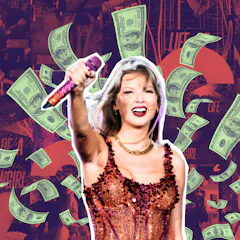
The album was released in dozens of different formats. Other artists have done this before, but rarely at this scale or with such an intense response from fans.
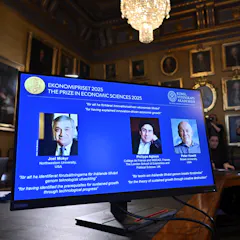
A better understanding of growth could help to improve living standards in the world’s poorest countries.

Fans of redistribution may find something good in the latest AI-powered development in pricing.

The coffee giant is pivoting back to its ‘third place’ roots – but the shift away from grab-and-go customers could open the door for rivals.
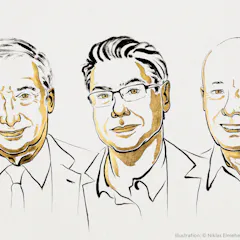
Collectively, the trio’s work has examined what drives sustainable economic growth over time, including scientific innovation and the birth and death of firms.

Most sellers already pay no tax, so the proposal’s benefits would flow to the richest.
The pace of US business investment has fallen by about 50% over the past 50 years. Idle capacity, not cautious executives, explains the decline, research suggests.

The challenge is not job creation, but how to find the workers we need. There’s much the government can do, from childcare to migration.
Partisan bias doesn’t stop with voters. When Republicans hold the White House, Republican economists consistently overshoot on growth forecasts.
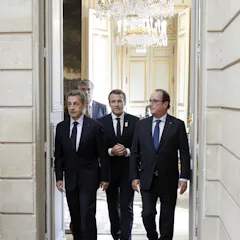
France’s government backs a budget aimed at cutting the national debt, but it may lack enough support in parliament. An economist looks at factors behind the debt’s recent climb.
Responsible borrowers are locked out of the global financial system for reasons beyond their control. A study looking at shopping habits offers a novel solution.

The US is moving away from a laissez-faire version of capitalism and toward a state-directed form.

A healthy economy relies on healthy natural systems. But at the economic roundtable, this fact was all but absent.

From exorbitant rents to an undersupply of affordable homes, ancient societies faced some familiar-sounding problems – with serious social consequences.

After a long lead-up, the economic roundtable attendees are descending on the capital. But what can we expect from it? The treasurer has laid out his vision.
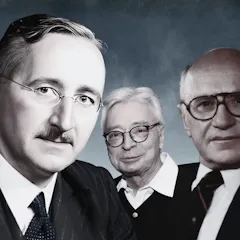
When the Cold War came to an end, neoliberals appealed to nature in order to justify inequality.
Top contributors
-

Associate Professor of Business, Boston University
-
Professorial Fellow, University of Canberra
-
Scientia Professor of Economics, UNSW
-
Dean of Business School, University of Southern Queensland
-
Senior lecturer, Canberra School of Government, University of Canberra
-
Distinguished Professor, Arthur J. Gosnell Professor of Economics, & Head, Department of Sustainability, Rochester Institute of Technology
-
Emeritus Professor of Economics (Griffith University) and Teaching Associate (University of Queensland), Griffith University
-
Professor of Economics, University of Minnesota Duluth
-
Associate Professor, Economics, MacEwan University
-
Professor, School of Economics, The University of Queensland
-
Senior Lecturer in Economics, The Open University
-
Adjunct Senior Lecturer in Economics, Adelaide University
-
Professiorial Fellow, The University of Melbourne
-
Director, Centre of Policy Studies, Victoria University
-
Chief executive officer, Grattan Institute