

Rising seas threaten low-lying islands in the Torres Strait. Does the government have a duty of care?
Articles on duty of care
Displaying all articles

Offering an intensive programme of duty of care creates an impression of safety and control.

Two Traditional Owners from the Torres Strait Islands who took the Australian government to court over climate-related harms have lost their case.

The report contains 67 recommendations – none of which address misinformation and disinformation.

The new proposal is aligned with approaches in the European Union and United Kingdom – and overcomes the flaws of banning people under 16 from social media.

The Albanese government will develop and legislate a “Digital Duty of Care” to place the onus on platforms to keep people safe and better prevent online harms.

Many participants who are offered support do not take it up.
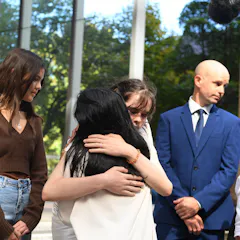
The Federal Court has essentially said it can’t act. But the decision certainly doesn’t mean the government can’t act. In fact, that’s exactly who the judges indicated must.
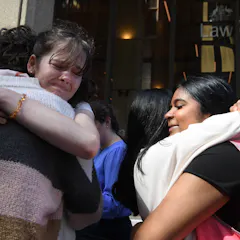
Environment minister Sussan Ley successfully argued that she doesn’t have a duty of care to protect young people from climate change. Here’s why the judges unanimously ruled in her favour.
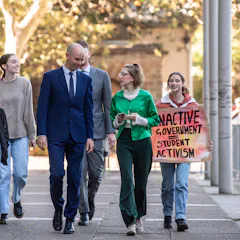
The court described climate change as ‘the greatest inter-generational injustice ever inflicted by one generation of humans upon the next’.

Australia lacks standalone hazing legislation that clearly makes it the responsibility of universities, but courts here and overseas are increasingly likely to find them liable for the harm done.
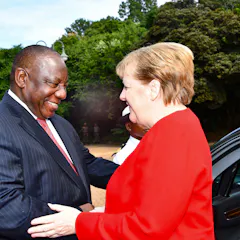
It is no accident that those leaders who have responded worst to this crisis have also been the main sources of countless conspiracy theories and misinformation.

The Royal Commission into Institutional Responses to Child Sexual Abuse has demonstrated how catastrophically some teachers have failed their duties - a pledge is one way to turn that around.
Top contributors
-

Professor of Information Sciences & Director, Social Change Enabling Impact Platform, RMIT University
-
Deputy Director, Australian Centre for Climate and Environmental Law and Lecturer in Law, University of Sydney
-
Lecturer in Creative Industries, The Open University
-
Lecturer in Law, Deakin University
-
Senior Lecturer, Department of Business Law and Taxation, Monash University
-
Associate Fellow, Faculty of Education, Monash University
-
Professorial Fellow, University of Canberra
-
Project Lead, Australian Climate Accountability Project at the UNSW Australian Human Rights Institute, UNSW
-
Lecturer in Law, The University of Melbourne
-
Professor of Law, The University of Melbourne
-
SA UK Bilateral Research Professor in Political Theory, Wits and Cambridge, University of the Witwatersrand
-
PhD Candidate, Melbourne Law School, and Research fellow, Melbourne Climate Futures, The University of Melbourne