
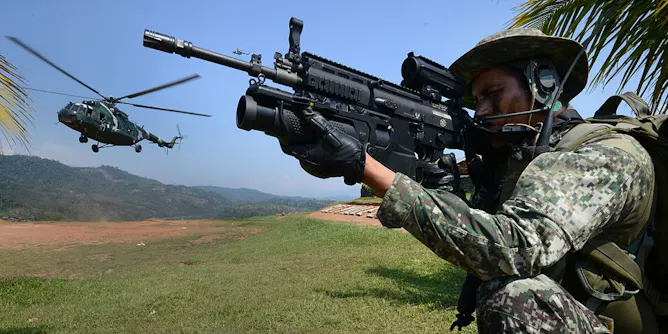
The nebulous nature of narco-terrorism has allowed presidents from Reagan to Trump to deploy the term when it serves broader political goals in Latin America.
Articles on Drug war
Displaying 1 - 20 of 23 articles
Two US wars based on lies, in which tens of thousands of American troops and millions of civilians died, offer a cautionary tale about the rush to war.
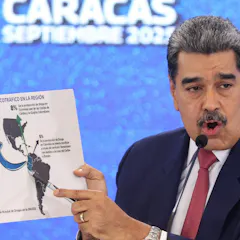
A US military buildup in the Caribbean after weeks of naval strikes is both the latest case of intervention in Latin America and uniquely aggressive in key ways.
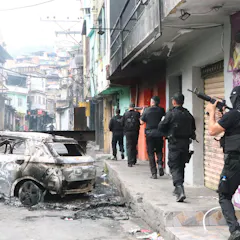
The hard-line approch to law enforcement risks perpetuating the lawlessness it is trying to stamp out.
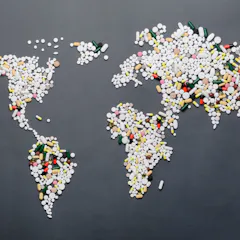
As with climate change, why are we so slow to recognise the existential threat that drug use poses to humanity?
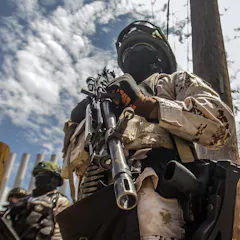
The modern Mexico–US drug trade is rooted in the unintended consequences of government policy on both sides of the border.
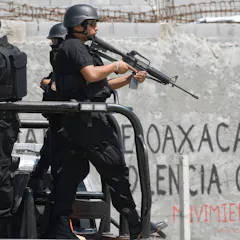
Latin America’s spike in violence is the result of systemic problems that have long gone unaddressed.
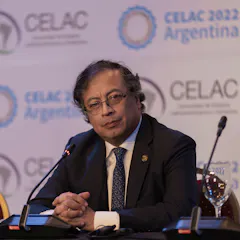
Colombia’s current president, Gustavo Petro, is pushing for a new global approach to drug addiction and use.
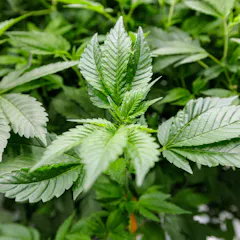
Contrary to popular views, it was not just uneducated and socially deviant individuals who were engaged in cannabis farming or trade.
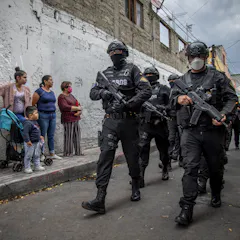
Mexico would not fully legalize cannabis; its new regulation plan makes recreational use legal. However modest, that would be a symbolic milestone for a country immersed in a long, deadly drug war.

Possessing heroin, cocaine, meth and other drugs for personal use is no longer a criminal offense in Oregon. The idea is to get people with problem drug use help, not punishment.

A program intended to reduce coca production ended up giving two Latin American countries a big boost to their flower power.
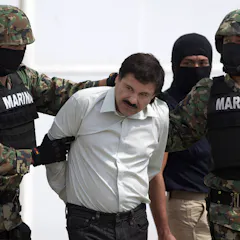
The conviction of Mexican drug kingpin Joaquín Guzmán Loera, who evaded justice in Mexico, is a win for US officials. But it’s a pyrrhic victory in the war on drugs.
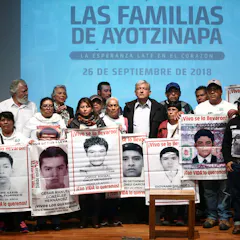
President López Obrador campaigned on some outside-the-box ideas to ‘pacify’ Mexico after 12 years of extreme violence. But so far his government has emphasized traditional law-and-order policies.
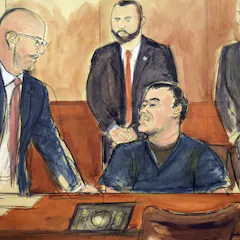
With its tales of bloody violence, corruption, international trade and entrepreneurial innovation, Guzmán’s trial offers a telenovela-style explainer on Mexican cartels and their American clients.
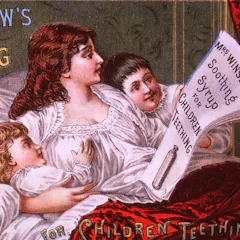
Canadian drug policy began to take shape well before anti-immigration attacks on Chinese establishments in 1908. Drugs like opium and coke were causing grave public health concerns.
El Día Después is an important initiative led by the cultural and intellectual elite, for all Mexicans.
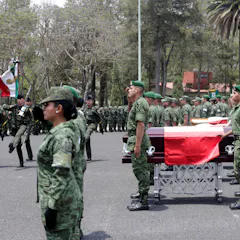
Exactly 234,966 people have died in Mexico’s 11-year drug war. Now the government wants to deploy soldiers to criminal hot spots, a move many fear will just increase violence and weaken the police.

Politicians on the left and right object to this practice, which the Trump administration is championing.
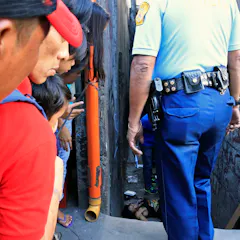
After a short suspension of anti-drug operations, President Rodrigo Duterte has resumed his bloody war.
Top contributors
-

Senior Lecturer in Human Rights, Constitutional Law and Legal Theory, University of Wollongong
-
Associate Professor, Medical History, Department of Health Sciences, Brock University
-
Professor of Film and Screen Studies, University of Portsmouth
-
Adjunct Professor, Roosevelt Public Policy Institute at Hunter College, City University of New York
-
Honorary Lecturer in the Department of History, UCL
-
Research Fellow in the War Studies Department, King's College London
-
Professor Emeritus of Journalism, San Francisco State University
-
Associate Professor in International Criminology, University of Bristol
-
Africa research project coordinator, Global Drug Policy Observatory, Swansea University
-
Associate Professor of Political Science, UMass Lowell
-
Honorary Reader in the Department of International Development, University of Birmingham
-
Professor, Sociology Department, Oregon State University
-
Associate Professor of Business, Boston University
-
PhD candidate and Research Fellow, University of Ibadan
-
Professor, Sociology Department, Washington State University