

We compared the educational progress in years 3 and 4 in 2019 with 2020 – the year normal schooling was disrupted by the pandemic. Overall, students progressed at the same rate in both years.
Articles on Disadvantaged students
Displaying 21 - 40 of 81 articles

New South Wales and Victoria are investing $250 and $337 million respectively for disadvantaged students who fell behind in 2020 to have extra tutors.

There are a number of evidence based practices that have shown to dramatically reduce challenging student behaviour at school. Here are five of them.

An educational ethicist talked to teachers about what ethical issues were most pressing during COVID. Here are the three that featured most.

Our report examines Australia’s educational performance against equity and excellence benchmarks. It finds the inequality gap is large and growing.
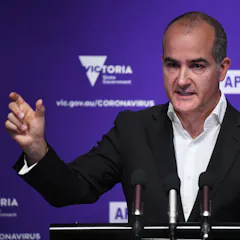
The Victorian government’s funding is critical to helping disadvantaged students catch up. But the government needs to take several extra steps to ensure their funding has its desired effect.

The government should have a plan for how to help disadvantaged students catch up from learning lost during the pandemic, and how to better support students with mental health issues.

A Grattan Institute report shows the achievement gap between disadvantaged and advantaged students widens at triple the rate in remote schooling compared to regular class.

As many as one in five children in Australia start the school day without eating breakfast. About 15% arrive at school without lunch, or the money to buy it at the canteen.

The government can invest in a number of catch-up programs, including summer school and small group tuition, to help children who fall behind due to COVID-19.

Many of the new proposals would leave the wealthiest students and graduates better off.

Schools in poorer areas can make a significant impact on their students’ lives. This can matter more, relative speaking, than higher test scores in wealthier suburbs.

Educational inequality in the UK takes root before children even begin primary school.
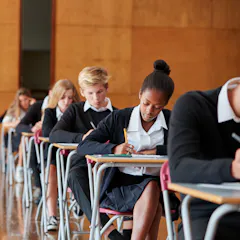
Half of clever students from poorer backgrounds fail to secure top GCSE grades.

Research shows that 80% of medical students come from just 20% of the UK’s secondary schools.

This study confirms that a student’s background matters, and that targeting students early is vital.
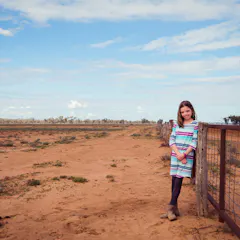
If we fail to recognise that standardised tests are metro-centric, we will continue to produce disadvantage for rural students.

Students on ‘enabling’ courses may now have to pay substantial fees under higher education reforms.

Schooling expert Dr Glenn Savage answers your questions on recent changes to school funding.

Continuing the status quo will not reduce disadvantage, and over time may even increase it.
Top contributors
-

Deputy Program Director, School Education, Grattan Institute
-
Executive Director, Student Equity; and Director, Centre for Higher Education Equity and Diversity Research, La Trobe University
-
School Education Program Director, Grattan Institute
-
Professor of Education and Public Policy, Durham University
-
Deputy CEO (Research), Australian Council for Educational Research
-
School Education Program Director, Grattan Institute
-
Professor of Education, Durham University
-
Adjunct associate professor, Southern Cross University
-
Research Chair in Education and Director of the Centre for International Research on Education Systems, Victoria University
-
Director, Pathways and Academic Learning Support (PALS) Centre, University of Newcastle
-
Visiting Professor of Education and Social Justice, University of Huddersfield; and Emeritus Professor, Federation University Australia
-
Professor of Economics and Public Policy, ANU College of Arts and Social Sciences, Australian National University
-
Senior Research Fellow, Curtin University
-
Professor of Education, Jesus College, University of Cambridge
-
Postgraduate research assistant, Imperial College London