
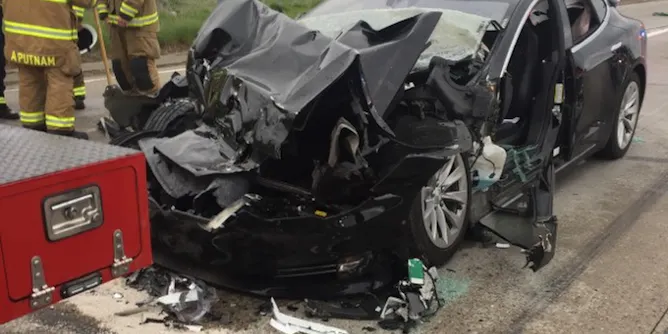
AIs are notoriously opaque, even to the people who build them, which makes it hard to know why they fail. A new tool aims to reveal their inner workings at the moment they went off the rails.
Articles on Digital forensics
Displaying all articles

An accounting expert points out that income Americans previously thought was invisible to the IRS will now be tallied up and reported by Venmo and similar apps.
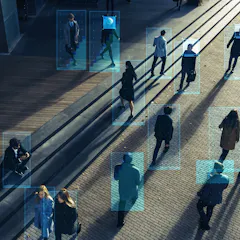
CCTV is a popular form of digital evidence but it can be unreliable and problematic.

Our vehicles hold a remarkable amount of information, which can be used by digital forensic investigators in the detection of crime.

A key element of the battle between truth and propaganda has nothing to do with technology. It has to do with how people are much more likely to accept something if it confirms their beliefs.
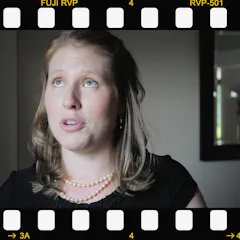
A new technique for detecting deepfakes conceives of videos as flip-books and looks for changes in successive frames of a sequence.

The new technology behind machine learning-enhanced fake videos has a crucial flaw: Computer-generated faces don’t blink as often as real people do.
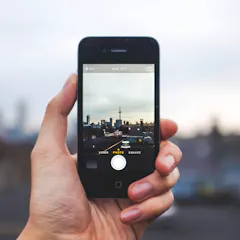
Photos are full of information, from your location to phone model, and digital forensics can help extract it.

Cyberdetectives look for digital doors or windows left unlocked, find electronic footprints in the dirt and examine malicious software for clues about who broke in, what they took and why.
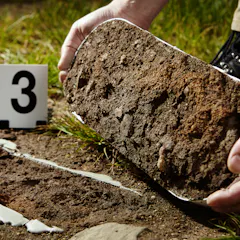
A new technique could help the police identify more criminals from just their footprints.

This week’s hack of the Bureau of Meteorology appeared to come from China, but how do we know? The problem is, it’s notoriously difficult to pinpoint the origin of a hack.
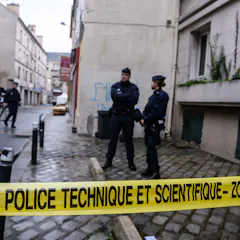
Paris police were able to use information found on a phone, but what details can be found that could tackle future attacks?

So much of modern life involves our digital devices – including crime. As the field of digital forensics gains prominence, practitioners need practical and ethical guidelines.
Top contributors
-

Director of UWA Centre for Software Practice, The University of Western Australia
-
Professor Emeritus of Criminal Justice, University of Alabama at Birmingham
-
Lecturer, Adelaide University
-
Director, Institute for AI and Data Science, Distinguished Professor, Computer Science and Engineering, University at Buffalo
-
Professor of Photographic Sciences, Rochester Institute of Technology
-
Executive Director, Arizona State University
-
Associate Professor of Physics, University of Nottingham
-
Professor of Electrical and Electronic Engineering and Director of Electronic Warfare Research, City St George's, University of London
-
Course Leader and Senior Lecturer in Cyber Security NCSA, University of South Wales
-
Professor of Criminology, University of South Wales
-
Research associate professor, Viterbi School Of Engineering, University of Southern California
-
Research Fellow, University of South Wales
-
Assistant Professor of Accounting, Youngstown State University
-
Ph.D. Student in Electrical and Computer Engineering, Georgia Institute of Technology
-
Associate Professor of Cybersecurity and Privacy, and Electrical and Computer Engineering, Georgia Institute of Technology