

The US dominates international payment systems.
Articles on Digital currencies
Displaying 1 - 20 of 22 articles

The EU aims to launch the currency by 2029, but digital literacy and security are possible barriers.

Tokenisation works by converting real assets into tradeable digital tokens. But New Zealand’s regulatory uncertainty risks investment billions migrating offshore.

The tax implications of owning cryptocurrencies largely depends on how seriously an investor pursues and manages their purchase.
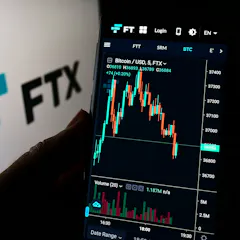
If FTX reimburses investors who lost their assets when the crypto exchange collapsed, it may offer the chance of a new start for the sector.

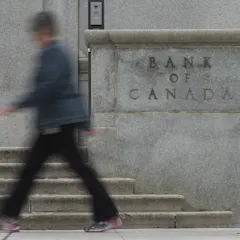
Recent Bank of Canada findings that showed Canadians have misgivings about a central bank digital currency should serve as a wake-up call that policymakers must do more to bridge the trust deficit.

To encourage the widespread use of eNaira, Nigeria will have to fix its infrastructure, train financial services staff and ensure data privacy for users.

While a digital national currency does have the potential to mitigate key financial issues, we cannot ignore the democratic risks such a currency could introduce without safeguards.

Despite China’s economic power, the yuan lags as a major global currency. Here’s why current US interest rates and sanctions on Russia may change that.

Central banks are now taking digital currencies seriously, and the EU is exploring the idea. While an “e-euro” could increase monetary security and stability, the venture is not without risks.

Nigeria’s Central Bank didn’t have an adoption strategy for its digital currency. It was a missed opportunity.

The UK economy could benefit from a digital pound, but is there a role for crypto?

The latest market chaos is set to continue and could result in more regulatory scrutiny.

Cryptocurrency has a substantial carbon footprint. Ethereum have taken steps to address this, but will others follow suit?

Because cryptocurrency exchange platforms act more like banks, they should be subject to increased oversight to protect clients’ assets.
Central banks worldwide are racing to implement national digital currencies, yet democratic considerations are hardly discussed in public. This has to change.

Plus, a philosopher explains the history of the idea that we might all be living in a simulation. Listen to The Conversation Weekly podcast.

There’s no indication that handling cash increases your chance of catching COVID-19. But that hasn’t stopped countries around the world from looking at digital currencies.

More than ten years since blockchains were developed, their usefulness is only just being discovered.

National cryptocurrencies could make payments faster and prevent crime, but they come with their own risks.
Top contributors
-

Professor of Law, University of East London
-
Professor of Finance & Financial Technology, University of Reading
-
Postdoctoral Fellow, Digital Society Lab, McMaster University
-
PhD Candidate, Political Science, McMaster University
-
Associate Science Editor & Co-Host of The Conversation Weekly Podcast, The Conversation
-
Assistant Professor, Smith School of Business, Queen's University, Ontario
-
Associate Professor of Finance, Loyola University Maryland
-
Host, The Conversation Weekly Podcast, The Conversation
-
PhD candidate in FinTech, University of Reading
-
Postdoctoral Research Associate, Center for Political Economy, Columbia University
-
Senior Lecturer in Philosophy and Ethics, Nottingham Trent University
-
Assistant Professor - Geography and Development, Northumbria University, Newcastle
-
Assistant Professor in the School of Computer Science and Statistics, Trinity College Dublin
-
Assistant Professor, Warwick Business School, University of Warwick
-
Senior Lecturer in Finance, University of Otago