

Any work to ease current shortages and price hikes while the Strait of Hormuz remains closed will take years and billions of dollars.
Articles on Diesel fuel
Displaying 1 - 20 of 21 articles
Seven months into the US conflict with Iran, with no clear end in sight, the global oil market has now largely exhausted the safety measures that exist to keep a lid on petroleum prices.

There’s not much diesel fuel lying around, and lots of people want to buy what is available, as well as what little is produced each day. It’s all a matter of supply and demand.

The country, and the world, have been losing diesel refining capacity for many years and can’t just ramp up production to fill the shortages.
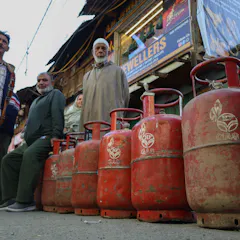
Cooking gas and diesel fuel are among the oil products whose supply levels have been affected already. Here’s why to expect long-term shortages.

Suspending the federal gas tax, which would require Congress to agree, would drop gas prices only about 4% – less in high-cost states like California.
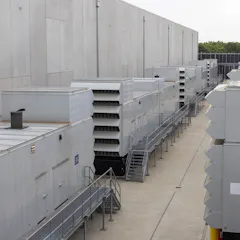
Using existing backup generators as regular sources of electricity would emit lots of pollution into American skies and endanger people’s health.

As US gas prices climb, politicians are looking at ways to lower them. An economist breaks down what does − and doesn’t − move the number on the sign at the gas station.
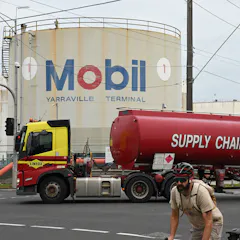
It’s highly unlikely Australia will end up with no diesel. But if what is available becomes extremely expensive, the whole economy – and all of us – will feel it.

Opposition leader Peter Dutton will promise in his Thursday budget reply that a Coalition government would immediately halve the fuel excise on petrol and diesel.
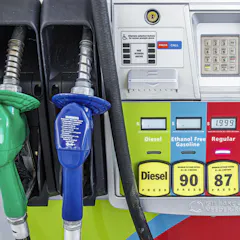
Both gasoline and diesel fuel are refined from crude oil, but they are good for different things and can’t be used interchangeably.
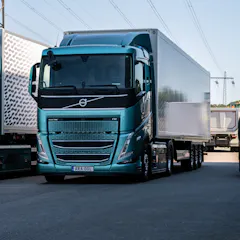
Modelling shows a shift to electric trucks is the better, faster option for cutting transport emissions under most plausible scenarios in Australia’s energy transition.
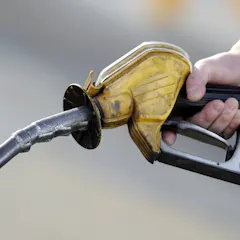
Australia’s fuel tax credit scheme lacks a clear rationale or purpose. Reforming it can save the federal budget $4 billion a year.
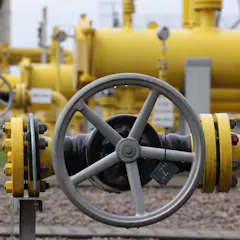
Russian President Vladimir Putin has not hesitated to use energy as a weapon. An expert on global energy markets analyzes what could come next.
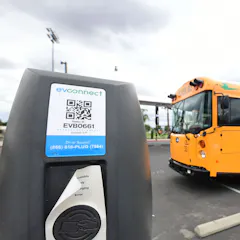
They look like conventional school buses, but electric versions are cleaner, quieter and cheaper to maintain. States, utilities and federal agencies are helping school districts make the switch.
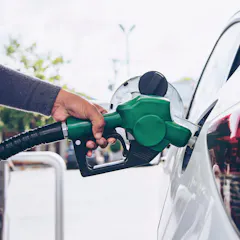
Eco-driving techniques, such as knowing how to control your acceleration, can go a long way towards conserving fuel.
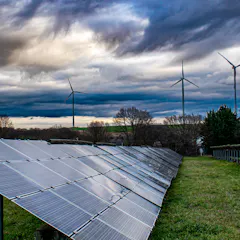
Without community involvement and ownership, renewable energy projects are doomed to fail over the long term.
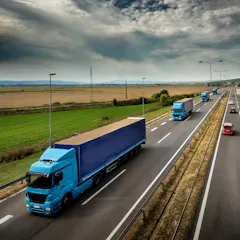
Electric vehicles can have a positive impact on the climate and air pollution levels, but governments should rethink how they electrify the transportation network.

Sulfur contaminates gasoline and coal, and when these fuels are burned, sulfur dioxide is emitted, causing pollution and respiratory issues. Now there may be a new, cheaper way to remove it.

Despite the overwhelming evidence that electric vehicle technology can deliver huge benefits, misinformation continues to muddy debate. Let’s look at the facts.
Top contributors
-

Director, Energy, Climate Justice, and Sustainability Lab, and Research Professor, New York University; Tufts University
-
Assistant Professor of Economics, Georgia Institute of Technology
-
Adjunct Professor of Transport, University of Technology Sydney
-
Professor in Supply Chain and Freight Innovation, Swinburne University of Technology
-
Associate Professor in Environmental Engineering, University of Technology Sydney
-
PhD Candidate, Swinburne University of Technology
-
Transport and Cities Program Director, Grattan Institute
-
Assistant Professor, Operations and Supply Chain Management at Haskayne School of Business, University of Calgary
-
E-Mobility Research Fellow, The University of Queensland
-
Assistant Professor, Beedie School of Business, Department of Technology & Operations Management, Simon Fraser University
-
Researcher in Sustainable Transportation, Carleton University
-
Senior Associate, Transport and Cities Program, Grattan Institute
-
Professor of Transport Technology and Sustainability, Swinburne University of Technology
-
Assistant Professor Chemical and Life Science Engineering, Virginia Commonwealth University
-
Woodruff Endowed Professor of Mechanical Engineering, Georgia Institute of Technology