
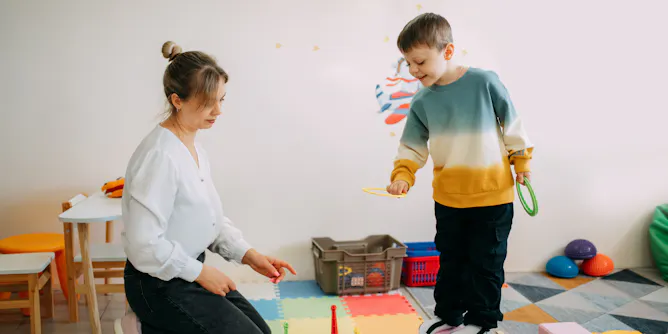
As part of the Thriving Kids program, Victoria plans to screen three- and four-year olds for developmental delay before they get to kinder and school.
Articles on Developmental delay
Displaying all articles

The health minister also says fewer kids are now vaping because of the government’s ban, which ‘exploded’ as a health problem during the COVID years.

Developmental delay might mean a toddler isn’t using sentences when expected, or not meeting milestones such as walking or feeding themself.

A new strengths checklist aims to help parents, carers and clinicians more easily identify a child’s skills, talents and positive qualities.
Developmental delay is viewed clinically as a temporary state where children are slower to develop than expected. It is most often used for children under five.

It starts with recognising your child needs support. Then, you have to prove they are eligible for it. Finally, you have to find the appropriate support. There’s help available along the way.

It’s easy to worry if your child doesn’t seem to be developing as quickly as their playmates. But trust your ‘niggles’ and watch out for ‘aha’ moments. Our research shows they’re often right.

Current rules about who meets the eligibility criteria for autism support services are patchy and inconsistent, meaning those with the greatest need don’t necessarily have the greatest access.
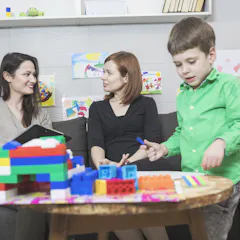
Parents need support from early childhood educators to build capacity to claim for NDIS services.

Parents who notice their child has a flat head should talk to a GP or specialist to see if any treatment is needed.
Top contributors
-

Deputy Director, The Kids Research Institute Australia, Professor of Autism Research, The University of Western Australia
-
Honorary Fellow, Early Childhood Education., Charles Darwin University
-
PhD candidate and sessional academic, UNSW
-
Associate Professor, Occupational Therapy, Australian Catholic University
-
Professor, Social Policy Research Centre, UNSW
-
Lecturer and PhD Candidate, Occupational Therapy, Curtin University
-
Senior research fellow, School of Occupational Therapy and Social Work, Curtin University
-
Neurodevelopmental Paediatrician and Associate Professor, University of Sydney
-
Senior Research Fellow in Child Neurodevelopment, Brain and Mind Centre, University of Sydney
-
Professor and Clinical Psychologist, Michael Crouch Chair in Child and Youth Mental Health, University of Sydney
-
Speech Pathologist and Senior Lecturer, School of Allied Health, Curtin University
-
Professor of Speech Pathology, Curtin University
-
Professorial Fellow, University of Canberra
-
Professor of Epidemiology, University of Sydney
-
Head of Autism Research and Senior Principal Research Fellow, The Kids Research Institute Australia