
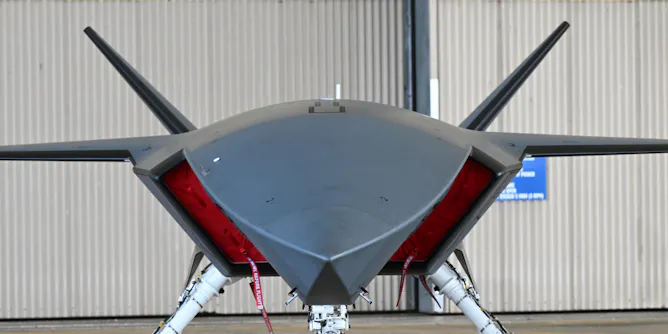
Australia needs to consider how to adapt its military tactics and preparedness to meet potential future threats.
Articles on Deterrence
Displaying 1 - 20 of 26 articles
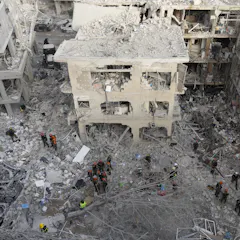
Mutual deterrence may prevent a longer war for now, but the balance remains precarious and could collapse with little warning.

For our deterrence strategy to be effective, we need to be much clearer about our ‘red lines’ for going to war.

Under what conditions could France – the only nuclear power in the EU since Brexit – provide deterrence on a European scale now that US protection against Russia is not guaranteed?
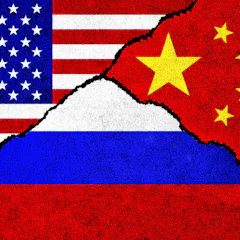
The Pentagon is preparing for what it calls ‘great power competition’ among the US, Russia and China.

Escalating conflict between Israel and Iran is partly the result of an unsuccessful, decade-long plan to ‘contain and deter’ the Iranian regime.
The Rwanda plan was meant to stop the boats – but all the evidence shows deterrence doesn’t work

The imposition of fines and fees on people unable to pay has had a disproportionate impact on Black and Latino communities.
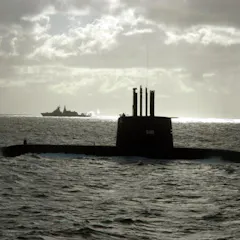
South Africa is a large peninsula on the strategic Cape sea route. Some 90% of its trade flows through its harbours. The navy defends the country’s sovereignty and national interests.

Foreign policy experts are divided on whether Russia’s invasion of Ukraine makes it more or less likely that China will launch a similar attack on Taiwan. Here are the arguments on both sides.

‘The risks of military escalation or miscalculation are rising’, according to the long-awaited report.

One key reason is to provide an increased deterrent in an increasingly turbulent region.

A new acoustic recorder could track the movements of marine mammals more accurately.
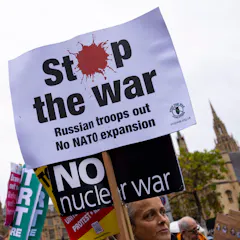
The left was split over whether Nato expansion had prompted the Ukraine invasion or whether it was an act of imperial aggression that must be opposed.
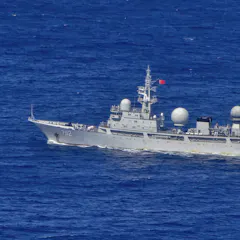
While there are good reasons not to exaggerate these events, the bad news is these incidents are almost certain to continue. But we shouldn’t frame them as if we’re in the brink of war.

The most commonly used justification for capital punishment is not actually supported by evidence.

The first of a series of fatal flaws in the idea is about where to draw the line.

Unfairness alone is upsetting enough to drive people to punish lucky recipients of unfair outcomes.

What makes us comply with the rules? Behavioural economics holds some clues for how to enforce coronavirus measures.
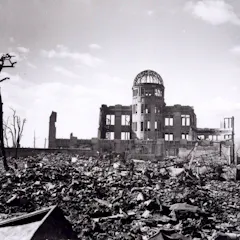
Kwame Nkrumah and Ali Mazrui associated nuclear weapons with imperialism and racism, but proposed different approaches to address the problem they present.
Top contributors
-

Professor of Sociology and Criminology, University of North Carolina Wilmington
-
Associate Professor, UNSW Art & Design, UNSW
-
Deputy Director, Center for Cyber and Homeland Security, Auburn University
-
Senior Lecturer in International Business, University of Liverpool
-
Ph.D. Candidate in Psychology, Yale University
-
Emeritus Distinguished Professor of Defense Analysis, Naval Postgraduate School
-
Director, McCrary Institute for Cyber and Critical Infrastructure Security, Auburn University
-
Lecturer in Organisation and Management, University of Liverpool
-
Assistant Professor of Psychology, Boston College
-
Professor of Sociology & Criminology and Arts & Sciences Distinguished Scholar, University of Miami
-
Associate Professor in Strategic Studies, Macquarie University
-
Professor of Sociology, University of Washington
-
Associate professor in human geography, University of Oxford
-
Professor of Government, Wesleyan University
-
Associate Professor Sociology, University of North Carolina – Greensboro