

A 1952 law that President Harry S. Truman opposed, calling it a step backward, now underpins many actions by the Trump administration against noncitizens in the US.
Articles on Deportation
Displaying 21 - 40 of 89 articles

The government of the Dominican Republic is raiding maternity wards and deporting Haitian women before or after they’ve given birth. More than 3,000 have been deported since April 10.
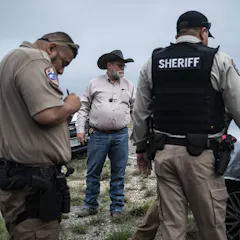
History shows that building the trust of immigrants is an effective tactic in combating local crime and making entire communities safer.
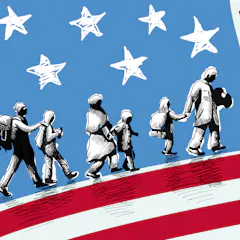
There’s no one set legal definition for sanctuary cities and other places with these policies. But they often limit local coordination with federal immigration authorities.
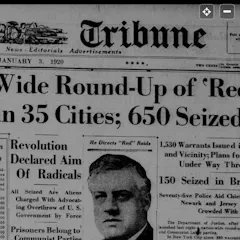
An immigration historian says removal orders targeting student activists echo America’s long past of jailing and expelling immigrants because of their race, what they say or believe – or all three.

Habeas corpus – a Latin phrase meaning ‘you shall have the body’ – protects any person, whether citizen or not, from being illegally confined. It’s a crucial element of US law.

‘It’s one big show of contempt for the court,’ says a former federal judge about the Trump administration’s handling of two cases related to its deportation of noncitizens to an El Salvador prison.
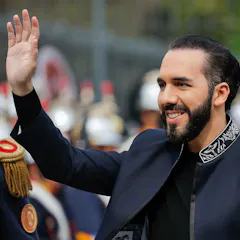
El Salvador’s leader, Nayib Bukele, has cut a deal with Trump to house alleged gang members deported from the US.
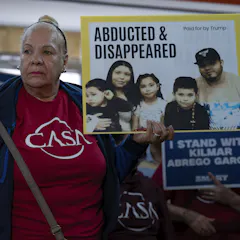
The high court ordered the Trump administration to facilitate the return of a Maryland man, Kilmar Abrego García, to the United States.

A scholar explains why the Trump administration’s actions may violate the constitution.
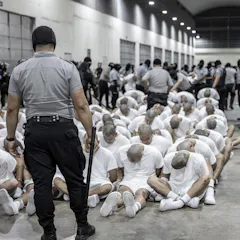
The Alien Enemies Act, first used in the late 1700s, was last invoked during World War II.

Lawful permanent residents hold many of the same rights that US citizens have, but the government can deport them on certain, often vague, security grounds.

Workers can report violations to the government, regardless of their immigration status.
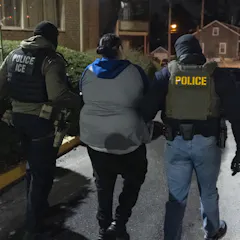
Immigrants who fear deportation might have their kids miss school, or skip a doctor’s appointment. This fear can affect people who are legally in the US.

While immigrants without legal authorization make up about 5% of the U.S. workforce, these workers are concentrated in particular industries, including agriculture.
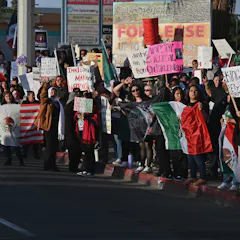
Conflicting polls can make it seem like Americans back Trump’s deportation plan. A psychologist and survey researcher explains how to make sense of the numbers.
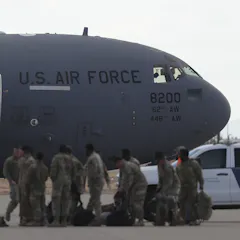
Donald Trump’s deportation orders are raising concerns across the Pacific about a possible influx of returned migrants – and a lack of funds to help them integrate into society.

Trump’s mass deportation plan has got off to a rocky start.

The Alien Enemies Act, first approved in the late 1700s, was last used during World War II to identify particular foreign nationals living in the US.
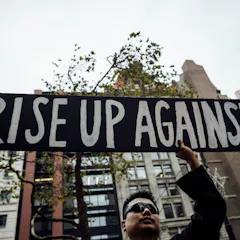
Dictatorial regimes are increasingly reaching across borders to crack down on dissent or punish critics.
Top contributors
-

Professor of Political Science, University of Oregon
-
Clinical Associate Professor of Law, Co-Director, USC Immigration Clinic, University of Southern California
-
President, Dickinson College
-
Professor of International Politics, Lancaster University
-
Dean of Law, Australian Catholic University
-
Senior researcher, Arnold Bergstraesser Institute
-
Senior Lecturer in Human Rights, Constitutional Law and Legal Theory, University of Wollongong
-
Reader in Sociology, City St George's, University of London
-
Assistant Professor of Human Rights and Cultural Relations, American University School of International Service
-
Deputy Director, Global Migration Center, University of California, Davis
-
Associate Professor of Political Science, University of New Mexico
-
Associate Professor of English, University of California, Irvine
-
Samuel Weiss Faculty Scholar and Founding Director, Center for Immigrants' Rights Clinic, Penn State
-
Professor, Melbourne Law School, The University of Melbourne
-
Clinical Professor, School of Law, Boston University