
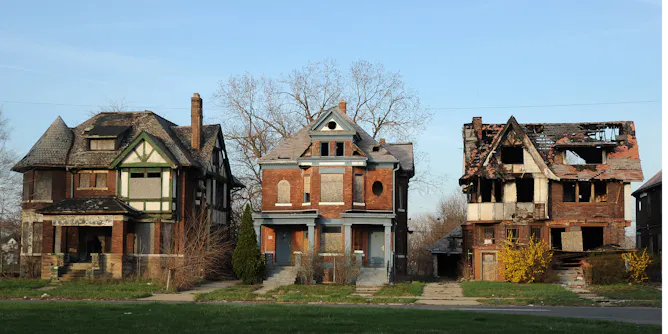
Tearing down abandoned homes has proven benefits, such as reducing crime and toxic materials, but it doesn’t pay for itself.
Articles on Demolition
Displaying all articles
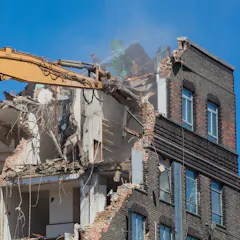
A passport for construction materials could keep resources in circulation for as long as possible.
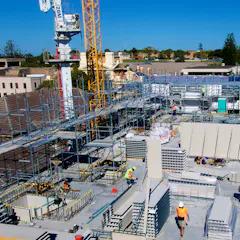
Our buildings and infrastructure can only become sustainable if the sector shares, leases, reuses, repairs, refurbishes and recycles materials and products. A new report maps out out how to get there.

If Vallée’s films are so moving, it is because for him, cinema and television are an act of communication. He said he hoped his stories would “give back a little.”
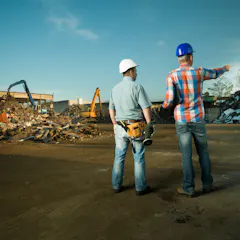
Construction and demolition creates more waste than any other sector, but much of it can be recycled. However, public resistance to setting up new plants stands in the way of a sustainable market.

Mismanaged and in disrepair, many low-income housing complexes are nonetheless seen as important avatars of modern architecture. But are calls for their preservation forgetting those who matter most?
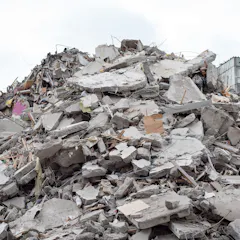
China has put the onus back on Australia to take responsibility for our waste, and Germany has shown us the way with extended producer responsibility for construction and demolition waste.
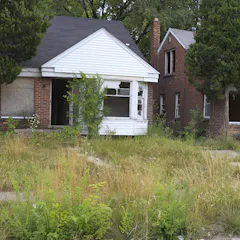
By the time a building is abandoned and falls into disrepair, its community is already suffering. Michigan scholars suggest it’s time to plan for structures’ end of life before they even go up.
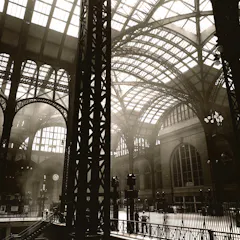
We asked five architecture experts to name one building or structure they wish had been preserved, but couldn’t resist the tides of decay, development and discrimination.
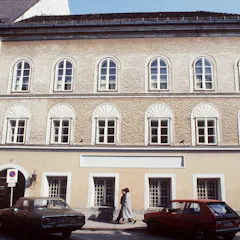
In the past, demolishing the dictator’s residences created a void exploited by Nazi sympathizers.
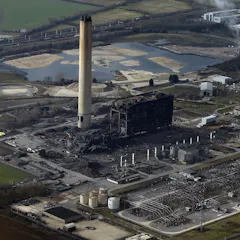
It’s a dangerous job and sometimes things don’t go to plan.
Top contributors
-

Clinical Associate Professor of Urban and Regional Planning, University at Buffalo
-
Senior Lecturer, School of Property, Construction and Project Management, RMIT University
-
Associate Dean and Head of Project Management, RMIT University
-
Professor of Construction Management, Glasgow Caledonian University
-
Founding Director of The Skyscraper Museum, Adjunct Associate Professor of Architecture, Columbia University
-
Vice Provost for Inclusive Excellence and Professor of Architecture, University at Buffalo
-
Director, Preservation Studies Program; Professor, History of Art & Architecture; Professor, American and New England Studies, Boston University
-
Professor of Construction Management, Michigan State University
-
Assistant Professor of Construction Management, Michigan State University
-
Professor of Integral Design, Deputy Head, School of Architecture & Built Environment, and Director, Mediated Intelligence in Design (MInD) Research Lab, Deakin University
-
Senior Research Associate in Circular Economy & Digitalisation, Lancaster University
-
Associate Director, Purdue University
-
Associate Professor, Property, Construction and Project Management, RMIT University
-
Senior Lecturer in Construction Technology, The University of Melbourne
-
Stagiaire postdoctorale, Université Laval