
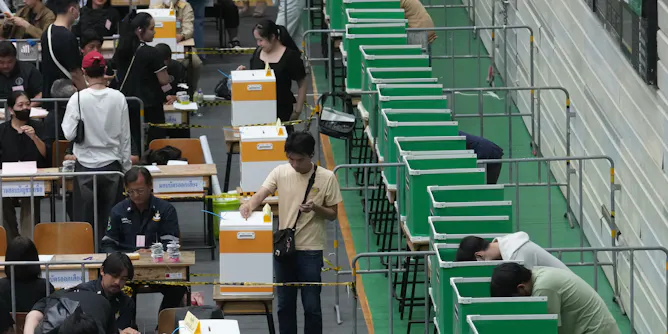
A new report assessing democratic values across more than 200 countries has found 6 billion people live in autocracies. Here’s where Australia sits.
Articles on Democratic values
Displaying 1 - 20 of 23 articles

A new video intervention shows correcting Americans’ exaggerated views of political opponents can defuse tensions, reduce support for antidemocratic practices and promote a healthier democracy.

A large proportion of Americans is willing to support leaders who would violate democratic principles.

A scholar of Islam writes about how widespread authoritarianism in the Muslim world shapes governments’ foreign policy toward Muslim minorities abroad.
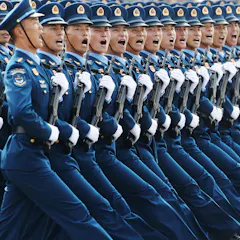
The Chinese Communist Party sees liberal values as a threat to its rule and needs many of them to be suppressed. Its approach? Co-opt, ignore and selectively exploit global institutions.

The US Armed Forces run 14 programs in over 150 countries, providing education and training for roughly 70,000 foreign military personnel each year. What, if anything, are they learning?
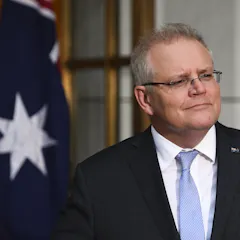
The word ‘values’ was seldom used in Australian diplomacy in recent decades, but has slowly become more prevalent as Canberra has sought to counter China’s influence in the region.
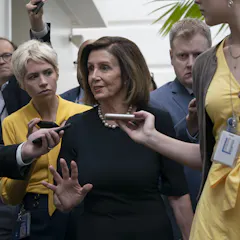
As the House mounts an impeachment investigation of President Trump, examples from Central and South America show that ousting an executive leader from office doesn’t always have the intended effect.
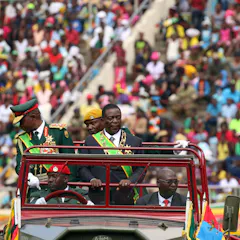
Violence and uncertainty has followed Zimbabwe’s first modern election without Robert Mugabe. That’s not surprising: After 38 years of dictatorship, it takes more than a vote to build democracy.
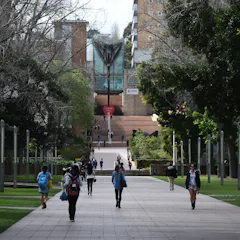
Australian higher education policy debates focus primarily on how and by whom universities are funded. This diminishes understanding of universities’ democratic purpose and wider social mission.

Reforms to the judiciary are a threat to democracy – and that affects us all.
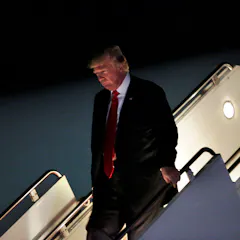
Ousting an executive leader from office doesn’t always have the intended effect, as these examples from Central and South America show.
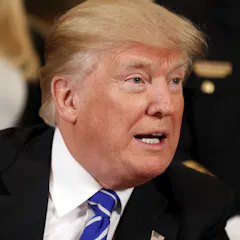
The rule of law can take on different meanings depending whom you ask and where you are – but in the US it pretty much means one thing.
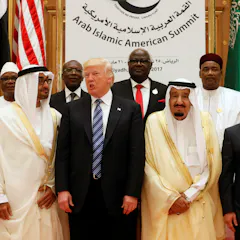
For Trump, putting America first means that being a global leader on human rights may take a back seat.
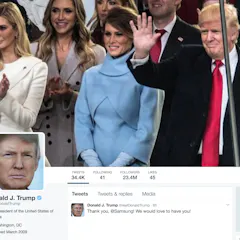
Donald Trump is reinventing the royal fiat by novel means: the rule-by-tweet, or ‘twiat’. This move is not an extension of popular democracy, but its enemy, and it needs to be resisted.

While the US is reeling from rampant fake online news, political movements in Europe are using the internet as a powerful democratic symbol to win elections. Will cyber-optimism or pessimism win?

At a time when politics is showing its most divisive side, a scholar argues that embracing humility could help us deal with hidden biases.

Ukraine desperately needs Chinese investment but, like many other countries in this position, this is giving rise to concerns about the consequences for its fragile democracy.
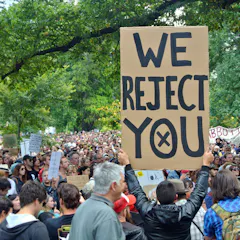
Pressure from online comments can cause our democratically elected leaders to act in the strangest ways.
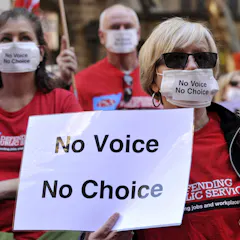
Good governance is the right thing to do, and boosts the legitimacy of decision-making. If moral chivalry doesn’t appeal, here are two more reasons: it’s cost-efficient and delivers better solutions.
Top contributors
-

Associate Professor of Political Science, The Ohio State University
-
Assistant researcher, University of Sydney
-
Lecturer in Comparative Politics, UNSW
-
Professor of International Affairs, Penn State
-
Professor of Media, Communications and Social Theory, London School of Economics and Political Science
-
Professor of Politics, Department of Government and International Relations, University of Sydney
-
Frank and Bethine Church Chair of Public Affairs & Associate Professor, School of Public Service; Nonresident Fellow, Carnegie Endowment for International Peace, Boise State University
-
Associate Professor of Politics and International Relations, Macquarie University., Macquarie University
-
Lecturer in Geographic Information Science, Birkbeck, University of London
-
Professor of Political Sociology, Institute for Culture and Society, Western Sydney University
-
Emeritus Professor of Innovation, University of Technology Sydney
-
Professor, Department of Politics and Government, Universitas Gadjah Mada
-
Associate Professor in Media Theory and History, Università di Torino
-
Managing Director of the McCourtney Institute of Democracy, Associate Research Professor, Political Science, Co-host of Democracy Works Podcast, Penn State
-
Lecturer and Teacher, Department of Politics and International Relations, Cardiff University