

A new report shows Australians don’t want to be reduced to merely voters. They want a democracy that listens, including between elections.
Articles on deliberative democracy
Displaying all articles

The information systems Congress uses have existed largely unchanged for decades, while the world has experienced an information revolution.

Mini-publics, a type of participatory process, can help revitalize democracy in democratic member-based organizations.

As Canada’s nearest neighbour grapples with serious attacks on democracy, a fresh approach to citizen engagement in Canada is an exciting prospect, worthy of serious consideration.

Deliberative democracy should have a place in emergency decision-making. Here’s how it works.

Problems with party politics abound, largely driven by the fusion of executive and legislative powers that enforces party discipline. Here’s how to get the public more involved.

Universities should look to democratic innovations seen in society like ‘mini publics’ where citizens deliberate about critical issues in representative forums.

At a time when democratic norms appear to be in decline around the world, deliberative democracy is one potential remedy worth pursuing.

Our brains use a function similar to a search engine’s autocomplete feature, but sometimes we get it wrong.
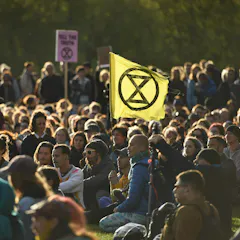
A citizens’ assembly can help identify what the people want. Because if climate action is not democratic, it’s not realistic.

What sort of democracy is now required to break the Brexit deadlock?

Populism can be benign and simply mean giving ordinary citizens more of a voice. But the nasty side that can lead to far-right groups gaining momentum could still be reined in. Here’s how.

Populist politics would appear to have left deliberative democracy by the wayside, but innovations that engage citizens in reasoned decision-making have much to offer.

Citizens do not have enough say in how mental health services are planned, funded and run in Australia. Here’s why that needs to change.

One reason Perth’s Roe 8 project is the subject of passionate protests is that it’s a case of a government asserting power over people rather than exercising power with local communities.
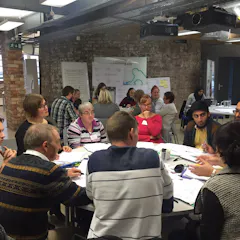
A citizens’ jury has been working to refresh the Future Melbourne strategy. It’s part of a broader shift from government decision-making for communities to decision-making with communities.

If smart cities run on big data and algorithms that channel only ‘relevant’ information and opinions to us, how do we maintain the diversity of ideas and possibilities that drives truly smart cities?

Aung San Suu Kyi’s NLD has won Myanmar’s elections in a landslide, but must lead the transition to democratic rule carrying the hopes of tens of millions of voters who expect life to be transformed.
Top contributors
-

Associate Professor of Business and Society, Gustavson School of Business, University of Victoria
-
Assistant researcher, University of Sydney
-
Professor, Sustainability Policy Institute, Curtin University
-
Professor, Department of Child and Youth Studies, Brock University
-
Collaborative Research Fellow, Sustainable Industries and Liveable Cities (ISILC), Victoria University
-
Associate Professor, Centre for Deliberative Democracy and Global Governance, University of Canberra
-
Professor, Australian National University
-
Associate Professor in International & Community Development, Deakin University
-
Associate Professor, Brain and Mind Centre, University of Sydney; University of Canberra
-
Postdoctoral Fellow, University of Canberra
-
Professor of Strategic Design, Queensland University of Technology
-
Leverhulme Trust Early Career Fellow, Loughborough University
-
Research Fellow, Democracy and Citizen Engagement, Centre for Deliberative Democracy, University of Canberra
-
Senior Lecturer, Griffith University
-
Postdoctoral research fellow, Flinders University; University of Canberra