
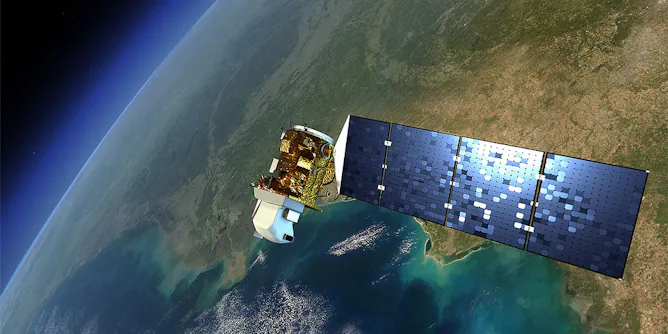
A new approach to monitor changes to the earth’s surface uses maps that consist of physical and human geographic data to explain what’s changed.
Articles on Deforestation
Displaying 321 - 340 of 408 articles

Brazil claims mining and logging will boost the economy and help it protect the environment. But there is little evidence this works.

Conservationists need to assess costs which allow for the adequate compensation of communities on protected lands, whose livelihoods are deeply entwined with forest use.
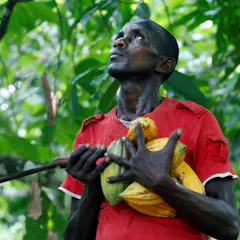
There are rising concerns that rapid deforestation across the Amazon and Southeast Asia could spread to Africa. The continent hasn’t yet seen vast agricultural expansion but it could be on the way.
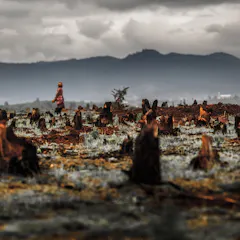
Human alteration of the natural environment will make malaria increasingly difficult to control in the years to come.
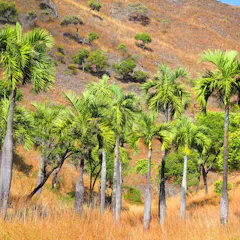
International and local demand have brought Madagascar’s palm species to the brink of extinction.
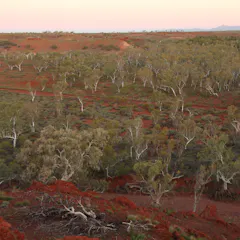
A new survey has identified millions of hectares of forest in dryland areas, a finding that boosts the total global forest cover by 9% and has significant consequences for carbon budgets.
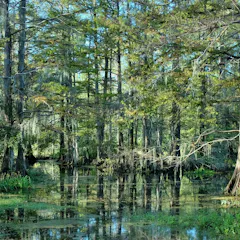
A new report calls U.S. forests an undervalued asset for slowing climate change. It warns that they are being degraded by logging for wood, paper and fuel, particularly in the Southeast.

Climate change, deforestation, overfishing and hydrocarbon exploitation threatens one of Africa’s oldest lake’s, Lake Tanganyika.

Eat less meat, save the world
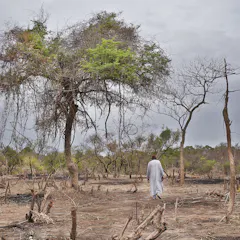
Unless they trust climate change programmes, communities will continue to plunder forests rendering such interventions redundant.
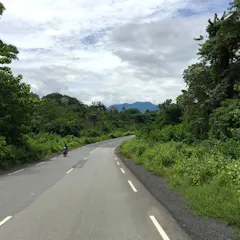
A time-series analysis of tree cover loss before, during and after road construction reveals a strong relationship between infrastructure development and accelerating deforestation.
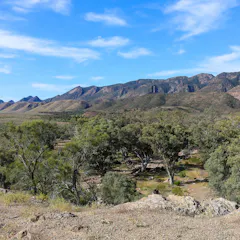
Areas like the Flinders Ranges have provided refuge for flora and fauna when the climate has changed. But rapid temperature increases and human intervention may stop them doing so again.
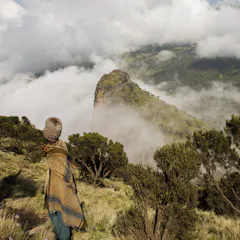
You’d hope we wouldn’t flatten the pyramids to build a highway. But that’s exactly what’s happening to the world’s natural heritage sites.
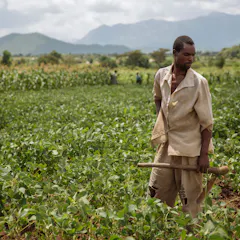
How can we feed a growing world population while protecting the environment? One key strategy is to improve yields on small farms, which produce much of the food in the world’s hungriest countries.
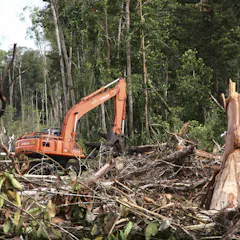
The region faces some of the world’s highest rates of habitat loss, as well as direct over-exploitation of species.
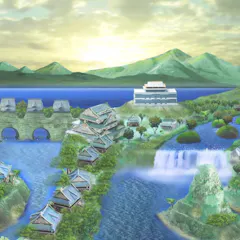
Given that cities may be home to 80% of humanity by the end of the century, they can only be sustainable if eco-friendliness is one of their core features.
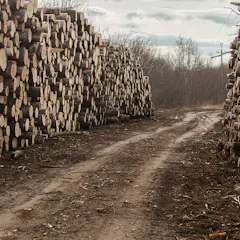
A new mapping study shows that roads have sliced and diced almost the entire land surface of Earth, leaving huge areas prone to illegal logging, mining and hunting.
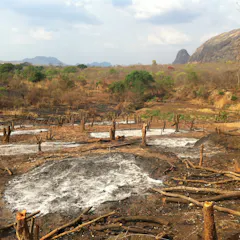
Since 1992, an area of land two-thirds the size of Australia has been converted to human use.
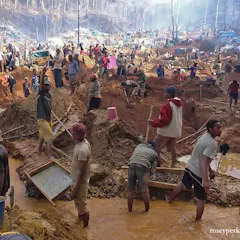
The island’s latest mining boom threatens a critically endangered lemur – and puts human lives at risk.
Top contributors
-

Distinguished Research Professor and Australian Laureate, James Cook University
-
Professor in Conservation Science, School of the Environment, The University of Queensland
-
Professor of Conservation Science, Lancaster University
-
Moran Professor of Conservation and Development, University of Cambridge
-
Chief Research Scientist, CSIRO Environment; Executive Director, Global Carbon Project, CSIRO
-
Professor of Environmental Management, The University of Queensland
-
Professor Emeritus of Latin American Studies and Geography, University of Florida
-
Honorary Associate Professor, The Crawford School of Public Policy, Australian National University
-
Reader in Ecology and Conservation Biology, Manchester Metropolitan University
-
Principal Scientist, Center for International Forestry Research – World Agroforestry (CIFOR-ICRAF)
-
Honorary Professorial Fellow, The University of Melbourne
-
CGIAR
-
Senior Research Associate, University of Johannesburg
-
Professor and Climate Scientist, Department of Geography, Planning and Environment, Concordia University
-
Professor of Geography, University of Florida