
In the age of TikTok, images of people in public go viral all the time. Here’s how the law does and doesn’t protect you.
Articles on Defamation law
Displaying 21 - 39 of 39 articles
Australia’s defamation laws have been inadequate for years - as this case starkly shows.
With the high-profile defamation trial over, an expert explains how to avoid becoming the next Coleen Rooney or Rebekah Vardy.

The government’s plan to make social media companies hand over trolls’ details aims to make it easier for victims to sue their harassers for defamation. But this conflates two very different concepts.

Today’s ruling may inspire many social media account managers to more tightly restrict comments — or, where possible, switch them off completely.
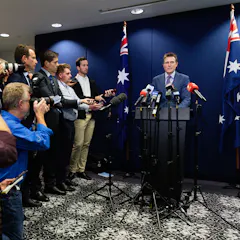
Porter claims even though he wasn’t named in the ABC article, he was easily identifiable to many Australians. For the ABC, the defences to defamation are notoriously difficult to establish.

The ins and outs of a fiercely contested defamation case.
While the latest changes to defamation laws are a step in the right direction, much more could be done to improve them for the benefit of the public.

The NSW Court of Appeal’s Dylan Voller decision means the media may be liable for the hurtful things users write on social pages. This will have many media companies in a panic.

The Australian Press Council’s ruling suggests an exemption for ‘entertainment magazines’ from the standard of factual reporting. This ruling has no basis in Australian defamation law.

Media freedom is good, but absolute media freedom could lead to a nastier, more brutish public discourse.
Defamation law reform is on the horizon. Social media companies may be held more liable for what they publish. But this could come at the expense of everyday users.
Journalists are not happy about a decision of the Supreme Court of New South Wales finding that media companies could be liable for defamatory comments made under news stories on their Facebook pages.
Calls to impose harsh prison sentences for verbal crimen injuria are often premised on the need to deter such behaviour.

Google has lost a High Court appeal in defamation litigation brought by Michael Trkulja. It is time to consider that extending “safe harbour” to Google may be a good idea.

A trend of defamation cases going digital has led to a review of defamation law in New South Wales.

Writing a negative online review can have serious consequences, so you need to be careful about how, and what, you write.

The trend of politicians suing other politicians is worrisome since it risks limiting free speech. But there’s a solution at hand known as anti-SLAPP legislation.

Defamation law poses a considerable threat to freedom of speech in Australia, especially where social media is concerned.
Top contributors
-

Senior Lecturer in Law, The University of Western Australia
-
Lecturer in Law & Justice, UNSW
-
Professor of Law, University of Sydney
-
Emeritus Professor in Law and Criminal Justice, Adelaide University
-
Senior Research Fellow, Centre for Advancing Journalism, The University of Melbourne
-
Senior Lecturer in Media Law, University of Essex
-
Professor Emeritus of Communication and Rhetorical Studies, Syracuse University
-
University Teacher in Journalism, University of Sheffield
-
Professor of Journalism, The University of Melbourne
-
Senior Lecturer of Law, Adelaide University
-
Associate Professor, School of Health Studies, Western University
-
Associate Director, Centre for Indonesian Law, Islam and Society, The University of Melbourne
-
Associate Professor of Clinical Communication, The Ohio State University
-
Lecturer in Media and Communications, The University of Melbourne
-
President, Dickinson College