
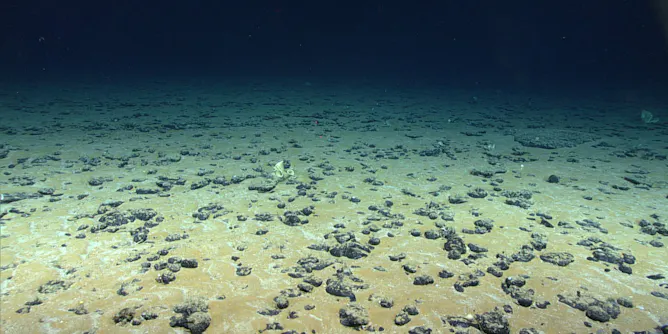
The deep ocean is not a silent, static place – it’s active, connected to the oceans above and always changing.
Articles on Deep sea mining
Displaying 1 - 20 of 26 articles
New marine protected areas may hinder lucrative deep sea mining.
Four Pacific nations are backing deep-sea mining, while others worry about environmental consequences. The split could threaten the region’s climate leadership.
After 20 years of intense debate, the world looks set to have a treaty protecting marine life out beyond national waters.
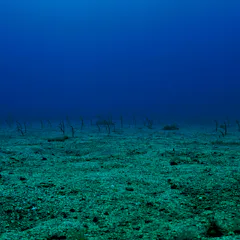
Whether the government approves two seabed mining applications or chooses a precautionary approach, the stakes are high and other Pacific nations will be watching.
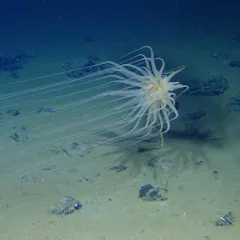
Companies are preparing to move forward with seabed mining, but a method for gathering critical minerals from the seafloor would create sediment plumes in the water column where many creatures live.

Deep seabed mining is already controversial because of inherent environmental and biodiversity risks. A new study shows that its economic impacts may hit even harder.

A new database documents 16,000 proteins from deep-sea organisms that could yield new inventions.
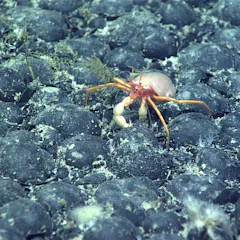
Deep sea metallic nodules could help us shift to clean energy. But we don’t know how much damage it will do to ecosystems

For centuries, Pacific Islands have been raided by mining interests with little to show for it. Harnessing their enormous green mineral wealth must be done justly.
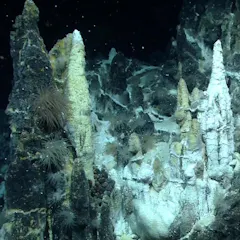
Among the dozens of endangered species, is a spiky snail named after The Clash lead singer, Joe Strummer.

Which species are becoming endangered and which are recovering, according to the IUCN World Conservation Congress?
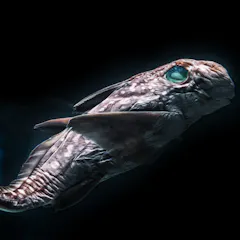
Contracts for exploring the deep sea are due to expire before a safe mining code can be agreed.

Plus, why Brazilian women who lived through Zika are avoiding getting pregnant during the COVID-19 pandemic. Listen to episode 18 of The Conversation Weekly podcast.
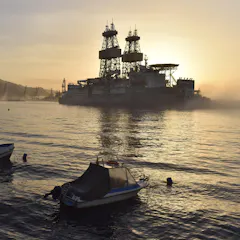
As few as 100 companies produced 60% of revenues in eight ocean industries in 2018.
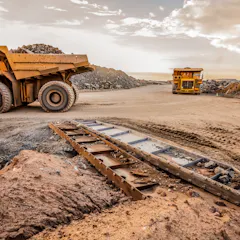
Mining is not just a physical engineering process. It requires social engineering as well.

International law does not meaningfully address biodiversity conservation in the high seas. We risk losing marine species before we have a chance to identify and understand them.
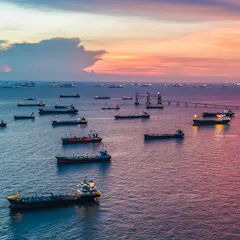
The Great Acceleration inaugurated the Anthropocene in the 1950s. Now, a similar race for resources and space is happening in the ocean.
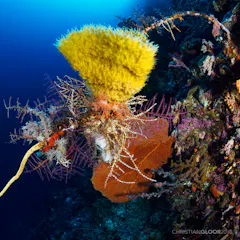
Companies are developing technologies to mine the deep sea, but environmental regulations have yet to be finalized.
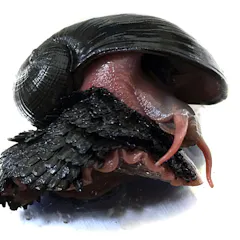
When Julia Sigwart went looking for the scaly-foot snail – or Sea Pangolin – in the deep ocean, they were hard to find. Now they are seen as endangered from the prospect of deep sea mining.
Top contributors
-

Professor, Department of Oceanography, Dalhousie University
-
Associate Professor in Ocean Stewardship, Stockholm University
-
Postdoctoral Researcher in Sustainability Science, Stockholm University
-
Postdoctoral Research Fellow, Plymouth Marine Laboratory
-
Research Fellow, Melbourne School of Government, The University of Melbourne
-
Lecturer in English, University of Bristol
-
Research Fellow, Stephenson Institute for Renewable Energy, University of Liverpool
-
Senior Policy Fellow, University of St Andrews
-
Senior Lecturer (Associate Professor) in Marine Biology and Associate Director, Queen's University Marine Laboratory
-
Associate Professor of Geography, University of Guelph
-
Lecturer in Law, Deakin University
-
Principal Lecturer in Wildlife Conservation, Nottingham Trent University
-
Director, Ocean Policy Program, Duke University
-
Professor of Environmental Science, Stockholm University
-
Research fellow, UNSW