

As COVID gradually recedes and attention focuses on economic recovery, good leadership is essential to help companies and their employees navigate a post-pandemic future.
Articles on Decision making
Displaying 61 - 80 of 167 articles

It’s human nature to unconsciously rely on quick rules to help make spur-of-the-moment decisions. New research finds physicians use these shortcuts, too, which can be bad news for some patients.

Feeling powerful makes us more prone to overvaluing our own perspective, dismissing the expertise of others, and failing to recognise limitations.

People tend to stick with their stated beliefs. But here’s how external forces like vaccine mandates can push people to do something they don’t want to do – and provide some face-saving cover.
The African evidence community has built strong relationships across traditional boundaries. This has allowed researchers to mobilise quickly and effectively to improve policy outcomes.
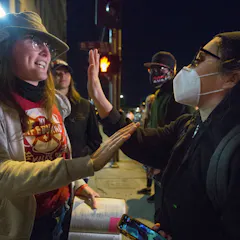
How you respond to a risk depends on how you weigh the costs and benefits of an action. The problem is you’re not just a logical computer, and emotions bias your interpretation of the facts.

Conservatorships significantly restrict people’s ability to make decisions for themselves. Other options can provide support while maintaining respect for autonomy.

Science denial is not new, but researchers have learned a lot about it. Here’s why it exists, how everyone is susceptible to it in one way or another and steps to take to overcome it.

Bias is a psychological process detectable in individual judgements. Noise is a different phenomenon affecting human decisions.

Why do groups of knowledgable people sometimes all make the same flawed decisions?

Decades of research gives insight into how free our choices really are.

Australia can take great strides forward in climate policy and action. A reactionary, incremental approach to adaptation will fall short. Now is the time to think big.

Cognitive scientists are investigating the ways relative factors like new options and the order they’re presented influence your choices and beliefs.

Psychological research presents some unsurprising wisdom about how to make big decisions without regret: focus on people, don’t miss opportunities, and stay true to yourself.

Our brains have two ways of thinking and making decisions: fast and slow.

New research suggests there’s often a mismatch between how you respond and what the other person wants to hear.

The pandemic has made many of us acutely aware of the daily risks we need to take. The ancient Greeks often did not leave risky choices up to individuals alone.

People have plenty of individual reasons to stick with or end a romantic relationship. But researchers have identified some common themes that influence this big decision.
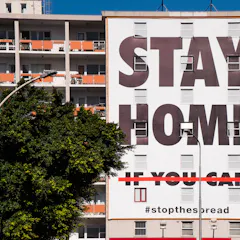
Scientists and policymakers need to be more humble in their claims of what they know.

Cognitive shortcuts help you efficiently move through a complicated world. But they come with an unwelcome side effect: Facts aren’t necessarily enough to change your mind.
Top contributors
-

Assistant Professor of Ecology & Evolutionary Biology, University of Tennessee; Smithsonian Institution
-
Professor of Cognitive Psychology and Director of the Institute for Climate Risk and Response, UNSW
-
Associate Professor of Marketing, University of Technology Sydney
-
Senior Lecturer in Marketing, RMIT University
-
ARC DECRA Senior Research Fellow in Cognitive Neuroscience, Western Sydney University
-
Professor of Clinical Neuropsychology, University of Cambridge
-
Associate professor, Department of Health Sciences, Carleton University
-
Lecturer and Head of the Prediction and Decision-Making Lab, The University of Melbourne
-
Professor of Biological Sciences; Director of the Cellular and Behavioral Neurobiology Graduate Program, University of Oklahoma
-
Lecturer, Institute for Digital Technologies, Loughborough University
-
Senior Lecturer in Skill Acquisition and Motor Control, University of Technology Sydney
-
Associate professor, UCL
-
Director of Behavioral Science & Policy Initiative, Schaeffer Institute of Public Policy & Government Service, USC Price School of Public Policy, USC Dornsife College of Letters, Arts and Sciences
-
Associate professor, University of Wollongong
-
Distinguished University Professor, University of Pittsburgh