

Florida’s new unified human trafficking database allows criminologists to determine the scope of the problem and find patterns of exploitation.
Articles on Databases
Displaying all articles

Many Native American languages only have a few native speakers left.

Death data in the US is fragmented, incomplete and inconsistent. The consequences of undercounted deaths and lack of real-time tracking continue to be felt with each new public health crisis.

Spreadsheet-related errors can have serious consequences in the private and public sector. But what can we do to overcome them?

A central repository system offers practical solutions to reducing the large number of awaiting-trial inmates in Nigeria.

Did ancient technological advancements drive social innovation, or vice versa? Studying cause and effect in the ancient world may seem like a fool’s errand, but researchers built a database to do just that.

Natural language coding means that people won’t need to learn specialized coding languages to write programs or design websites. But large corporations will control the means of translation.
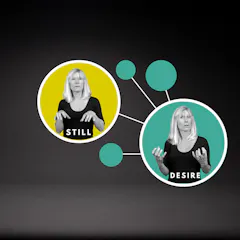
In American Sign Language, some words rhyme, some look like what they mean and some are used more often than others. A new database of these features paves a pathway for ASL research.

The scientific community is churning out vast quantities of research about the coronavirus pandemic – far too much for researchers to absorb. An AI system aims to do the heavy lifting for them.

A new project looks at the race of on-duty police officers and civilians involved in 917 fatal shootings in 2015.

Allowing the police unfettered use of vast databases of information will begin to tilt the balance of power towards totalitarianism.

Governments must stop thinking that owning as much data as possible is the only way to protect national security and prevent crime.

How have state firearm laws changed over time? Over the past 27 years, some states have loosened the rules for gun owners and the gun industry, while others are getting stricter.

Anti-terrorism policy is too often adopted based on very small sets of data – and fear.

An online database explores the nearly 36,000 slave voyages that occurred between 1514 and 1866.
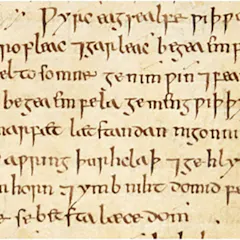
A team of medievalists and scientists look back to history – including a 1,000-year-old eyesalve recipe – for clues to new antibiotics.
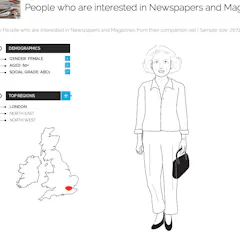
One of the UK’s largest market research firms has caused a stir with an online tool that gives a peek into its treasure trove of consumer profiles. YouGov describes its Profiler app as “a showcase for…

As the world wakes up to the power of data, we need to start working out how to join up all this information. We need to turn it into meaningful findings that will help us to make changes to the way we…

Electronic medical records are essential for treating rare conditions. I have a two-year-old daughter with a rare medical condition. She is seen by three doctors and is on a number of different medicines…
Top contributors
-

Lecturer in Atlantic World History, 1500-1800, Lancaster University
-
Biostatistician, University of Manchester
-
CLIR Postdoctoral Fellow for Data Curation in Medieval Studies, University of Pennsylvania
-
Assistant Professor of History, St. John's University
-
Professor Emeritus of History, Emory University
-
Professor, Digital Sociology and Social Policy, The University of Queensland
-
Researcher, University of Oxford
-
Boston University
-
Lecturer in Social Studies Education, Clemson University
-
Visiting Professor of Public Health and Community Medicine, Tufts University
-
University of Southampton
-
Director, European Centre for Environment and Human Health, University of Exeter
-
Associate Professor of Criminology, University of South Florida
-
Professor of Criminology, University of South Florida
-
Associate Professor of History, Rice University