
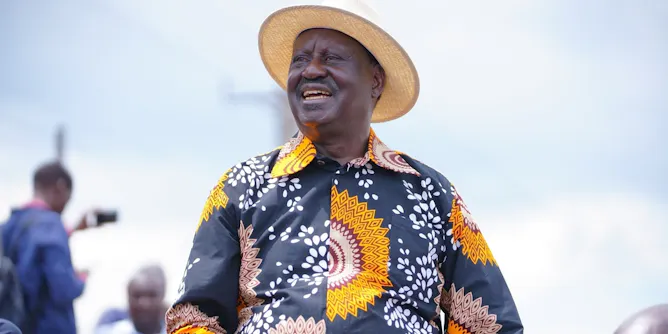
Odinga was both a remarkable figure and an embodiment of Kenya’s political contradictions.
Articles on Daniel Moi
Displaying all articles
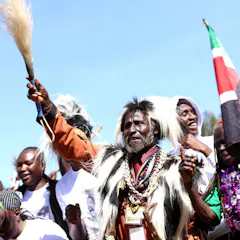
The land question and reparative packages for the ex-Mau Mau remain unaddressed.
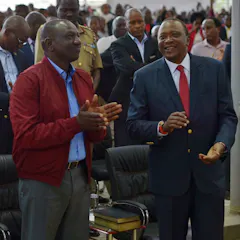
Religious checks on the state are a vital cog in the institutionalisation of moral politics in Kenya.
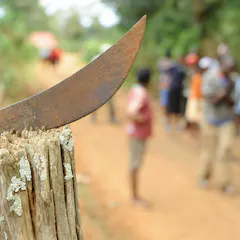
The politics of ethnicity laid the groundwork for Mungiki.
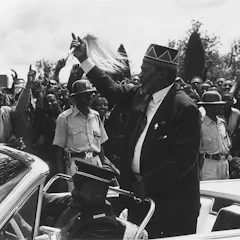
Jomo Kenyatta and his successor Daniel arap Moi set the tone for ethnic and authoritarian politics which Kenya has wrestled to free itself from in recent decades.
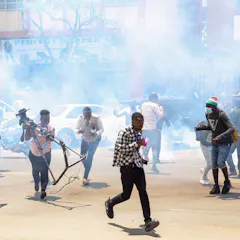
There is a growing public wariness about the performance of the media, which are increasingly accused of being partisan.

Alternatives to violent policing already exist in the daily practices of Nairobi residents who don’t depend on the police for safety.
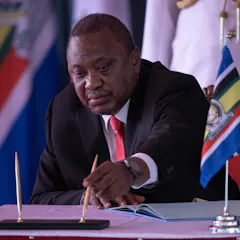
Kenya’s new president needs to forge closer ties with regional heavyweights to create a balance of power that favours his country.

Political interests have informed conservation policies in one of East Africa’s most important water towers, the Mau Forest Complex.

Banned 45 years ago, and its author detained, the Gikuyu language play Ngaahika Ndeenda profoundly shaped the literary legend.

Music has often been used as a political tool to urge Kenyans to forget the sins of colonial and post-colonial regimes.
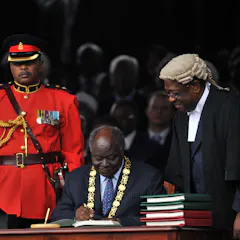
Kenya’s constitution-making process has exhibited a gyration pattern that often starts with a belief that governance reforms can rectify the country’s problems, but ends up as a power struggle.

For democracy to work in Kenya the country needs good leadership. Politicians must uphold the constitution to infuse trust and confidence in state institutions.

Moi’s university policies aimed at engineering a social transformation by providing opportunities to the excluded groups.

Elections in Kenya are never just a matter of casting ballots. Historically, they have been marred by ethno-political violence, exacerbated by vigilantes and militias deployed by politicians.
Top contributors
-

Professor of Comparative Politics, University of Warwick
-
Lecturer International Relations and Security, Technical University of Kenya
-
Assistant Professor of Anthropology, American University
-
International Relations Scholar, University of the Witwatersrand
-
Researcher, French Institute for Research in Africa in Nairobi (IFRA-Nairobi)
-
Anthropologist, University of Cape Town
-
Postdoctoral fellow, University of Milan
-
Research associate, University of Bristol
-
Associate Fellow at the HORN International Institute for Strategic Studies and Professor of History and International Relations, United States International University
-
Associate Professor, University of Central Arkansas
-
PhD Candidate, Justice Studies, Charles Sturt University
-
Professor of Media Industries, University of Nottingham
-
Professor of Practice, Aga Khan University Graduate School of Media and Communications (GSMC)
-
Lecturer of Music, Kabarak University
-
Associate Professor of Religious Studies, Moi University