
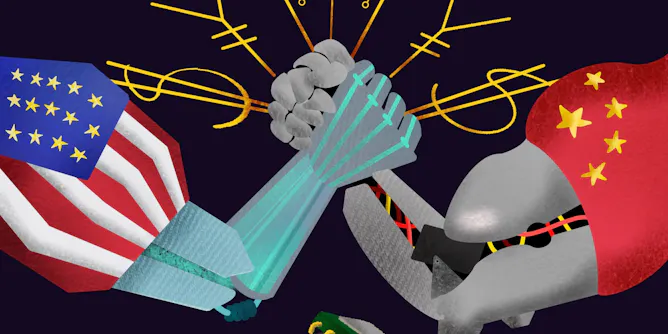
The US defense community is coming to understand that AI will significantly transform, if not completely reinvent, the world’s military power balance.
Articles on Cyberwar
Displaying 21 - 40 of 52 articles
Treating non-violent cyber attacks as warfare could lead to unnecessary escalation.

China and the United States are not at war, but cyberspace has created opportunities for intelligence gathering, influence and sabotage that are already taking place.
Dozens of countries and hundreds of firms and nonprofits are fed up with digital violence and are working toward greater cybersecurity for all.

Nuclear threats are serious – but officials, the media and the public keep a close eye on them. There’s less attention to the dangers of cyberattacks, which could cripple key utilities.
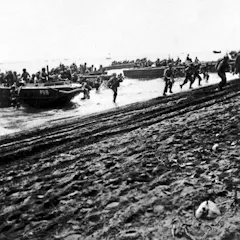
A defender that can hold out while inflicting greater losses on its attacker can wear down an adversary – reducing the threat of additional attacks.

US and Russian tension over power grid cyber attacks is a concern for global stability, but it also highlights our own critical infrastructure vulnerabilities.

Cyber attacks are becoming part of traditional warfare, but who should be targeted in response and what force should be used?

Countries may be forced to choose whether they side with the US or China when it comes to Huawei.
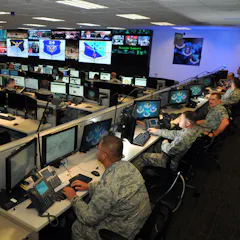
A new strategy for U.S. Cyber Command seeks to block enemies from achieving their objectives – but may not be successful, and could have unforeseen consequences.
‘I think we should be very concerned’: A cybercrime expert on this week’s hack and what needs to happen next
The Conversation38.8 MB (download)
This week, a 'sophisticated state actor' hacked the big Australian political parties. In today's episode, an expert on crime and technology says 'it's a given' that some will try to disrupt elections.
Bill Shorten said party political structures were perhaps more vulnerable than government institutions - and progressive parties particularly so.
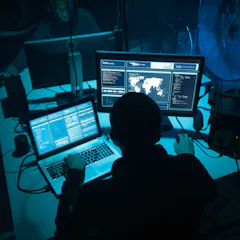
Cyber attacks need two components – the tools to exploit vulnerabilities and the people with the expertise to deploy them.

Despite the uncertainties – and dangers – of retaliating against suspected cyberattackers, a surprising number of companies and countries are exploring doing just that.
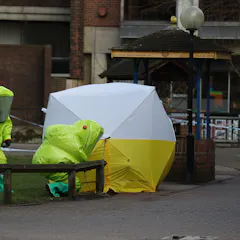
The UK has become surprisingly willing to brief the press about possible use of cyber attacks, including against Russia in response to the Skripal attack.

Cybersecurity experts in the US knew about Russian intelligence agencies’ activities, but may not have had any idea how comprehensive and integrated they were – until now.

The difference between probing and mapping and actually attacking depends on the intent of the people doing it, which is hard to figure out and may change. The dangers, however, remain worrying.
Simulation models show just how effectively fake news and propaganda can shift opinions.

North Korea’s cyber army is closely controlled by the ruling regime – a key difference from other countries’ cyberattack and espionage groups.

The government wants Australia to grow defence exports 800% by 2028. Investing in the cyber industry may be the only way to get there.
Top contributors
-

Associate Professor in Cybercrime and Cybersecurity and Co-Director of the Centre for Cybercrime and Economic Crime, University of Portsmouth
-
Emeritus Distinguished Professor of Defense Analysis, Naval Postgraduate School
-
Director, McCrary Institute for Cyber and Critical Infrastructure Security, Auburn University
-
Deputy Director, Center for Cyber and Homeland Security, Auburn University
-
Professor of Strategic Studies at the Marine Corps University School of Advanced Warfighting; Scholar-in-Residence, American University School of International Service
-
Professor of Cyber Security Practice, Edith Cowan University
-
Director, Centre for Cyber Security Research & Innovation (CSRI), Deakin University
-
Assistant Professor of Computer Science, North Dakota State University
-
Professor of Business Law and Ethics, Indiana University
-
Professor, Faculty of Science and Technology, Charles Darwin University
-
Associate Professor of Critical Media Analysis, School of Communication, Simon Fraser University
-
Associate Professor, Sociology, Athabasca University
-
Research Assistant (National Security College), Australian National University
-
Professor of Computer Science and Engineering, New York University
-
Leader, Complex Systems Science, CSIRO