
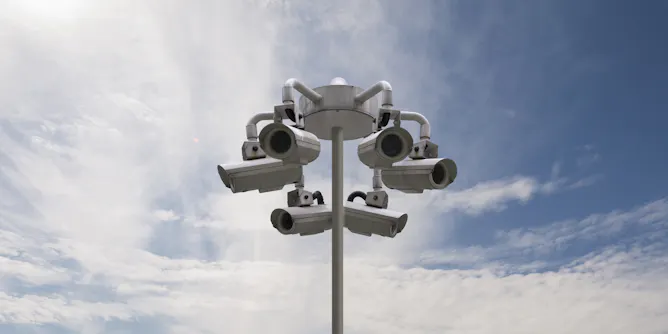
The architecture of automated license plate readers turns local cameras into a far-reaching surveillance network that can be accessed by agencies that never purchased the devices.
Articles on Customs and Border Protection
Displaying 1 - 20 of 29 articles

Companies that had sued for tariff refunds are taking different approaches to getting their money back – or quitting the effort.
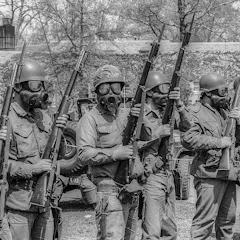
In 1970, National Guard troops killed four protesters at Kent State University. In 2026, federal agents killed two Minneapolis protesters. Public reaction to the deaths was significantly different.

Bruce Springsteen wrote and recorded ‘Streets of Minneapolis’ within days of Alex Pretti’s killing, continuing a long tradition of songs as protest against violence and repression.

Clergy demonstrating against ICE in Minneapolis have turned to classic ‘freedom songs’ – the music associated with protests ever since the Civil Rights Movement.
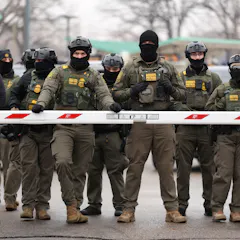
A policing scholar and former FBI special agent lays out the established principles of policing and constitutional law that govern how federal immigration enforcement efforts should be carried out.
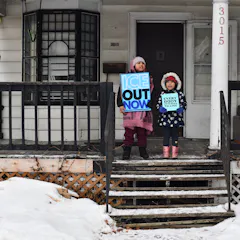
Children with a parent or family member who is detained, or are part of a drawn-out immigration court case, are twice as likely to have anxiety as young adults.

After the regime ‘disappeared’ their children, Argentina’s Madres de la Plaza de Maya relentlessly demanded justice – and exposed the atrocities of a dictatorship.
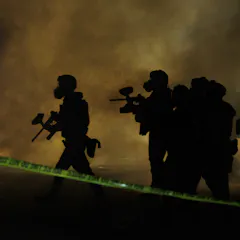
Militarized immigration enforcement used to be confined to near the US-Mexico border, far away from most Americans’ front lawns.

While federal immigrant agents need to produce a judicial warrant to enter a classroom, they can freely operate in public spaces at and around schools.
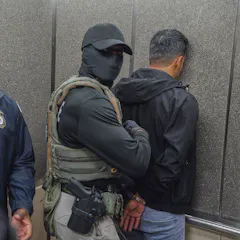
After his predecessors failed to diminish the US population of undocumented immigrants, President Trump is attempting to drastically reduce that population via unprecedented tactics.

New trade barriers are set to go into effect in July 2027.
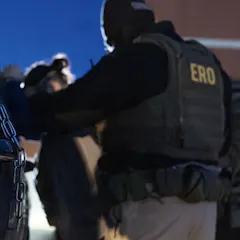
The 1952 Immigration and Nationality Act gives ICE broad power, including the right to arrest many noncitizens. The extent of this power is now being tested.
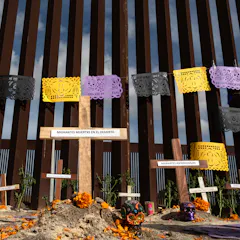
Drowning, blunt force trauma and exposure to extreme weather are among the risks that migrants face making the dangerous journey across the US-Mexico border.
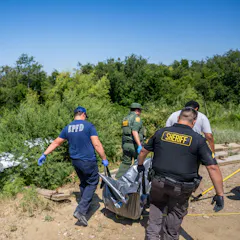
Enforcing immigration law at the border is the federal government’s role. But in Texas, that job has increasingly been taken on by the state. That shift may be key to Donald Trump’s border plans.
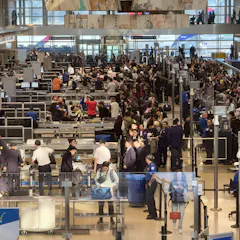
The Department of Homeland Security’s massive bureaucracy has many critical national security functions and spends billions of taxpayer dollars seeking to keep the nation safe.
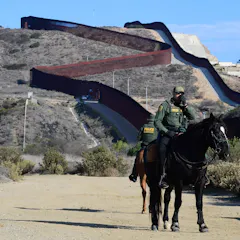
Created in 1924 to enforce draconian new immigration quotas, Border Patrol recruited its first agents from the Texas Rangers militia, giving it a kind of rogue, cowboy culture that persists today.

Last year, at least 686 migrants died trying to cross into the US from Mexico. Many had the option to call 911 but were too afraid of detection and deportation to seek help.

ICE detention facilities suffer from outdated systems, a lack of translation services – and a penchant for releasing ailing detainees to reduce the death count.
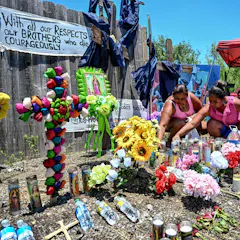
A 1994 US policy was supposed to deter migration by securing popular access points. Instead, it drives people to enter the US by more hazardous means, such as being crammed in hot tractor-trailers.
Top contributors
-

Distinguished Clinical Professor of Law, Rutgers University - Newark
-
Professor of Public Interest Law and Chicana/o Studies, University of California, Davis
-
Professor
-
Professor, Johnson Shoyama Graduate School of Public Policy, University of Regina
-
Graduate Student Researcher at the Center for US-Mexican Studies, University of California, San Diego
-
Professor of sociology, University at Albany, State University of New York
-
Physician and Clinical Fellow in Health Policy and Social Emergency Medicine, Harvard Kennedy School
-
Professor of Geography, Vassar College
-
Professor of Religious Studies, Michigan State University
-
Associate Professor of Philosophy, University of Alabama; Institute for Humane Studies
-
Associate Professor of the Practice, Texas A&M University
-
DrPH Student in Prevention and Community Health; Licensed Clinical Social Worker, George Washington University
-
Director of the Mexico Security Initiative, The University of Texas at Austin
-
Fellow for the Middle East, Baker Institute for Public Policy, Rice University
-
Professor of Computer Science, Elon University