
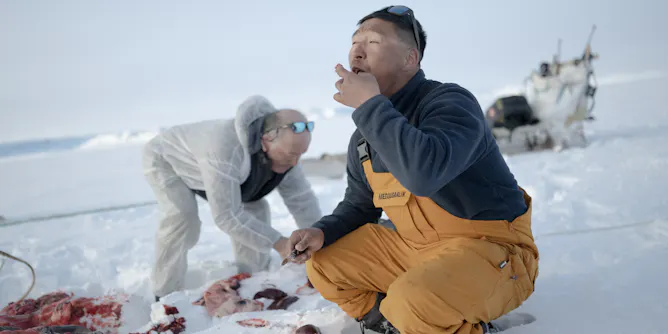
We are indeed still evolving, though it can be hard to tell because it happens over generations and often involves things you can’t see, such as what foods different people are able to digest.
Articles on Curious Kids US
Displaying 41 - 60 of 334 articles
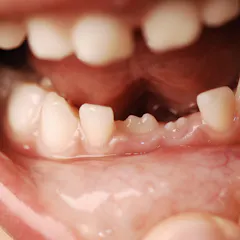
A pediatric dentist and an anthropologist explain how baby teeth and adult teeth help humans chomp their food over a long lifespan.
Even countries with similar values and goals can end up in conflict with each other due to forces they cannot fully control.
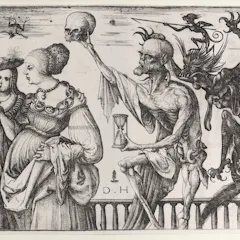
Artists often turn to the supernatural to reflect on and speak to the anxieties brought about by social, religious and political upheaval.

Pointy shoes have been all the rage across cultures for centuries, and their role as status symbols continue today.

Unstable atoms emit fast-moving particles that can damage cells in the human body. Some atoms are far more unstable than others.
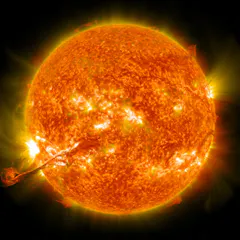
Space weather isn’t referring to rain clouds that float through the galaxy. Instead, it’s caused by massive explosions of particles that shoot out from the Sun.
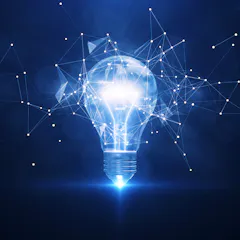
Thomas Edison is just part of the answer, and the light bulb is just part of what he achieved.

Would you guess that the Earth is spinning at 1,000 mph around its axis and at the same time hurtling through space on its orbit around the Sun at 67,000 mph? Here’s why you don’t feel all that motion.
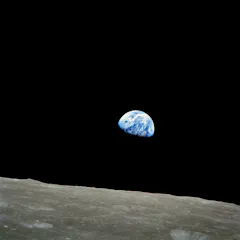
The Moon influences ocean tides – and ocean tides, in some ways, influence the Moon back.

Different paint recipes work for different uses. Two art conservators explain how analyzing paints from the past can reveal how they were made – and how best to preserve them.

Your food goes on a complex journey as it travels from your mouth to your colon.

Golf is one of a handful of sports that reward low scores, not high ones. That means getting around the course efficiently and not wasting strokes.

Researchers have found dreams are most likely to occur during the stage of sleep known as rapid eye movement, or REM.

Water and oxygen can make metals oxidize and rust, but researchers have found many ways to prevent this damage.
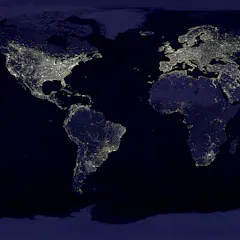
Power grids could likely handle the surge of demand, but all that light would pollute dark zones nearby.

Whether reading a book or listening to a podcast, the goal is the same: understanding. But these activities support comprehension in different ways.
Studying why heart cells are less likely to become cancerous can provide clues to improving heart regeneration and treatments for heart disease.

The first mention of a pirate by name may be in a Greek book from 2,500 years ago. But sea-raiding has been around since the very first boats traversed the world’s waterways.

An astrophysicist who spent time doing research at the South Pole gets to the bottom of how things feel at the ends of the Earth.
Top contributors
-

Distinguished Professor Emeritus of Anthropology, Binghamton University, State University of New York
-
Assistant Professor of Astronomy and Astrophysics, University of Maryland, Baltimore County
-
Professor of Astronomy, UMass Lowell
-
Professor of Biology, Clarkson University
-
Associate Professor of Veterinary Clinical Sciences, Oklahoma State University
-
University Distinguished Professor of Astronomy, University of Arizona
-
Doctoral Student in Biomedical Sciences, University of South Carolina
-
Lecturer in Geosciences, University of Montana
-
Assistant Professor of Gastroenterology and Hepatology, School of Medicine, University of Washington
-
Executive Dean of the College of Arts, Sciences & Education and Professor of Biological Sciences, Florida International University
-
Assistant Professor of Biological Anthropology, University of Tennessee
-
Professor and Chair of History Department, Colorado State University
-
Vice President of Academic Affairs and Dean of the College, Grinnell College
-
Associate Professor of Physics, University of Richmond
-
Associate Professor of Astronomy, Boise State University