

Recent military and economic pressure on Cuba, including Trump’s threats of a ‘friendly takeover’ of the island, follow a long pattern of US hostility toward its southern neighbor.
Articles on Cuban Missile Crisis
Displaying 1 - 20 of 26 articles

The national intelligence community has seemingly been sidelined from Trump’s Iran war decisions – a far cry from previous administrations, writes a former National Security Council member.
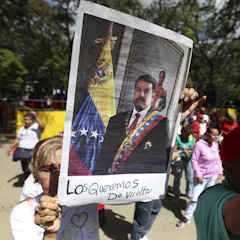
High school students in the US often learn about Latin America through the lens of the US, as a main character that exerts power.
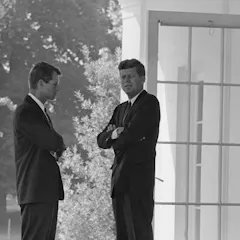
Robert F. Kennedy Jr.’s accounts of the notorious false flag operations proposed during the Kennedy years omit the most important part of the story. Hint: It’s a family affair.

A common US-centric narrative holds that the Cuban missile crisis ended when Washington stood firm against the Soviets. But that story ignores a whole continent.
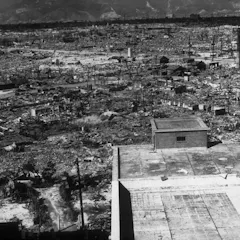
In the wake of the US attacks, the international community asked itself how it could ensure that such horrors were never repeated.
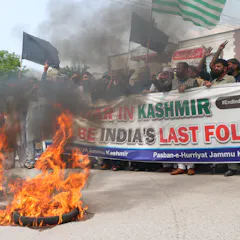
The Cuban missile crisis showed the virtue of communication between leaders. India and Pakistan need to heed the lesson.

The ‘Molink’ hotline has averted a serious crisis on several occasions. But would it still be as effective, given the personalities of the two leaders?
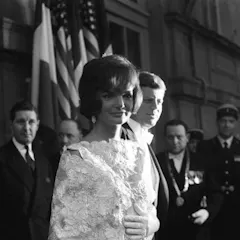
With wealth, charm and tactful leadership, John F. Kennedy set the standard for working toward the common good and decency in public discourse

During the Cuban missile crisis, World War III was likely averted by what one US official called ‘just plain dumb luck.’

Some of the key articles from our coverage of the war in Ukraine over the past week.
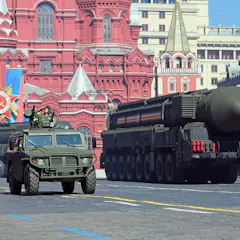
Because the west avoided a nuclear war over the Cuban missile crisis it should not be overconfident about Russia’s nuclear threats.
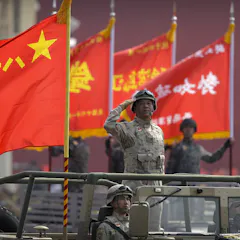
Hugh White warns of a potential war between the US and China, drawing lessons from the first and second world wars to explore how Australia might respond to such a conflict – and where to draw a line.
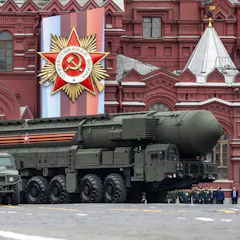
The sort of scenarios that might lead to the use of nuclear weapons in the Ukraine war would require a significant deterioration in Russian fortunes — and greater western involvement in the conflict.
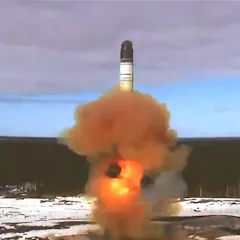
Russia is raising the stakes with upgraded ballistic missiles and blood-curdling threats from the Kremlin
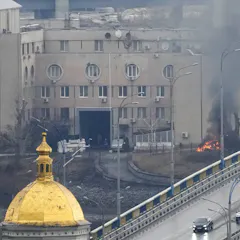
A western ‘do as I say, not as I do’ approach has helped provoke Vladimir Putin’s invasion of Ukraine.

During World War II, the US and USSR fought together to defeat the Nazis. When the war ended, the two superpowers began fighting each other.
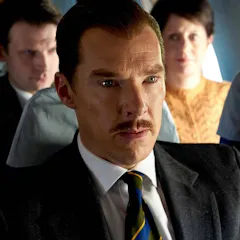
American intelligence has recognised there are four reasons why a ‘normal’ person might be convinced to spy.

Just as Fidel Castro’s 2016 death did not transform US-Cuba ties, his brother Raul’s exit from politics is unlikely to do so. But Cuba itself is changing. Eventually, Havana and Washington will, too.
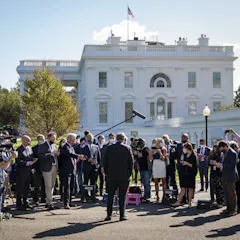
President Trump was direct in announcing he had COVID-19. But presidents in the past have been very good at deceiving the public about the state of their health. Which direction will Trump go now?
Top contributors
-

Professor of Military History, University of Calgary
-
Professor in Contemporary European History, University of Stirling
-
Doctoral Candidate, School of Social Sciences and Psychology, Victoria University
-
Professor of Political Science, University of Connecticut
-
Senior lecturer, Communications, Media and Culture, University of Stirling
-
Adjunct Assistant Professor of History, Quinnipiac University
-
Course Director, History, Coventry University
-
Emeritus Professor of Strategic Studies at the Strategic and Defence Studies Centre, Australian National University
-
Visiting Assistant Professor, Department of Government, Colby College
-
Professor of Social Welfare, Washington University in St. Louis
-
Assistant Professor, International Studies, Indiana University
-
Associate Professor of Global Studies, Appalachian State University
-
Associate Professor, Grady College of Journalism and Mass Communication, University of Georgia
-
Interdisciplinary Research Associate, School of Geography, Politics and Sociolog, Newcastle University
-
Associate Professor of Romance Languages and Literatures, Latin America, Binghamton University, State University of New York